Page 5 of 18


By Myra Adams – The Hill contributor

MYRA’S COMPLETE ARCHIVE IS HERE

Reposted from The Hill: August 9, 2024

My college history professor often yelled his favorite quote, from Winston Churchill, so we would never forget: “Those that fail to learn from history are doomed to repeat it.” It comes to mind now as American voters will soon elect a new president and the events of Jan. 6, 2021, have been nearly forgotten.

The Wall Street Journal recently interviewed a representative group of first-time college student voters aged 18 to 21 about issues impacting their presidential choice. Not one student mentioned Jan. 6 or related threats to democracy.

Thankfully, a January 2024 Washington Post poll found that 55 percent of Americans believed Jan. 6 was an attack on democracy that should never be forgotten. Meanwhile, the remaining 45 percent have forgotten or rationalized why the 2024 Republican presidential nominee was indicted last August for a conspiracy to remain in power after being soundly rejected by voters in the 2020 election.

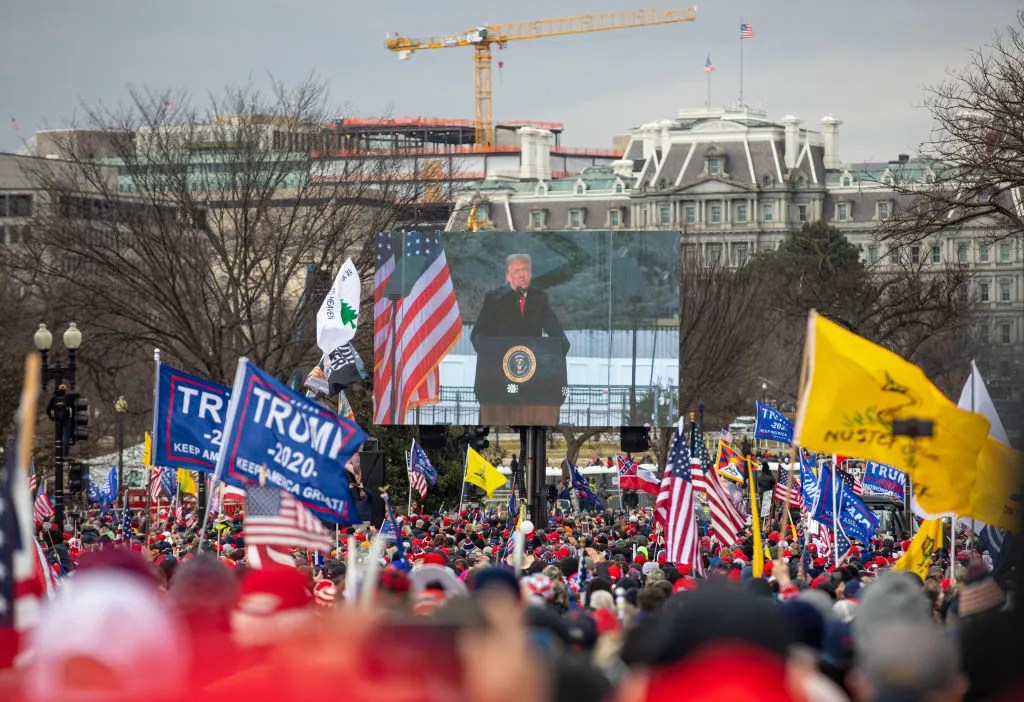
Allegedly, the then-president’s elaborate scheme encouraged an army of Trump supporters to organize a violent assault on the U.S. Capitol. Trump has successfully dragged out appeals and motions and has yet to be held accountable. Therefore, in November, voters will render the verdict.

What has made America great again every four years since its founding is that the peaceful transfer of presidential power is normal and expected. Beginning in 1788 our nation has held a presidential election in times of war and peace every four years. On Inauguration Day, every winner has placed his hand on the Bible and sworn an oath of allegiance to the Constitution.

Although President Biden’s inauguration was ultimately peaceful, the heavy military presence throughout Washington reflected a nation under siege after Jan. 6.

Six months from now, our nation should start a new streak of peaceful transfers. Yet, if Trump loses, President Biden is “not confident” of one. Here are four signs why January 2025 could be turbulent.

First, there is a dangerous expectation that if Trump loses, the election will have been rigged or stolen. I receive countless Trump campaign or Trump-allied organization emails, texts and social media messages warning how the Democrats are planning to steal the election, so “donate now.” Since Trump’s followers believe that only Trump can “save America,” he cannot lose by any fault of his own. Hence, the prospect of another “stolen” election is a fundraising bonanza, sowing the seeds of inaugural political unrest.

Second, in an interview during the Republican National Convention, Trump campaign co-manager Chris LaCivita said about his boss: “It’s not over until he puts his hand on the Bible and takes the oath. It’s not over until then. It’s not over on Election Day, it’s over on Inauguration Day, cause I wouldn’t put anything past anybody.”

LaCivita is gearing up for an epic electoral fight, blatantly warning that only if Trump wins will he accept the election results. Trump has made similar statements — our Founding Fathers’ worst nightmare — because the transfer of presidential power requires acquiescing to the will of the people.

It is immoral and un-American to assume without evidence that the opposing team will cheat and rob your guy of the presidency. Yet LaCivita’s message barely made a political ripple. Even just 20 years ago, such a statement from a major-party presidential campaign manager would have outraged the candidate and the nation, resulting in his termination.

Third, on July 29 Trump was interviewed by Fox News host Laura Ingraham. She asked about remarks he made at a Christian voter gathering that some interpreted as dictatorial— eliminating the need for voting. Trump told the Christians, “You have to vote on Nov. 5. After that, you don’t have to worry about voting anymore. I don’t care, because we’re going to fix it. The country will be fixed …”

Such bravado prompted Ingraham to ask Trump, “But you will leave office after four years?” He replied, “Of course. By the way, and I did last time. I kept hearing, he’s not going to leave. He’s not going to leave. Look, they are the ones that are a threat to democracy.”

Who are “they”? Again, imagine pre-Trump presidential campaigns. If either candidate called the other a “threat to democracy,” voters and the media would have been outraged. Moreover, the irony of Trump accusing his opponent (“they”) of being a “threat to democracy,” after he was indicted for trying to overturn the 2020 election, proves that Trump has mastered projecting his behavior onto others. Should he lose, this does not bode well for a peaceful transfer of power.

Fourth, both parties are shying away from featuring Jan. 6 in 2024 campaign ads. Has Jan. 6 been normalized and baked into the firmament of the election? Voters appear to have moved on and could explain why Trump announced he would “pardon the J-6 hostages.”

With the delay of his trial and the July boost from the Supreme Court’s confounding presidential immunity ruling, Trump has managed to turn himself and the Jan. 6 attackers into victims while Republicans applaud. Furthermore, the Supreme Court justices have diminished the importance of Jan. 6, which could jeopardize the next transfer of power.

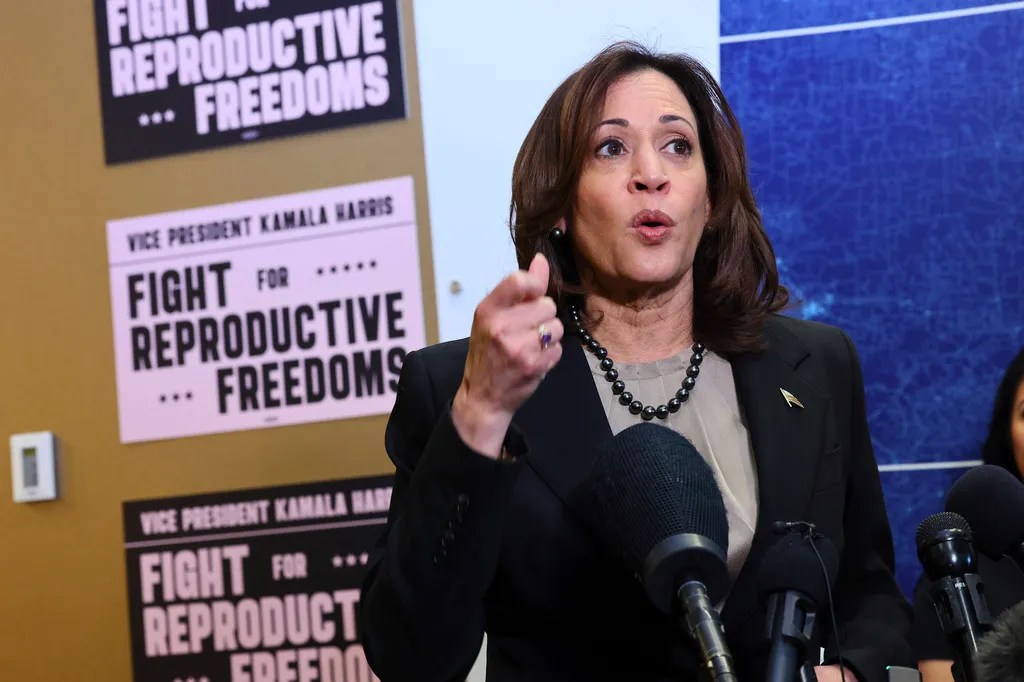
Win or lose, Kamala Harris will be the star on Jan. 6, 2025. As vice president, she will certify the Electoral College and announce herself or Trump as president. If the latter, given the Supreme Court ruling that nearly everything is an official act, presidential guardrails have been removed. Democracy is fragile, so voters beware: “Those that fail to learn from history are doomed to repeat it.”

Tags Chris LaCivita Joe Biden Laura Ingraham Winston Churchill


By Myra Adams – The Hill contributor

MYRA’S COMPLETE ARCHIVE IS HERE

Reposted from The Hill: July 26, 2024

“’Florida Man’ is notorious,” screamed the 2022 Washington Post headline describing a “figure of indulgence, decadence, and questionable decisions.” News accounts of outrageous, hilarious or criminal acts sustain this universal meme.

The futures of six Florida men are discussed below, and you can decide whether the “Florida Man” meme is applicable. All six are mega-MAGA power-hungry, focused on winning their next big job. The two senators, two representatives and one governor are engaged in a high-stakes game of trying to please and appease their leader—former and perhaps future President Trump. We begin at the top of the pyramid.

Donald J. Trump: Age 78 — the 45th president of the United States was elected in 2016 and defeated in 2020. He easily won the 2024 Republican presidential nomination.

After surviving a July 13 assassination attempt, Trump said he “took a bullet for democracy.’’ Whether or not you agree with that passion-packed statement, it will echo throughout presidential history if Trump is reelected. Moreover, his power to appoint and endorse will lord over these five other Florida men’s dreams and career paths.

Sen. Rick Scott (R-Fla.): Age 71  elected in 2018 and running for reelection. He was governor of Florida from 2011 to 2019.

In November, Florida’s junior senator should sail to reelection. Meanwhile, Scott covets the “Senate Majority Leader” title if Republicans win control. A Trump presidential victory practically ensures a Senate sweep, enhancing Scott’s chances of succeeding retiring Senate GOP Leader Mitch McConnell (R-Ky.) — an enemy of Trump and Scott.

Scott first tried and failed to unseat Leader McConnell after the 2022 midterm elections, losing a 36 to 10 vote despite Trump’s behind-the-scenes backing. If victorious, count on President Trump to apply pressure until his man Scott is elected Senate majority leader.

Suppose Trump is defeated but Republicans win Senate control. In that case, Scott is less likely to become majority leader, probably losing to long-time frontrunners Sens. John Thune (R-S.D.) or John Cornyn (R-Texas). Scott’s destiny to succeed McConnell is tied to Trump’s fate — circumstances Trump relishes for payback.

Sen. Marco Rubio (R-Fla.): Age 53 — elected in 2010. After Rubio collapsed as a presidential primary candidate in 2016, he was reelected to the Senate and again in 2022. Recently, Rubio was a Trump vice presidential finalist, losing to Sen. J.D. Vance (R-Ohio).

Should Trump win and deliver a GOP-controlled Senate, career advancement for Rubio is in the offing. He is vice chair of the powerful Senate Select Committee on Intelligence and would move to chairman. Still, Florida’s senior senator has long been itching to leave the upper chamber. An October 2015 Washington Post article quoted Rubio telling a friend that he “hate[s]” the Senate. Then, in May 2016, Rubio said he was “frustrated” and that “hate was not the right word.”

Therefore, despite his failed 2016 presidential campaign — having grown in national stature after nearly 14 years in the Senate — Rubio is ready for a new title if Trump extends an offer. Supposedly, Rubio is a top contender for secretary of State. Such a prestigious post could enhance his dream of becoming the first Hispanic president —with decades left to achieve that goal. In the 2048 presidential election year, Rubio would be 77, younger than 78-year-old Trump.

Gov. Ron DeSantis (R): Age 45 — narrowly elected in 2018. When reelected in 2022 with a 19-point margin of victory, DeSantis was considered “DeFuture” of the Republican Party. Then, high expectations and his lackluster 2024 presidential primary campaign produced a career low point. Crushed by Trump, DeSantis continued unabated as the powerful governor of the third-most populous state.

Young and ambitious, DeSantis’s next career move will be determined by two “ifs.” If Trump wins and if Sen. Rubio joins his administration, a vacant Senate seat will need an occupant until the 2026 midterm election. There are no rules to keep DeSantis from appointing himself, but a long-term strategy is more advantageous.

Due to term limits, DeSantis will leave office in early January 2027, which means he could appoint a placeholder senator who agrees not to run in 2026. Then, as the incumbent governor, DeSantis could launch his Senate campaign — a playbook successfully used in 2018 by then-Gov. Rick Scott, now Sen. Rick Scott. As a senator, DeSantis could mature into a national statesman and, as far out as 2056, at age 78, he could run for president like the 2024 GOP presidential nominee.

Rep. Matt Gaetz (R-Fla.): Age 42 — elected in 2016. He is a controversial, legally and ethically challenged Trump cheerleader.

From the Republican National Convention stage, Gaetz roared, “We ride or die with Donald Trump to the end.” Equally valid but unsaid by Gaetz is “I ride or die with Trump,” since he is strapped to Trump’s right wing. Gaetz usually does the former president’s bidding in the House, but questions remain about whether Trump supported Gaetz’s effort to remove Speaker Kevin McCarthy (R-Calif.)

Never humble, Gaetz said in June, “I’m trying to reshape the House in my image.” Could he reshape himself as a future House Speaker? If Trump wins and Republicans keep the House, anything is possible for this native Florida man.

Rep. Byron Donalds (R-Fla.): Age 45 — elected in 2020.

Donalds is an African American-born New Yorker who attended college in Florida and never left. He is a “MAGA-phone” acolyte for Trump, who teased Donalds with the VP slot. However, the congressman’s real future is if Trump wins the White House and, in 2026, endorses Donalds as the successor to Gov. Ron DeSantis. Byron Donalds also “rides or dies” with The Donald.

Brace yourself because these Florida men also have a “sister” — Judge Aileen Cannon. After she dismissed Trump’s Mar-a-Lago documents case, Gaetz tweeted her photo with the caption “Future Supreme Court Justice Cannon.”

All the Florida men and their supreme sister eagerly await King Trump’s coronation.

Myra Adams served on the creative team of two Republican presidential campaigns, in 2004 and 2008.TAGS BYRON DONALDS DONALD TRUMP FLORDIA MARCO RUBIO MARCO RUBIO MATT GAETZ REPUBLICAN PARTY RICK SCOTT RICK SCOTT RON DESANTIS RON DESANTIS


By Myra Adams – The Hill contributor

MYRA’S COMPLETE ARCHIVE IS HERE

Reposted from The Hill: July 5, 2024

In February, President Biden turned down the traditional Superbowl pregame interview, during which he could have appeared personable and presidential to more than 100 million American viewers.

That decision prompted Democratic strategist James Carville to warn it was “a sign that the staff or yourself doesn’t have much confidence in you. There’s no other way to read this.”

Carville’s “read” has since been proven correct by Biden’s ghastly debate performance, which pierced the protective shield his family and staff had created around him. At age 81, Biden’s shocking infirmity was witnessed by 51.3 million people, who saw that the world’s most powerful leader had exceeded his political expiration date.

Former President Trump, at age 78, is also considered unfit for office by half the nation.  Both men have unfavorable ratings exceeding 56 percent, signaling the presidential nominating system of the longest-lasting democracy is failing its people. 

Globally, the BBC has reported disparaging reviews of the Biden-Trump debate. Chinese state media said it was “like a reality show” with Trump “lying” and Biden “mumbling,” concluding that both are “currently facing difficulties.” The Russian media branded Biden’s performance as a “total failure” with concerns about his “mental health.”

Afterward, I called a high-level defense consultant, concerned that the debate presented a national security risk. “Trump and Biden’s debate performance was a catastrophe for U.S. national security,” he said emphatically. “Electing Trump or reelecting Biden is a sign of weakness that entices China to invade Taiwan and encourages Putin to keep going — but don’t mention my name.”

There are at least seven reasons why electing Trump or Biden would imperil national security.

First, the unwritten rule of “one president at a time” could be tested. Suppose Trump continues his glide path to a projected 312 Electoral Votes, such that Biden comes to be viewed as a lame-duck caretaker president from now until Election Day. During this time, the president could be undermined by elected officials, Trump loyalists gunning for cabinet posts and the last members of Trump’s foreign affairs team whom he did not fire.

A prime example is Richard Grenell, whom Trump calls his global “envoy” and who may be the next secretary of State. Grenell was Trump’s ambassador to Germany and then his unconfirmed acting director of national intelligence. On Apr. 5, the Guardian chronicled how Grenell’s “shadow foreign policy campaign is unsettling diplomats and threatens to collapse U.S. interests.” Indeed, our enemies could find ways to exploit even the mere hint that there are two competing presidents this fall.

Second, Biden’s exposed frailty is ripe for testing by America’s adversaries. Was it a coincidence that, three days after the June 27 debate, a terrorism alert was issued for U.S. military bases in Europe? A “3 a.m.” crisis is when a tired, weak commander in chief could cause delayed or indecisive actions followed by a blame game from Team Trump.   

Third, Trump poses a unique risk to national security as to whether the intelligence community can trust him with classified material. Last year, he was charged in a 32-count indictment for violating the Espionage Act after refusing to surrender boxes with sensitive government-owned documents stored at his Florida residence. His trial date is still in limbo.

Allies might also be reluctant to share vital intelligence with the Trump administration, considering the former president’s history of blabbing secrets and holding questionable allegiances. As a private citizen, after being convicted of 34 felonies and found guilty of civil financial fraud, Trump would be denied a security clearance but, if reelected, he will still be granted access to unlimited intelligence.

Fourth, NATO’s 75th Anniversary Summit begins on July 9 in Washington, D.C. This will be the first time Biden could be perceived as a wounded “lame duck.” Ironically, it was Biden’s leadership that helped strengthen the alliance and has successfully contained Putin’s invasion of Ukraine.

Two major global security questions will be on the agenda at the summit. The first is whether Ukraine will be invited to join NATO. The second is how NATO can “Trump-proof” itself and its support for Ukraine. Since Trump’s past anti-NATO stance is considered a threat, members anticipate relying less on American funding, weapons, and leadership. Biden also Trump-proofed U.S. NATO membership when, in December, he signed legislation requiring two-thirds Senate approval before the U.S. could withdraw from the alliance.

With Biden hosting NATO leaders in Washington, the “one president at a time rule” could be tested. Watch whether, smelling victory, a chest-thumping Trump sends envoys or makes a surprise off-site visit to conduct informal meetings.

Fifth: The Trump Organization’s new foreign projects are teeming with national security risks. This week, the Trump Organization announced a new project in Saudi Arabia. More Trump-Saudi business deals mean more conflicts. Shortly after Trump left office, the Saudi government invested $2 billion in Trump’s son-in-law, Jared Kushner’s newly formed investment firm.

And let’s not forget about Trump’s failed 2016-2017 effort to build a Trump Tower in Moscow. Perhaps it could be revived in his second term, when there will be no presidential guardrails.

Sixth, the status of Trump and Vladimir Putin’s relationship poses a risk. Some worry that Putin might have financial influence over the former president. Other believe there exists “Kompromat” — compromising information that Putin can use to keep Trump in line.

If Trump is reelected, watch how fast he tries to end U.S. support for Ukraine, pleasing Putin with devastating consequences for Europe. It has long been reported that American intelligence agencies believed Russia had “leverages of pressure” over President Donald Trump — one more national security risk for intelligence agencies to monitor during Trump’s second term.

Seventh, Trump will enjoy an “imperial presidency” on steroids, thanks to the Supreme Court’s immunity decision, which prompted Justice Sonia Sotomayor to write, “In every use of official power, the president is now a king above the law.”

Both Trump and Biden present national security problems, but if Biden ends his campaign, leadership uncertainty dramatically increases global short-term risk. And a second Trump term is potentially riskier because many believe that Trump worships power and money and seeks unholy revenge bolstered by an army of followers who worship him as God’s chosen.

Myra Adams served on the creative team of two Republican presidential campaigns, in 2004 and 2008. TAGS 2024 PRESIDENTIAL ELECTION DEBATE DONALD TRUMP JAMES CARVILLE JAMES CARVILLE JOE BIDEN NATIONAL SECURITY RISK PRESIDENT JOE BIDEN


By Myra Adams – The Hill contributor

MYRA’S COMPLETE ARCHIVE IS HERE

Reposted from The Hill on June 21, 2024

The 2024 race for the White House did not have to be an unpopular national embarrassment. For that, you can blame President Biden.

His worst strategic decision was running for reelection. Yes, he had his reasons — three of them, by my reckoning — but the data and polls confirm Biden’s consequential blunder. His likely defeat will consequently be the three I’s: infirmity, inflation and immigration.

According to the RealClearPolitics poll averages, with “no toss-up states,” former President Donald Trump would win 312 Electoral College votes to Biden’s 226 if the election were held today. In 2020, Biden won 306 to Trump’s 232.

On June 21, 2020, Biden led Trump by 9.8 percentage points. At the same point in the election cycle precisely four years later, the race is virtually tied. To illustrate how much worse off Biden is this time, Trump led Biden in only two outlier national polls out of hundreds taken throughout the 2020 cycle. This time, he leads in most polls.

More critically, in the seven battleground states that will decide the election, Trump leads by an average margin of 3.3 points. That is a significant achievement considering that in 2020, Biden won Michigan by 2.78 points, Pennsylvania by 1.17 points and Wisconsin by 0.63 points.

In Arizona, where Biden won by only 0.3 points in 2020, Trump dominates, with an average lead of 4.6 percent. The same is true in Georgia, where Trump’s lead averages 4.8 points, dwarfing Biden’s 0.23-point margin of victory.

More reliable than polls are the incumbent president’s job approval rating. Yesterday, Biden averaged 40.4 percent, an encouraging trend since he rarely breaks 40. How does his job approval compare to the fate of the last three incumbents on June 20 during their fourth year in office? Donald Trump’s was 42.6 percent, and he was defeated. Barack Obama earned 47.4 percent and George W. Bush rated 48.2 percent. Both were reelected.

Given Biden’s consistently underwhelming job approval rating, his 2020 victory points to the cause of his likely downfall. In November 2024, Biden will turn 82. Everyone knew this in 2020, and practically no one expected him to run a second time. He could have played the “I want to spend time with my family” card at the appropriate time, eliciting sighs of relief with zero political backlash.

Announcing against reelection, Biden might have proudly invoked Cincinnatus, the Roman statesman who relinquished power for the good of the republic. He could have quoted John F. Kennedy about “passing the torch to a new generation.” Biden could have, might have, should have.

But he did not.

Now, half of American voters fear that the other half will elect a convicted felon. The first half believes Trump is unfit for office, but he is favored to win. Next week’s debate could shift the race toward Biden in the battleground states. But since that is highly improbable, the question remains why Biden made his worst strategic decision.

First, President Biden feared the consequences of being a lame-duck for half his term. The timetable for startup presidential campaigns dictated that Biden needed to announce his one-term decision shortly after the 2022 midterm elections.

Biden understood that two years as a lame-duck president could have dangerous ramifications in an increasingly volatile world. For example, in February 2022, Russian President Vladimir Putin invaded Ukraine. Biden is credited with successfully rallying and expanding NATO to help thwart Putin’s ambitious attempt to reunite the former Soviet empire. Had Biden been a lame duck commencing in November 2022, his stature and effectiveness among NATO allies could have been diminished.

In December 2019, an intriguing Politico headline read, “Biden signals to aides that he would serve only a single term.” The report quoted a “well-known Democratic strategist” who said what Biden instinctively believed: “If you begin your first day as president as a lame duck, it changes everything. Every Cabinet secretary, every subcommittee chairman treats you differently. I wouldn’t advise it, just from a governing perspective as well as political.”  

That “truth” also applies to half a presidential term. But now, Biden’s frail appearance and Trump’s campaign momentum raise the question, “Did Biden break a ‘one term’ pledge?” The answer is no, since immediate lame-duck status meant a weak, dead-duck president.

If Democrats had been trounced during the 2022 midterms, Biden might well have bowed out in 2024. Instead, he perceived the unexpectedly positive midterm results as a green light for his own reelection. A week later, on Nov. 15, 2022, Trump announced his presidential campaign, unable to resist a rematch against the man who accused him of trying to steal the 2020 election.  

Second, and contributing to Biden’s worst strategic decision of running for reelection, is a hangover from his second-worst decision, which was to choose Kamala Harris as his running mate. Mirroring Biden, her job approval rating usually dances between 38 and 39 percent. Harris is seen as dragging down Biden’s already-weak presidency and harming his chances of reelection.

Harris left Biden with no good options. Imagine if Biden had announced in November 2022 that he was not seeking a second term. Immediately, he would have embraced lame-duck status by upping Harris’s profile within his administration. At the same time, she was likely to announce her presidential plans. Still, awaiting the vice president would be a tough primary fight with the next generation of Democratic governors eager to take on Donald Trump with incumbency as her only advantage.

Based on Harris’s fast-flopped 2020 presidential campaign, a fizzled 2024 attempt would have further weakened and embarrassed Biden’s lame-duck presidency.

Conversely, running for reelection, Biden could not risk replacing a woman of color as his running-mate, since he feared alienating core constituencies within the Democratic Party. Worse still, how does one fire the incumbent vice president?

Biden will turn 86 years old in 2028. That fact, combined with Harris’s unpopularity, unleashes death fears that “a vote for Joe Biden is a vote for Kamala Harris.” 

Finally, the prospect of Biden willingly leaving the office he first sought in June 1987 would have been an untenable blow to his psyche, even though a bevy of 2023 polls showed that as many as 70 percent of voters did not want him to run for a second term.

Ultimately, Biden made his worst strategic decision, potentially jeopardizing American democracy. This mistake seems to motivate voters to say, “You’re fired!” and to rehire the infamous man who popularized that quote.

Myra Adams served on the creative team of two GOP presidential campaigns, in 2004 and 2008.

TAGS 2024 PRESIDENTIAL ELECTION DONALD TRUMP DONALD TRUMP JOE BIDEN PRESIDENT JOE BIDEN


By Myra Adams – The Hill contributor

MYRA’S COMPLETE ARCHIVE IS HERE

Reposted from The Hill – June 7, 2024

Sen. Marco Rubio (R-Fla.) appears to be calculating that his dormant dream of becoming the first Hispanic president could be awakened by Donald Trump — by the same man who, in 2016, turned the senator’s presidential primary campaign into a comedic punchline.

With Rubio’s presidential ambition suppressed over the last eight years, his recent batch of controversial Trump-pleasing statements points to a newfound obeisance, whose aim might just be the vice presidential nomination.

Well established is Trump’s litmus test that potential running mates refuse to commit to accepting the results of the 2024 election. Last month, Rubio aced that test on NBC News’s “Meet the Press.”

Then, after Trump became a convicted felon, Republican leaders and vice presidential “shortlist” candidates raced to the microphones for a chorus of outrage, but Rubio’s remarks were the most extreme.

On Sean Hannity’s Fox News show, Rubio, the son of Cuban immigrants, said, “This is the quintessential show trial. This is what you see in communist countries. This is what I grew up having people in this community tell me about it happened in the days after the Castro revolution.”

Rubio’s sycophantic performance could be Trump’s vice presidential decision breakthrough — unlocking the White House gate for Rubio after his key was lost to young, unbridled ambition.

First elected to the Senate in 2010 at age 39, Rubio announced his presidential campaign on April 13, 2015. Numerous unenthusiastic Florida Republicans thought Rubio was “getting ahead of himself” or “in too much of a hurry” and “not ready to be president.”

Subsequently, the freshman senator was shredded on the presidential stage. As expected, in March 2016, Rubio’s primary campaign crashed and burned. Still, he was easily reelected that November, despite allegedly expressing “hatred” for the Senate amid his presidential campaign.

By mid-April 2021, Rubio’s career seemed to be floundering. CNN put him on its list of “10 Senate seats most likely to flip in 2022,” prompting my op-ed: “What happened to Marco Rubio, Time Mag’s ‘Republican Savior’ of 2013?”

But those headlines did not age well. In 2022, Rubio won his third term by a 16-point margin, even carrying heavily Democratic Miami-Dade County. He was absent from the 2024 presidential primaries, but by then he seemed to have found a niche as a respected Republican senator.

Nevertheless, this spring, Rubio’s name has popped up as a prospective running mate for Trump. And Republicans would consider him a brilliant choice, if not for his state of residence.

The 12th Amendment to the Constitution states that presidential electors may not choose both a president and vice president from the same state as themselves. This means that Florida’s 30 electors, if they vote for Trump, would not also be able to vote for Rubio, since both are Florida residents. This appears to make Rubio a gamble as a vice-presidential nominee.

Rubio seems undeterred by this constitutional problem. As the New York Times has reported, he “has told people that changing his residency would not be a problem,” and that there are possible workarounds. Note that the electors don’t vote until Dec. 17. Rubio could, at least in theory, resign his Senate seat on Nov. 6 and try to establish residency elsewhere.

If Trump selects the 53-year-old Rubio, it would make him the first Hispanic vice-presidential nominee on a major party ticket. Whether Trump wins or loses, Rubio would instantly become the frontrunner for 2028, the incumbent vice president, or both.

Considering all the above, there are at least five reasons Trump is Rubio’s ticket to becoming the “Hispanic Obama.”

First, Rubio is a practicing Catholic. Among the faithful, he is considered the “real thing,” in contrast to Biden. Unquestionably, he would bring Trump more Catholic voters, reminiscent of how vice-presidential nominee Mike Pence brought more evangelicals in 2016 despite Trump’s evident lack of churching.

According to exit polling, Trump won 50 percent of Catholics in 2020 to Biden’s 49 percent. Among Hispanic Catholics, Biden won 67 percent compared to Trump’s 32 percent. In the Rust Belt swing states of Wisconsin, Michigan and Pennsylvania, with their large Catholic populations, Rubio could help deliver a Trump victory.

Second, polls indicate that Trump is already making headway with Hispanic voters, who are projected to outnumber Black voters in 2024 for the first time. Moreover, the Spanish-speaking Rubio could boost the ticket, especially among non-aligned young Hispanics.

Third, Rubio could serve as a “party unity” candidate, attracting voters who are unsure or don’t like Trump while broadening the overall appeal of the Republican ticket.

Fourth, after 14 years in the Senate, Rubio brings extensive domestic and foreign policy expertise. He is a senior member of the Foreign Relations Committee in addition to serving as Intelligence vice chairman. Additionally, Rubio is stationed at the forefront of the immigration issue, which is critical to GOP voters. He could effectively shepherd Trump’s agenda through Congress while quietly soliciting support for himself in 2028.

Finally, Rubio would be an “insurance policy,” ready to take the top job on day one. Expect Trump to contrast Rubio with Vice President Kamala Harris, who is widely seen as a hugely unpopular drag on Biden’s ticket, considering the current president’s age and the unlikelihood that he will finish a second term.  

On the flip side, there are at least four reasons the former president might reject a Trump-Rubio ticket.

First, a plan to resolve the 12th Amendment problem must first be established. This probably cannot be resolved as a judicial question before the Nov. 5 election, so there is a great deal of risk.

Second, Trump distrusts Rubio. Although the senator now shows loyalty, Trump has a long memory, and Rubio’s 2016 statements eviscerating him will appear in anti-Trump ads. For example, “Friends do not let friends vote for con artists” — updated, perhaps, with “for a convicted felon.”

Third, Rubio voted to certify the 2020 presidential election. During his Senate floor speech, he said that “democracy is held together by people’s confidence in the election and a willingness to abide by its results.” Team Biden will relish comparing the Rubio of 2021 to the one under Trump’s spell.

Fourth, Trump could fear that Rubio will overshadow him. Remember that Trump’s vice presidential role model was Mike Pence, except on Jan. 6, 2021.

So there are ample grounds for Trump to look elsewhere. Even so, his campaign’s high command might convince him that Rubio is worth the risk.

Myra Adams  served on the creative team of two GOP presidential campaigns, in 2004 and 2008. TAGS 2024 PRESIDENTIAL ELECTION DONALD TRUMP MARCO RUBIO PRESIDENT JOE BIDEN


By Myra Adams – The Hill contributor

MYRA’S COMPLETE ARCHIVE IS HERE

Reposted from The Hill: May 24, 2024

Former President Donald Trump knows from the real estate business the three words that most affect property values: “location, location, and location.”

As the presumptive Republican presidential nominee ponders selecting a new running mate, he also knows the impact of “loyalty, loyalty, and loyalty,” believing that on Jan. 6, 2021, his “disloyal” former vice president thwarted his grandiose plans for retaining power.

While Trump does not explicitly state “loyalty” as a prerequisite, vice presidential wannabees subliminally hear the word replayed on MAGA megaphones and act accordingly, lured by the opportunity to be one heartbeat away from the presidency behind an overweight, high-strung man who turns 78 on June 14.   

Thus, ambitious vice presidential “shortlist” candidates are deaf to the warnings of Mike Pence, Trump’s once uber-loyal vice president. Notably, on August 1, 2023, when Trump was indicted for allegedly trying to overturn the 2020 election, Pence said, “President Trump demanded that I choose between him and the Constitution. I chose the Constitution, and I always will.”

In March, Pence announced that he would not endorse Trump for president, which some consider a historic snub.

Prior to Jan. 6, Pence had demonstrated unflinching loyalty to Trump, his administration, and the two presidential campaigns. With that “except” in mind, however, it now appears Trump is trying to “Pence-proof” the vice presidency with loyalists who, if confronted with a Jan. 6-type crisis, might even choose Trump over the Constitution.

Below, ranked in order of “Pence-proof” loyalty, are Trump’s four most likely running mates.

Rep. Elise Stefanik (R-N.Y.): Age 39 (40 in July)

If loyalty is Trump’s number one criterion, then Stefanik belongs at the top of his list. She is the headline-grabbing, third-ranked House Republican and, since 2021, has chaired the House Republican Conference. Stefanik personifies Trump-loyalty, endorsing him for president a week before Trump even made his official announcement on Nov. 15, 2022.

In February, she aced the Pence-proof loyalty test. During a CNN interview, when asked about Jan. 6, 2021, Stefanik said, “I would not have done what Mike Pence did. I don’t think that was the right approach.”

Proving Stefanik is a contestant in a league of her own, last Sunday in Jerusalem, she addressed the Knesset, Israel’s parliament. When she forcefully denounced President Biden’s policy of withholding heavy weapons if Israel invaded Rafah in Gaza, the White House blasted her back.

From Israel, Stefanik made more Trump-pleasing headlines appearing on “Fox News Sunday.” In a testy exchange, she pushed back against host Shannon Bream’s questions about documented statements by Stefanik herself from 2016, criticizing Trump’s treatment of women after the infamous “Access Hollywood” tape had been released.

Stefanik is a legal attack dog. This week, she filed an ethics complaint against Judge Juan Merchan, who is presiding over Trump’s “hush money” case in Manhattan. Similarly, she filed complaints against Special Prosecutor Jack Smith and Judge Arthur Engoron, who had presided over Trump’s civil fraud trial.

Trump had said on NBC’s “Meet the Press” that he liked “the concept” of a female running mate and called Stefanik “a killer” at a Mar-a-Lago dinner.

Since the Harvard-educated Stefanik has the loyalty chops and guts to be Trump’s running mate, she is well-positioned for a debate fight with Vice President Kamala Harris.

VP assessment: A young, bold choice that could attract suburban women voters.

Sen. J.D. Vance (R-Ohio): Age 39 (40 in August)

Vance owes his seat to the former president, which guarantees his loyalty.

In return, and as a shortlist contender, Vance played the Pence-proof veep card this month on CNN, when he questioned the well-documented physical danger that Pence experienced on Jan. 6, when rioters at the Capitol called for his hanging. “I’m truly skeptical that Mike Pence’s life was ever in danger. I think politics and political people like to really exaggerate things from time to time.” Music to Trump’s ears.

Vance is trying hard to break his 2016 “double album of disloyalty” — he had once told a roommate that Trump “might be America’s Hitler,” and at one point tweeted of Trump, “My god, what an idiot.” Nonetheless, the prospect of presidential power trumps all, and Vance’s new tune, “I was wrong about him,” debuted May 12 on CNN’s “State of the Union.” The next day, Vance appeared at Trump’s hush money trial, earning extra loyalty points.

VP assessment: A high-risk, low-reward, boring choice that does not enhance Trump’s ticket.

Sen. Tim Scott (R-S.C.): Age 58

Scott, who oozes loyalty and love for Trump, appears high on the vice presidential shortlist. During his own failed 2024 presidential primary campaign, the Black conservative senator never criticized Trump and called the former president’s fourth indictment “un-American.”

The love-fest really began after Scott dropped out and endorsed Trump on January 19. At Trump’s New Hampshire primary victory speech, he asked Scott why the senator supported him over former Gov. Nikki Haley (R), who had appointed Scott to fill a Senate vacancy in 2012. Scott’s retort to Trump: “I just love you.”

This month, Scott displayed Pence-proof loyalty cred during an awkward argumentative interview on NBC’s “Meet the Press.” When host Kristen Welker continually pressed the senator about accepting the 2024 presidential election results, he refused to give a straight answer — ensuring a top seed on Trump’s shortlist and perhaps a historic-looking vice presidential match against Kamala Harris.

VP assessment: Another bold choice that could appeal to African American voters in swing states.

Gov. Doug Burgum (R): Age 67

The two-term North Dakota governor is this year’s political breakout star. Not only is Burgum a self-made multi-millionaire who could write campaign checks, but while campaigning with Trump, a “bro-connection” has developed. Showing loyalty, Burgum attended and spoke outside Trump’s hush money trial.

The governor has received good press as a normal, earnest man with a central-casting look that appeals to Trump. On the downside, in 2016, Burgum bashed Trump, and his Pence-proof loyalty levels remain unproven.

A transactional White House relationship and, at the very least, a cabinet post is expected based on mutual respect.

VP assessment: Overall, a low-risk but low-reward choice. A mature, wealthy, intelligent business “buddy” who might boost the ticket as a “national insurance policy” in the worst-case scenario.

Myra Adams served on the creative team of two GOP presidential campaigns, in 2004 and 2008.TAGS 2024 PRESIDENTIAL ELECTION DONALD TRUMP DOUG BURGUM ELISE STEFANIK ELISE STEFANIK J.D. VANCE MIKE PENCE TIM SCOTT


By Myra Adams – The Hill contributor

MYRA’S COMPLETE ARCHIVE IS HERE

Reposted from The Hill: May 10, 2024

During every modern presidential election cycle, pundits and experts have claimed the current election is “the most consequential” — whether it be “in my lifetime,” “in this century” or “since World War II.”

Thankfully, America survived all of those contests and often thrived after a course correction or pendulum swing away from the loser. Looking back, those “most consequential” presidential elections have always seemed tame compared to the next one.

But today, when it comes to 2024, “most consequential” may be tragically understated. The extreme polarization in today’s body politic rivals that of the 1860 presidential election won by Abraham Lincoln, whose inauguration was followed by the start of the Civil War just five weeks later.

Like 1860, the 2024 presidential election is fraught with explosive constitutional and institutional issues potentially threatening America’s founding principles. Millions of Americans believe that the preservation of democracy is indirectly on the ballot. So, too, is the potential consolidation of power in an executive branch poised to unbalance tri-equal power shared with the legislative and judicial branches of government.

The perception of an existential crisis for the U.S. is only enhanced by the blockbuster movie “Civil War” and a recent poll that inspired the screaming Drudge Report headline: “41 percent see Civil War ll on the horizon.”

Last month, a Pew Research Center survey found that half of registered voters would prefer replacing both Trump and Biden on the ballot. Pew’s data reinforced a March YouGov/ Yahoo News poll, in which 53 percent of voters chose a combination of dread, exhaustion or depression to describe their feelings about the 2024 rematch.

This unpopular historic Biden-Trump rematch unnerves most Americans paying attention, even many of their supporters. Whoever wins, half the nation will be disgusted, angry, pessimistic and fearful of the future, wondering how America can endure with “that guy” as president for a second term.

And four additional “minefield” issues could explode during the campaign’s final six months or before the 2025 inauguration, further exacerbating that pessimism.

1. The first pertains to whether the loser will accept the outcome. Trump has continually planted seeds for potential unrest, even predicting the end of democracy if he loses. On CNN in May 2023, Trump qualified his acceptance of the 2024 results by saying, “If I think it’s an honest election, I would be honored to.”

Recently, Trump doubled down on that qualifier. During a Milwaukee Journal Sentinel interview, he said, “If everything’s honest, I’d gladly accept the results,” adding, “If it’s not, you have to fight for the right of the country.” Trump has yet to explain that “fight” statement — perceived as a “dog whistle” for encouraging political violence — nor defined his criteria for “everything’s honest.” This is a warning.

After numerous court decisions and recounts, Trump still believes the 2020 election was stolen, making it a test of loyalty. Now, it appears not committing to accepting the 2024 results is a litmus test for his vice-presidential nominee.

If Trump loses on Nov. 5, will he again try to subvert democracy as he allegedly did on Jan. 6, 2021, for which he has been indicted? A potential minefield surrounds your voting booth.

2. America’s smooth presidential transition has always shown the world why we are a beacon of freedom and democracy, even after contentious or close elections. This is why the events of Jan. 6, 2021, unnerved our allies and delighted our enemies. That means on Jan. 20, 2025, America must prove the last transition was an aberration. A repeat of such violence could create a national security situation for our enemies to exploit.

3. In 2024, several courtrooms sit atop political minefields. Trump’s Jan. 6 trial and the Mar-a-Lago documents case are now on hold. America’s judicial system is built on faith and trust that “no person is above the law.” Nonetheless, what could be construed as a double travesty of delayed federal justice has been orchestrated by (some would say) a Trump-friendly Supreme Court and Trump-appointed Florida U.S. District Judge Aileen Cannon. Delays by both courts could ensure that neither Trump’s Jan. 6-related trial nor the Mar-a-Lago documents case trial are held before Election Day.

Sixty-four percent of Americans want the Jan. 6 trial to occur sooner. But several conservative Supreme Court justices appear much more interested in how their ruling would affect future presidents’ claims of immunity than they are about Trump’s specific claims about his actions Jan. 6. If voters are denied a verdict on whether Trump is guilty of trying to overturn the 2020 election to remain in power, there could be a voter backlash.

This week, Cannon postponed indefinitely Trump’s 37-count indictment for refusing to return top secret government documents allegedly removed from the White House. Reacting to that news, former Trump White House attorney Ty Cobb called Cannon’s decision “really inexplicable” and “tragic.”

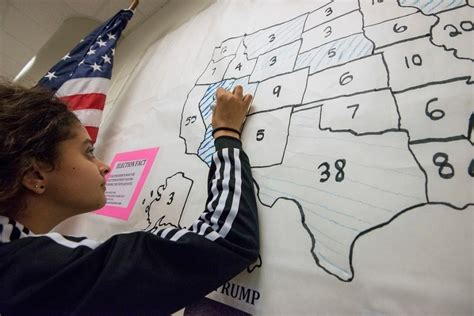
4. The “battleground states presidential election” has reached a tipping point: A 2023 Pew Research Study found that 65 percent of American adults favor a nationwide popular vote to elect the president. Six battleground states (Michigan, Pennsylvania, Wisconsin, Georgia, Arizona, and North Carolina) will totally dominate Biden’s and Trump’s campaign to win 270 Electoral College votes, severely warping where they spend time and money. An angry sentiment that “my vote doesn’t count” has long been growing among Americans who live outside of presidentially relevant states.

If Trump or Biden wins only the unpopular Electoral College but loses the popular vote — as Trump did in 2016 — Civil War-level outrage could result.


By Myra Adams – The Hill contributor

MYRA’S COMPLETE ARCHIVE IS HERE

Reposted from The Hill – April 26, 2024

Florida Gov. Ron DeSantis (R) was riding high after his landslide reelection, when the New York Post’s front page declared him “DeFuture” of the Republican Party. He was crowned a national star on a trajectory to battle Donald Trump for the Republican presidential nomination.

That didn’t quite work out for him. But now, forming on the Florida horizon are all the dramatic elements of another epic showdown between himself and Trump — this time to rule the Sunshine State and its Magic Kingdom after his second term has ended.

Last week, the stage was set for this possibility by an eye-popping Florida Atlantic University poll showing that 38 percent of registered Republican voters in Florida would choose Casey DeSantis, Ron’s wife, as their nominee.

If Casey were to declare herself a candidate for the 2026 Republican gubernatorial nomination of the nation’s third-most populous state, it could lead directly to a second major confrontation with Trump-world.

In the same poll, another 16 percent selected Trump acolyte Rep. Matt Gaetz (R-Fla.) — the media firebrand famous for ousting House Speaker Kevin McCarthy (R-Calif.). Gaetz wrote on X in February, “I have no plans to run for governor.” But if Trump encourages Gaetz to run, the congressman will likely bow to Trump’s wishes, especially since DeSantis and Gaetz have long been at odds despite being allies initially when DeSantis was elected governor in 2018.

With the governor’s race two and a half years away, FAU only polled a Casey DeSantis-Matt Gaetz primary matchup, with 20 percent indicating they would choose some other candidate. Other notable potential GOP contenders are Attorney General Ashley Moody and Team Trumper Rep. Byron Donalds (R-Fla.).

Another important finding from FAU’s poll is DeSantis’s 54 percent job approval among Florida voters. Apparently,  “Ron Desanctimonious” has more than adequately recovered from the national humiliation that Trump dealt him in the presidential campaign.

If DeSantis remains popular into 2025, then wife Casey could be well positioned to win his “third term” in a state that has not elected a Democratic governor since 1994.

It isn’t as crazy as it sounds. Casey was his closest adviser and greatest asset on the presidential campaign trail. Her Emmy-award-winning television career facilitated her easy-going, relatable stage presence and polished showmanship. She contrasted with her husband’s awkward, rigid, and widely mocked policy-wonk personality.

Mrs. DeSantis also received sympathy for surviving a fight with breast cancer. She is the mother of three young children and known for her elegant fashion flair, reminiscent of Jackie Kennedy. And Casey was a dedicated wife who stood by her man as their stage crashed and burned.

Casey and Ron’s first mistake in the presidential race was to underestimate Trump’s strength and resilience among primary voters. In June 2022, the Washington Post reported, “The couple believes that the governor’s skills are uniquely matched to the current political climate and are wary of waiting six years” to run for president in 2028, “by which time the tides may have shifted.” Instead, the tides nearly drowned them both.

But candidates can often learn from failure and emerge as future winners. Ron and Casey could follow that pattern with a 2026 gubernatorial race, a 2028 presidential run, or both. But first, they must defuse, neutralize, and successfully cross a Trumpian minefield without taking permanent damage.

With the Republican presidential nominee exercising total control over the Republican Party at all levels, Trump’s 2024 fate will heavily affect the DeSantises’ future. It begins when he anoints a running mate. Whether Trump wins or loses, that person will have the inside track for the Republicans’ 2028 presidential nomination if he or she performs well and stays in Trump’s good graces.In the near term, that scenario would seem to leave Ron’s presidential prospects melting like an orange popsicle in the Florida sun.

But another set of circumstances could keep DeSantis from the unemployment line in January 2027. What if Trump wins the White House and taps Sen. Marco Rubio (R-Fla.) for his Cabinet? In that case, DeSantis could appoint a “caretaker” to Rubio’s seat and run for it himself the subsequent special election to serve out the remainder of Rubio’s term. Conceivably, Ron and Casey DeSantis could appear on the same 2026 ballot — a political power-couple achievement.

Anything is possible, but don’t forget that Trump has a long memory and lingering animosity toward Ron and Casey. Even though DeSantis’s best showing was third place in Iowa, and he dropped out before the New Hampshire primary, Trump was still furious that he had the gall to run against him at all.

The former president repeatedly bragged that he “made” DeSantis’s career, warned the governor against entering the 2024 race, and boasted about destroying DeSantis for the “disloyalty” of daring to be his primary rival.

Trump’s anger stemmed from his primary endorsement of the obscure congressman from northeast Florida, which he first gave in December 2017. DeSantis, who had trailed initially after announcing his candidacy, flogged the endorsement to anyone who would listen and gained his first polling lead shortly after that. Trump subsequently reiterated that endorsement in June 2018, to much greater public notice, at which point DeSantis immediately surged to a consistent polling lead and never looked back until he had won the nomination in a 20-point landslide.

Future-former President Trump therefore believes, and not without reason, that he has the power to derail Ron and Casey’s political DeFuture. 

Myra Adams served on the creative team of two Republican presidential campaigns in 2004 and 2008.TAGS CASEY DESANTIS RON DESANTIS


By Myra Adams – The Hill contributor

MYRA’S COMPLETE ARCHIVE IS HERE

Reposted from The Hill: April 12, 2024

Our intelligence services are consumed with battling a new “Axis of Evil.” The updated phrase, first coined in 2002, now refers to Russia, China, Iran, and North Korea. This powerful authoritarian alliance is determined to meddle in elections, launch cyberattacks, destabilize and wage wars against America and its allied democracies around the world.

In this context, consider the likelihood that, starting next Jan. 20, sensitive secrets will be viewed by the most notorious national security risk living outside a federal penitentiary.

It sounds like a Hollywood script, but our spy services must contend with this real-life drama if Donald Trump is elected president once again.

President Biden’s campaign and those who served in Trump’s administration must convey to voters that Trump himself represents a national security risk with severe domestic and global ramifications. Even before November’s election, in mid-July 2024, after Trump is officially nominated at the Republican National Convention, he will be entitled to receive intelligence briefings that Rep. Adam Schiff (D-Calif.) hopes will be “dumbed down.” Schiff is reportedly “concerned about whether Trump could share the information.”

Intelligence agencies were always concerned and took necessary precautions during Trump’s presidency. “Officials were even more cautious about what information they provided Mr. Trump because some saw the president himself as a security risk,” the New York Times reported in 2022, quoting CIA counterintelligence official Douglas London.

That sentiment harkens back to January 2017, when an American intelligence official reportedly warned Israeli officials “that American intelligence agencies believed Russia had ‘leverages of pressure’ over President Donald Trump….The [American] official warned Israel to ‘be careful’ once Trump was inaugurated, adding that it was possible sensitive information shared with the White House and the National Security Council could be leaked to Russians.” Four months later, it actually happened.

If the election were held today, former President Trump would likely win. For the intel community, that means additional complications and distractions as they fight the Axis of Evil against threats that some believe Trump’s victory would accelerate.

This week, former CIA director John Brennan said that if elected, Trump “would give Vladimir Putin the green light to practically swallow Ukraine,” since Trump “can reduce or even stop financial and military aid to the government in Kyiv.” 

To date, Trump’s allies, such as House Speaker Mike Johnson (R-La.) and Rep. Marjorie Taylor Greene (R-Ga), have effectively blocked Ukraine aid. Last month, after Hungarian President Viktor Orbán met with Trump, Orbán told state television that Trump had said he “will not give a penny into the Ukraine-Russia war and therefore the war will end.” Brennan believes “that will encourage Putin to look hungrily at the rest of Europe.”

Trump’s enigmatic and decades-long Russia connection continues to amaze. NATO is taking extra precautions now that Trump has said Russia should be able to do “whatever the hell they want” to NATO members who don’t meet their defense spending targets.

The good news for Trump is that U.S. presidents don’t need security clearances. In November 2016, if not for Trump’s “President-elect” title, “citizen” Trump would have been denied a security clearance due to his extensive long-term business dealings with Russian oligarchs. In 2008, Donald Trump Jr. famously said, “Russians make up a pretty disproportionate cross-section of a lot of our assets,” and, “We see a lot of money pouring in from Russia.”

No wonder CIA officials saw President Trump “as a security risk.” For anyone not named Trump or Jared Kushner, the exhaustive process for obtaining a security clearance begins with the following nine-point list: “Loyalty to the United States, strength of character, trustworthiness, honesty, reliability, discretion, and soundness of judgment.” Additionally, “We also make sure you: Are free from conflicting allegiances to other countries. Are not a potential risk for blackmail. Will abide by regulations governing the use, handling, and protection of sensitive information.”

In other words, the next likely commander in chief would probably flunk most of the security criteria required of those who will brief him.

The last listed item, “handling and protecting sensitive information,” is a well-documented Trump violation. There are photos of document pieces flushed down his White House toilet. Staffers were tasked with taping together documents that Trump had ripped and discarded. In 2019, Trump tweeted a sensitive Iranian photo, as if he believed it was his personal property.

Such thinking and behavior are the reason Trump has been charged with a 32-count indictment for violating the Espionage Act. Trump allegedly moved boxes of documents, some with the highest classification, to his Mar-a-Lago residence and refused to return them as required by law. (A trial date has yet to be set.)

Topping the list of security clearance criteria is “loyalty to the United States.” Does Trump place loyalty to himself above the nation, given his encouragement of supporters to prevent certification of a lawful election on Jan. 6, 2021, for which Trump has also been indicted? What is national loyalty if not a willingness to abide by the Constitution?

Another clearance question asks if one is “free from conflicting allegiances to other countries.” What gets perhaps less attention than Putin is Trump’s active, lucrative business relationship with Saudi Crown Prince Mohammed bin Salman and the prince’s LIV Golf tournaments, some hosted at Trump courses.

Liz Peek recently asked whether bin Salman might sabotage Joe Biden’s reelection bid by cutting oil production thus raising prices, which would have adverse ripple effects on the U.S. economy. Indeed, the CIA will be watching the Trump-bin Salman connections, which would likely disqualify anyone from obtaining a federal security clearance.  

If Trump is elected, the intel community will be fighting the Axis of Evil while reporting to a president known as a security risk, and who habitually disregards intelligence that fails to mesh with or interferes with his personal interests. Flush goes the White House toilet and possibly the nation.

Myra Adams served on the creative team of two GOP presidential campaigns in 2004 and 2008.TAGS 2024 PRESIDENTIAL ELECTION DONALD TRUMP DONALD TRUMP JR. JAN. 6 CAPITOL RIOT PRESIDENT JOE BIDEN RUSSIA SAUDI ARABIA


By Myra Adams – The Hill contributor

MYRA’S COMPLETE ARCHIVE IS HERE

Reposted from The Hill – March 29, 2024

Four criminally charged or convicted men pardoned by then-President Trump now orbit his 2024 presidential campaign — exercising their gravitational pull for his victorious reelection. Of the four, Steve Bannon was dramatically granted clemency hours before Trump left office on Jan. 21, 2021, while Roger Stone and Paul Manafort received Christmas gift pardons on December 23, 2020. Retired Army Lt. Gen. Michael Flynn was pardoned a month earlier.

“Orbiting” means they are not officially on Trump’s reelection team. However, Steve Bannon, Roger Stone and Michael Flynn have a prodigious influence on Donald Trump, his campaign and ardent supporters.

And then a surprise news report heralded the re-emergence of the internationally scandalous Paul Manafort. Allegedly, Trump’s disgraced first 2016 campaign manager is poised for a “potential role” at the July Republican National Convention and as a fundraiser for Trump’s cash-strapped campaign.

With Trump’s cult-like MAGA voters wearing “Make America Great Again” and “Save America Again” caps — a bold, lawless image enhances the ability of these pardoned men to galvanize voter support and serve their legally challenged master.

The combative communication styles of Bannon, Stone and Flynn mirror Trump’s outrageous claims of victimhood. He was “robbed” of his 2020 victory, and he is fighting a “weaponized” Justice Department aiming to destroy him — and them, at least until they were graciously pardoned.

Let’s briefly examine each man’s influence on Team Trump and their impact on his third presidential campaign.

Stephen K. Bannon is the most powerful of the pardon four-pack, “Bannon is the intellectual ringleader of the MAGA circus,” Rep. Jamie Raskin (D-Md.) has proclaimed. Proving the point is Bannon’s fiery 2024 CPAC speech. Then, for MAGA street cred, “Bannon seems to have been deeply enmeshed in the planning of the disruption of the peaceful transfer of power and the seizing of the presidency for Donald Trump,” Raskin explained as a member of the January 6 House Committee.

First, a little history: In mid-August 2016, when Trump’s presidential campaign was floundering under Manafort’s disjointed leadership, Bannon was named “campaign chief executive.” After Trump’s shocking victory, Bannon served for seven months as “chief White House strategist” until his combative, headline-generating exit in August 2017.

In August 2020, Bannon and three associates were indicted for defrauding crowdfunding donors who had contributed $25 million to their “We Build the Wall” campaign — the federal charge that Trump commuted on his last day in office. New York state charges were later filed in 2022.

Although Bannon is embroiled in multiple pending legal matters and facing prison, his highly ranked “War Room” podcast makes him a media powerhouse. He has successfully filled the red-meat media gap left by Rush Limbaugh’s death, and his “angry warrior” MAGA brand has left traditional conservativism in the dust.

“War Room” is the go-to misinformation destination for Trump acolytes such as Reps. Matt Gaetz (R-Fla.), Marjorie Taylor Greene (R-Ga.) and Elise Stefanik (R-N.Y.). Encouraged by Bannon’s bombastic master communicator skills, elected members can vent about their enemies and invent conspiracy theories to enhance fundraising while currying favor with Trump.

If Trump wins in 2024, the War Room should be credited for pumping up and turning out Trump’s MAGA army that Bannon’s “deconstructing the administrative state” ideological underpinnings helped birth and grow into a significant political movement.

Roger Stone is a political mastermind infamously known for “dirty tricks,” either real or imagined. Stone’s volatile relationship with Trump began in the 1980s when he was businessman Trump’s first political adviser. Roger’s book, “The Making of the President 2016,” chronicles his role in Trump’s historic upset over Hillary Clinton. If graphed, the Trump-Stone relationship would have sharp peaks and deep valleys but with a continuous brotherly connection.

In July 2020, Stone was sentenced after being convicted of witness tampering, obstruction and lying to Congress about 2016 campaign-related activity. He was hours away from reporting to a federal corrections facility when Trump commuted his sentence and then pardoned him in December 2020. Ever since, at GOP events, Stone has received rock star treatment.

This week, I asked Stone about his status with Team Trump. He replied, “I have, and I seek no formal or informal role in the presidential campaign. I remain a strong supporter of the president, and I speak to him as well as members of his campaign team regarding political matters occasionally. Those conversations remain confidential.”

Stone said that his various radio shows (where he promotes Trump) keep him “more than busy.” Then he added, “If you look at every one of these stories, my alleged [campaign] involvement is simply based on the fact that I have ‘been seen at Mar-a-Lago recently’ — what a crock of s***.”

Truthfully, Trump and Stone will always have each other’s backs — the source of Stone’s influence — which he intentionally underplays, despite having Trump on speed dial.

Lt. Gen. Mike Flynn served as Trump’s first national security adviser. He was in office for only 22 days before the ambush. Flynn was convicted of lying to the FBI about Russian interference in the 2016 presidential campaign, for which Trump pardoned him. He was entangled in more international legal problems subsequently.

In Trump world, Flynn is an emissary, a folk hero, a victim, a man-of-God, and someone who engaged in Jan. 6 related events. He juices up the Christian-nationalist election-denying wing of the GOP. Nonetheless, the general’s influence is dwarfed by that of Trump sergeants Bannon and Stone.

But that could change on April 5, when Flynn begins his national movie tour for “Flynn: Deliver the Truth. Whatever the Cost.” Will Flynn’s “Truth” movie justify his advising Trump to deploy the military to rerun the 2020 election and seize voting machines? Perhaps, along with the popcorn, Flynn will sell Trump’s “God Bless the USA Bibles” so that God can help Trump win and in turn restore Flynn to the White House.

Finally, there’s Paul Manafort. Today, his MAGA influence is zero. But his stock will rise if Trump’s high command hires him as some anticipate, and he performs successfully. Manafort’s rap sheet is marked with old-fashioned greed gone amok, which included hiding $55 million in foreign bank accounts, filing false tax returns, defrauding banks and milking pro-Russian Ukrainian clients — crimes worthy of Trump pardons.

As Trump’s campaign heats up, watch these loyal men earn their pardons.

Myra Adams served on the creative team of two GOP presidential campaigns, in 2004 and 2008. TAGS DONALD TRUMP MICHAEL FLYNN PAUL MANAFORT ROGER STONE  STEVE BANNON