Economic Crisis


By Myra Adams – The Hill contributor

MYRA’S COMPLETE ARCHIVE IS HERE

Reposted from The Hill – Dec. 19, 2025

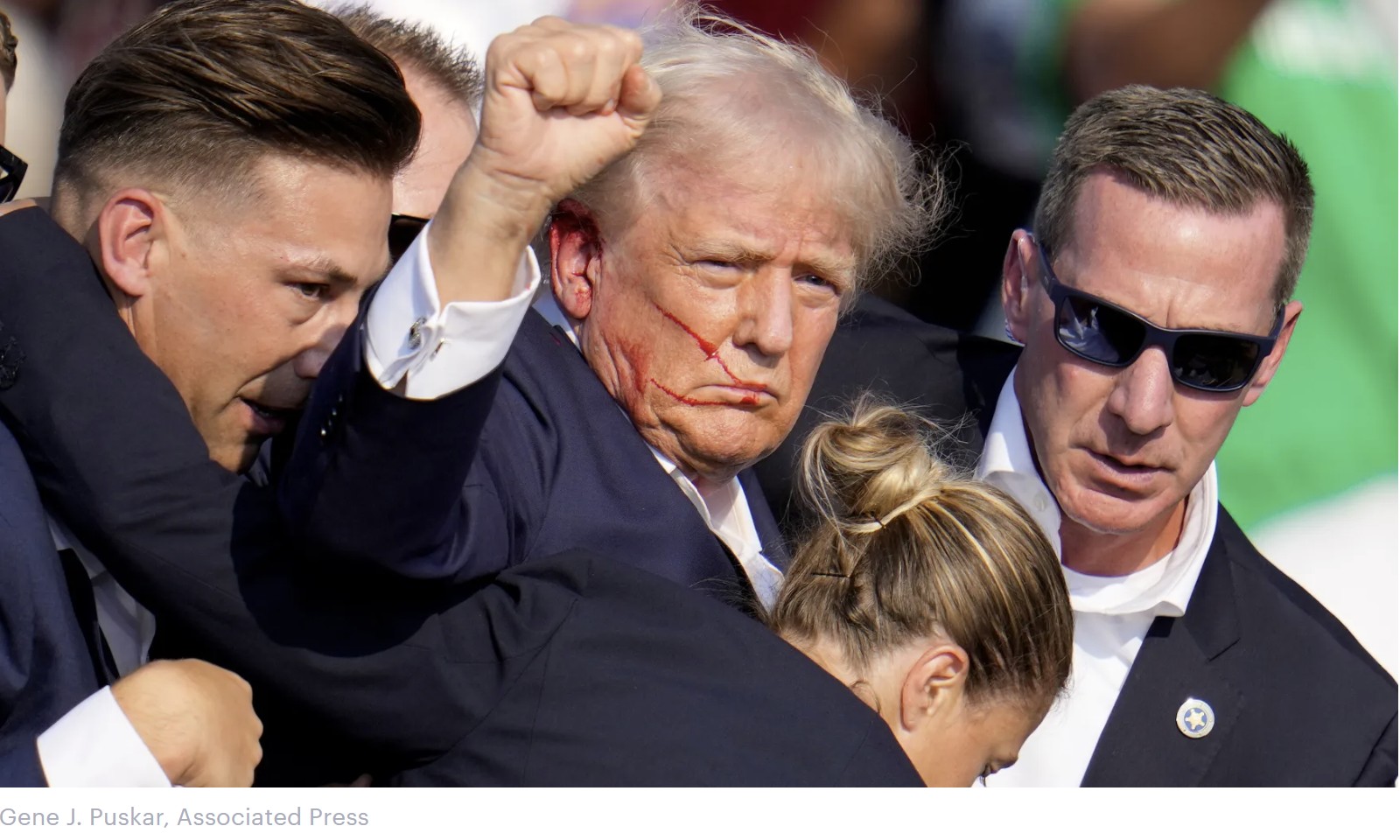
President Trump’s mint unveiled a coin commemorating his assassination attempt.

America’s last big birthday was the 1976 bicentennial. The 1969 moon landing solidified national pride, but the years leading up to 1976 were marked by a series of traumatic political events stemming from the Watergate scandal. Then, in April 1975, the Vietnam War, which had cost 58,220 American lives, ended in an embarrassing catastrophe. Meanwhile, the massive social movements for women’s rights and civil rights were taking hold and helped shape the nation we are today.

Having come of age as our nation endured turmoil and dramatic change, on July 4, 1976, I was proud to be an American, as a College Republican leader and an Army ROTC Cadet. From Fort Riley, Kan., I watched the bicentennial festivities with some of my fellow cadets. We were all proud that our country was forging ahead as the world’s greatest power.

Fifty years later, I feel less pride. As America nears its 250th birthday, dangerous trends threaten what our Founding Fathers envisioned when they boldly declared the United States into existence based on the revolutionary philosophy of unalienable rights “endowed by their Creator.” That philosophy was considered “revolutionary” because, for centuries, people’s rights and freedoms had been granted by kings rather than endowed by God.

Let’s examine four of those “dangerous trends” our founders would not have celebrated. Presented in no particular order, each poses an immediate and future national threat, beginning with the president’s desecration of national dignity.

On Flag Day — Sunday, June 14, which is also Trump’s 80th birthday — he will celebrate his passion for fighting by proudly hosting an Ultimate Fighting Championship mixed-martial arts event on the White House South Lawn. A 5,000-seat arena will be built to accommodate several cage-fight matches. This undignified display of violence, with fighter “weigh-ins” at the Lincoln Memorial, will diminish our national character at home and abroad. Is “Emperor Trump” reverting to the days of the Roman Colosseum, where gladiators fought to the death for the amusement of the masses?

 Another presidential throwback to Roman emperors was a proposed 250th-anniversary “Semiquincentennial $1 Coin” featuring Trump’s face and the inscriptions “Liberty,” “In God We Trust,” and “1776-2026.” More outrageous, in October, the Treasury unveiled a dollar coin with Trump’s iconic “fight-fight-fight” fist-pump visage.

Thankfully, half of Americans will celebrate the news that no official Trump coins will be minted in time for the 250th, at least according to current plans. The founders can applaud that one from their graves. Many believe, as I do, that a “fight-fight-fight” coin would have desecrated our national dignity.

However, on Monday, Trump managed to do that anyway by issuing the most outrageous, “inexplicable,” false political statement in response to the tragic murder of legendary Hollywood filmmaker Rob Reiner and his wife. The bipartisan fallout continues on that one. On the cusp of our 250th anniversary year, George Washington’s 47th successor drove a stake through the last vestige of national civility, decency, and moral presidential leadership, just two months after bulldozing the East Wing of the White House.

The next dangerous trend in the semiquincentennial era is the imbalance among the legislative, executive and judicial branches. Our founders would be dismayed by the now weakened legislative branch they designed in Article 1 of the Constitution. It was the Constitution’s centerpiece, the branch closest to the people, where laws originate and where the power to tax and declare war resides.

Now the legislative branch has been willfully eroded and usurped by the executive branch, with the current occupant coercing legislators’ votes through fear and threats of primary challenges. The president sometimes acts more like a king, against whom the founders rebelled and declared independence.

Furthermore, the judicial branch, constitutionally described as “the judicial power,” that is “vested in one supreme Court,” has now often acted as a rubber stamp for the executive branch. Moving forward, our national challenge is whether the three coequal branches will ever revert to the original balance that has kept our nation strong and free. Read more..


By Myra Adams – The Hill contributor

MYRA’S COMPLETE ARCHIVE IS HERE

Reposted from The Hill – Dec. 5, 2025

In what President Trump calls the “golden age of America,” Democratic Party ads that quote the president will write themselves.

This messaging strategy could be effective because his name will appear — metaphorically speaking, anyway — at the top of every ballot during next year’s midterm elections. 

Throughout 2026, voters can expect a surge of shocking, unpresidential statements and Truth Social posts that quickly turn into ads. Democrats are already relishing this year’s most outrageous “Trumpisms,” which will make their job easier. Let’s review a series of quotes that Democrats could use to win back Congress.

“They came up with a new word — ‘affordability.’”

One can imagine that Democratic communication teams cheered after hearing Trump mock the word “affordability,” — sarcastically exaggerating each syllable as if the issue were a joke. More politically damaging, his quote was amplified by the U.S.-Saudi Investment Forum setting. This Trump-hosted billionaire boys club drew the world’s most powerful business leaders and wealthiest investors to the Kennedy Center on Nov. 19.

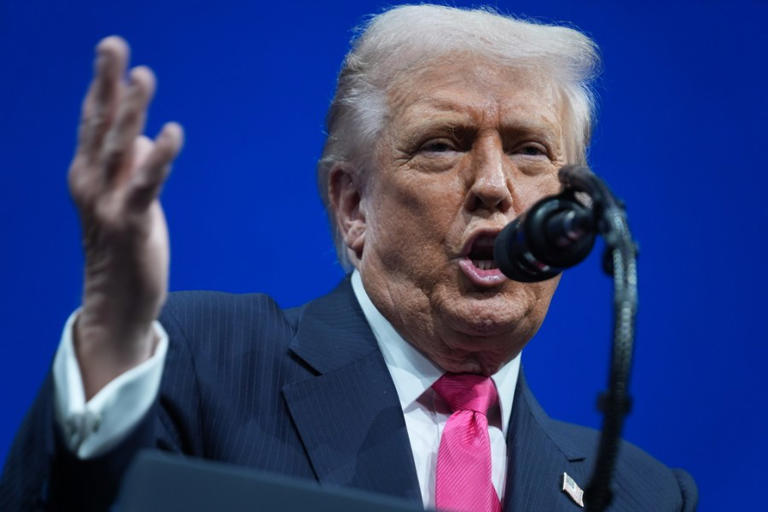
Mocking “affordability” from that podium screamed “Trump is out of touch,” since it was the top reason Republicans got crushed during last month’s off-year elections. Then, Trump complained, “I mean, we’re bringing prices down, but they came up with a new word, affordability.”

In a suggested future ad, a voiceover could explain: “When Trump says ‘they,’ he means you and your family who are living this affordability crisis. The president can mock affordability, and you can elect Democrats to Congress.”

During his Cabinet meeting this week, Trump added more fuel to the affordability fire, saying, “The word affordability is a Democrat scam.” That remark could generate another ad asking, “Why is affordability Trump’s least favorite word?” highlighting rising health care costs and soaring prices across all sectors, for which even Trump’s own supporters are blaming him. Read more..


By Myra Adams – The Hill contributor

MYRA’S COMPLETE ARCHIVE IS HERE

Reposted from The Hill – Nov. 21, 2025

Decades before Donald Trump was elected president in 2016, he displayed his name on buildings, locations and products to build a luxury lifestyle brand.

After opening the Trump Tower flagship in 1983 on New York City’s prestigious Fifth Avenue, he embarked on a promotional journey where anything seemed possible. Although it often was a turbulent and scandalous ride, he ultimately changed both national and global history.

Forty-two years later, Trump’s story is still evolving and could continue to evolve for decades, driven by his family’s relentless pursuit of wealth, fame and power.

Now that Trump is a lame-duck second-term president, there is an increased urgency for his “Trumpification” of America, including ample opportunities for leaders to curry favor by renaming things after him.

Let’s review the current list, starting with two major airports.

This month, Florida state Rep. Meg Weinberger (R) proposed legislation to rename Palm Beach International Airport as “Donald J. Trump International Airport,” where the hometown president parks Air Force One. Weinberger posted on X, “America’s greatest president deserves an airport that bears his name.”

If passed the Florida Legislature passes it, Republican Gov. Ron DeSantis (R) could sign it. The term-limited governor, who will need a new job in 2027, will have this chance to show loyalty to Trump.

Still, expect turbulence before landing. Last week, the Palm Beach Post published a letter from an angry reader: “By renaming everything in his name, this country is glorifying an egotistical dictator. Why should we honor this president who has done so much damage to this country?”

The eight commercial airports named after U.S. presidents were either named posthumously or years after they left office.

The last presidential renaming was Clinton National Airport in Little Rock, Ark., in 2012. Bill Clinton had left office in January 2001. Likewise, Ronald Reagan Washington National Airport, immediately across the Potomac from the District, was renamed in on Reagan’s birthday in 1998, a decade after he had left office. Thus, legislation to rename Palm Beach International Airport for the incumbent president could be grounded. Even so, in July, the airport’s Southern Boulevard has already been ceremonially renamed in Trump’s honor, so who knows?

Three days after Trump’s second inauguration, Rep. Addison McDowell (R-N.C.), along with four Republican original co-sponsorsintroduced a bill “to designate the Washington Dulles International Airport in Virginia as the ‘Donald J. Trump International Airport.’”

Trump’s ego would surely swell if the larger (although much less convenient) Dulles Airport were renamed, compared to the smaller Reagan National. That bill was sent to the Subcommittee on Aviation in February, where it is dead on arrival.

Bold prediction: Dulles will be renamed “Trump” after he wins a landslide third term.

Or how about the Kennedy Center? Ambitious first-term Rep. Robert Onder (R-Mo.) has introduced a bill “to designate the John F. Kennedy Center for the Performing Arts as the ‘Donald J. Trump Center for the Performing Arts.’” Onder’s press release announced it as the “Make Entertainment Great Again (MEGA) Act.” The bill was sent to the Subcommittee on Economic Development, Public Buildings, and Emergency Management, but no entertaining hearings have been scheduled. Read more..


By Myra Adams – The Hill contributor

MYRA’S COMPLETE ARCHIVE IS HERE

Reposted from The Hill: Nov. 7, 2025

The 2028 presidential election is exactly three years from today. Imagine a burned-out nation on the verge of a meltdown from campaign fatigue.

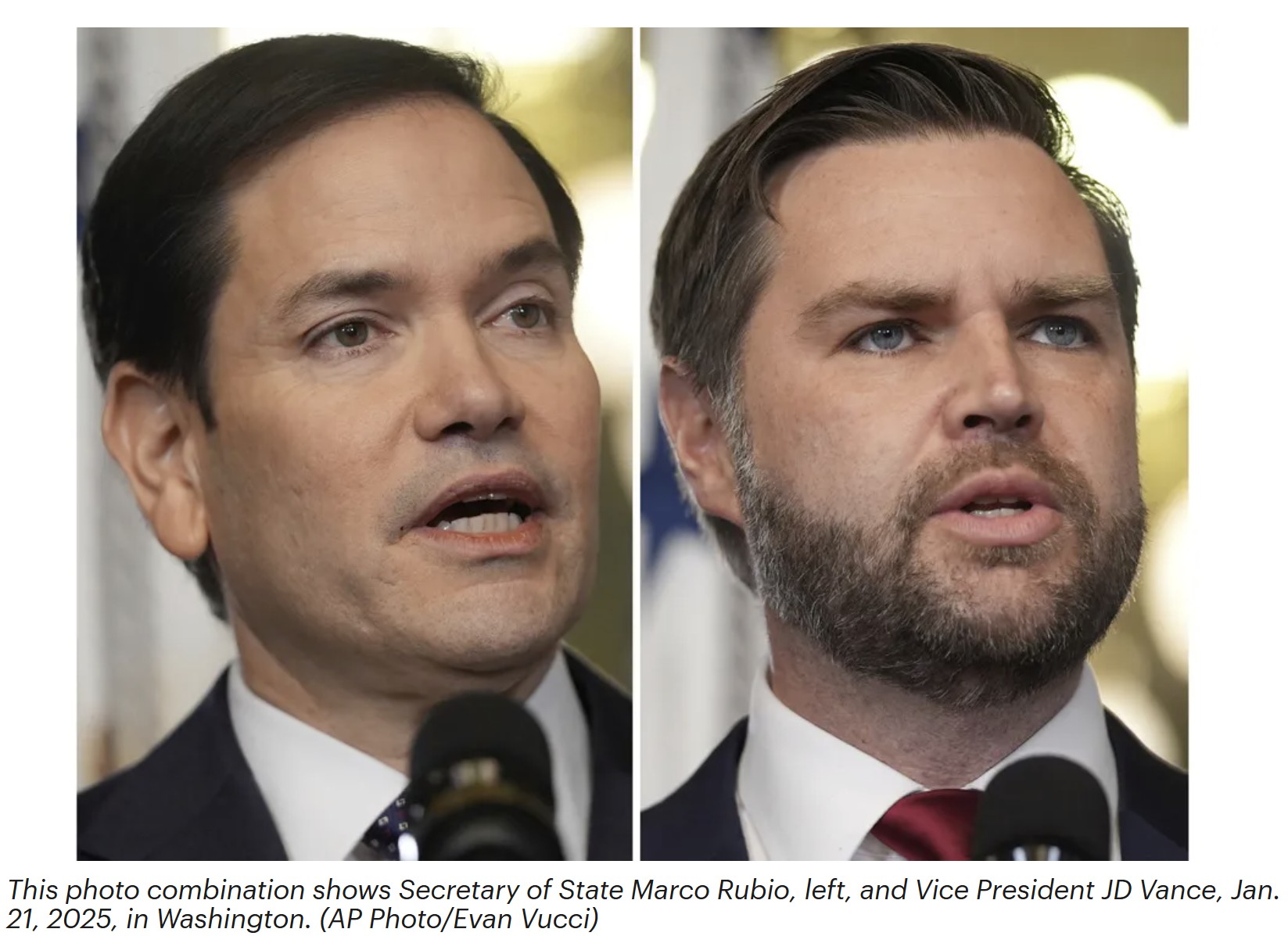
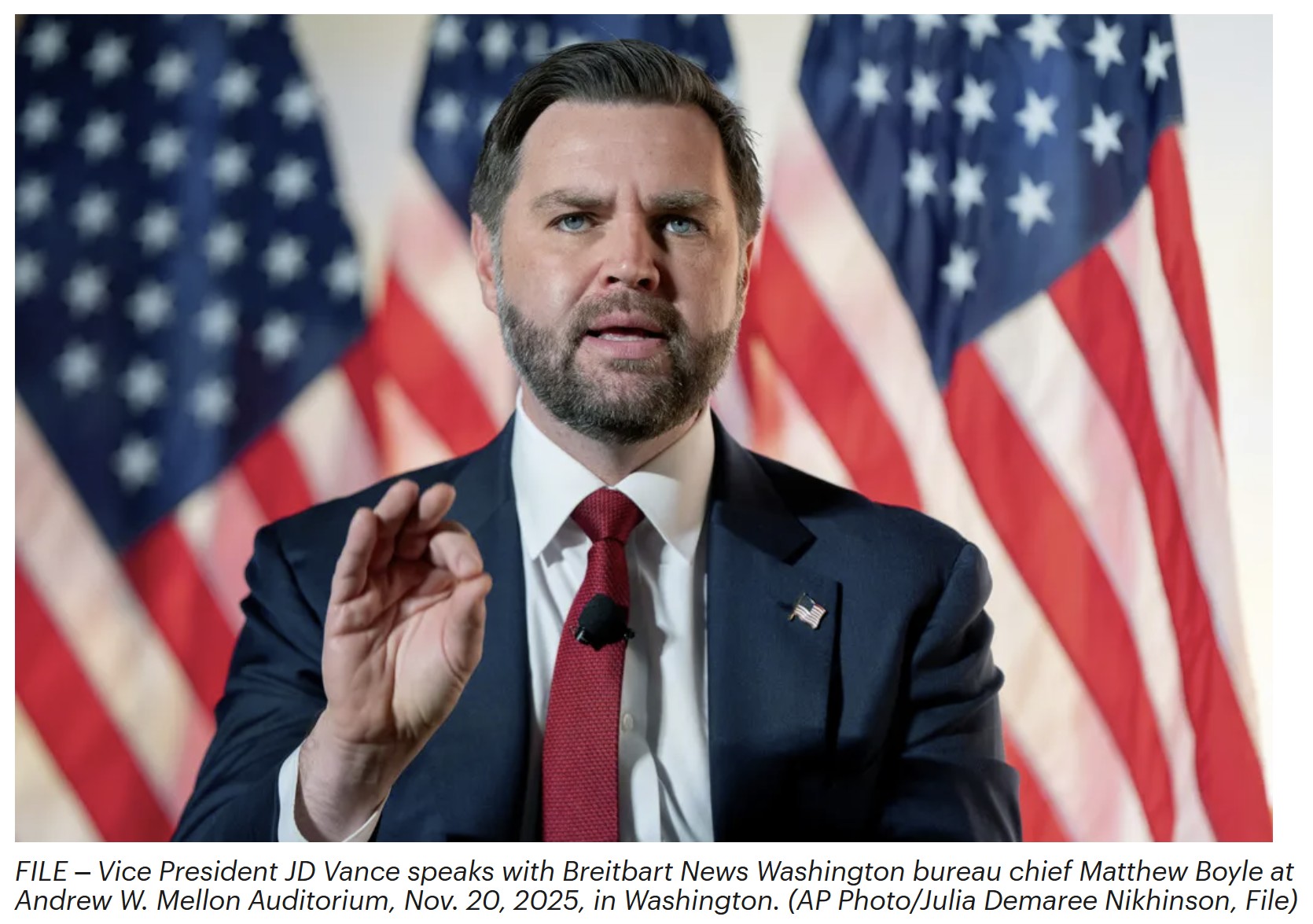
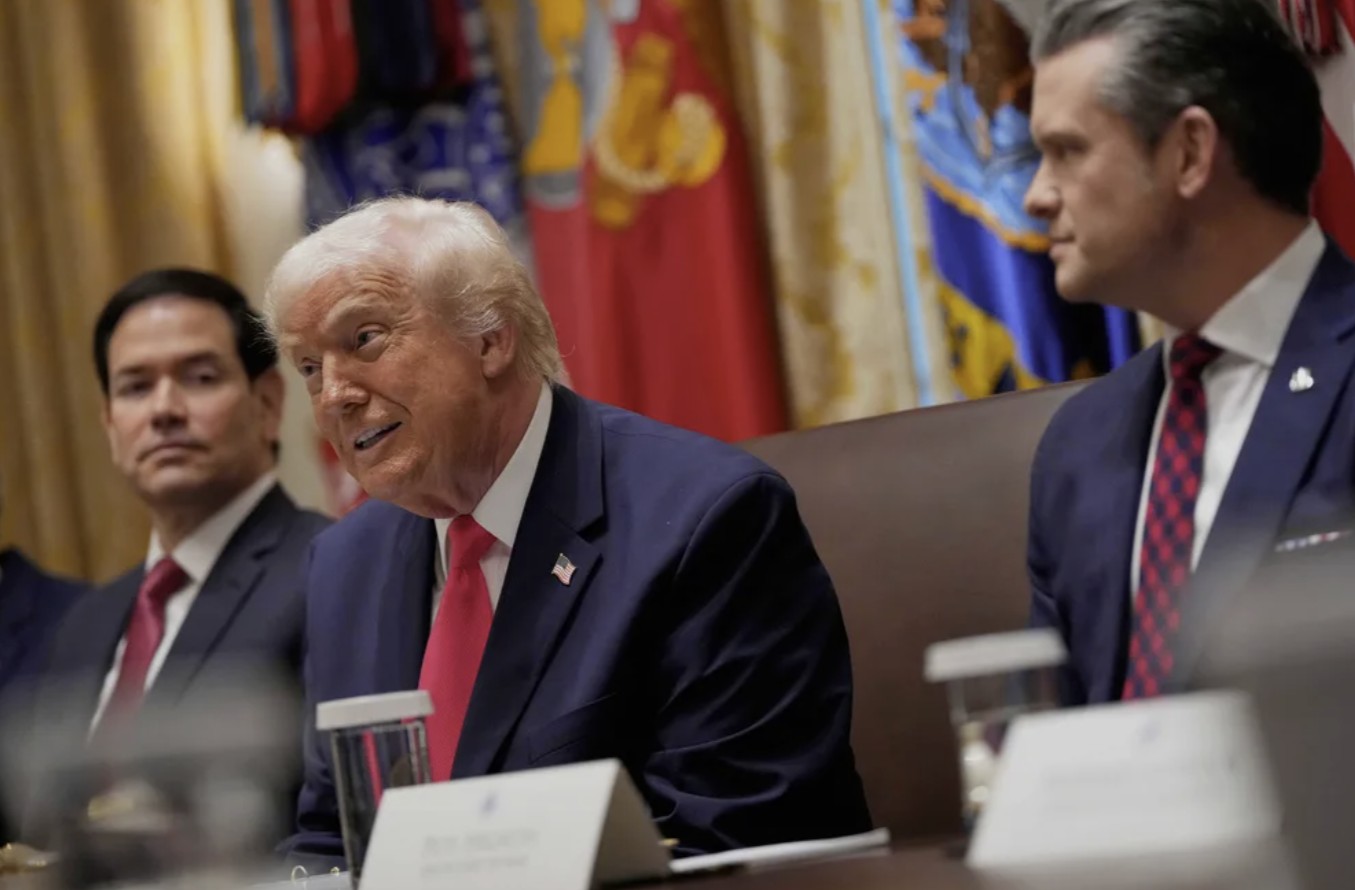
For Republicans, the question of who will be President Trump’s MAGA-man successor is already a hot-button issue. Recently, the president “endorsed” his dream ticket — Vice President JD Vance and Secretary of State Marco Rubio — and gloated, “We have JD obviously, the vice president, who’s great. Marco’s great. I’m not sure if anyone would run against those two. I think if they ever formed a group, it would be unstoppable.”

Nonetheless, Earth will orbit the sun three times before voters have their final say. Therefore, alternative Republican candidates could emerge while Republican and Independent primary voters might reject a predetermined, finger-on-the-scale ticket anointed by an unpopular lame-duck president. As shown by Tuesday’s off-year election, Trump’s name was invisibly at the top of every ballot, and he got slammed.

Assuming no seismic events occur before Nov. 7, 2028, that lead to a President JD Vance, expect Republican ticket drama to be relatively mild compared to the costly, brutal struggle that will produce a Democratic presidential nominee.   

In late September, The Hill published “Ranking the Democratic contenders for president in 2028.” California Gov. Gavin Newsom led that list of 10 names, and after Tuesday’s redistricting win, strengthened his top position.

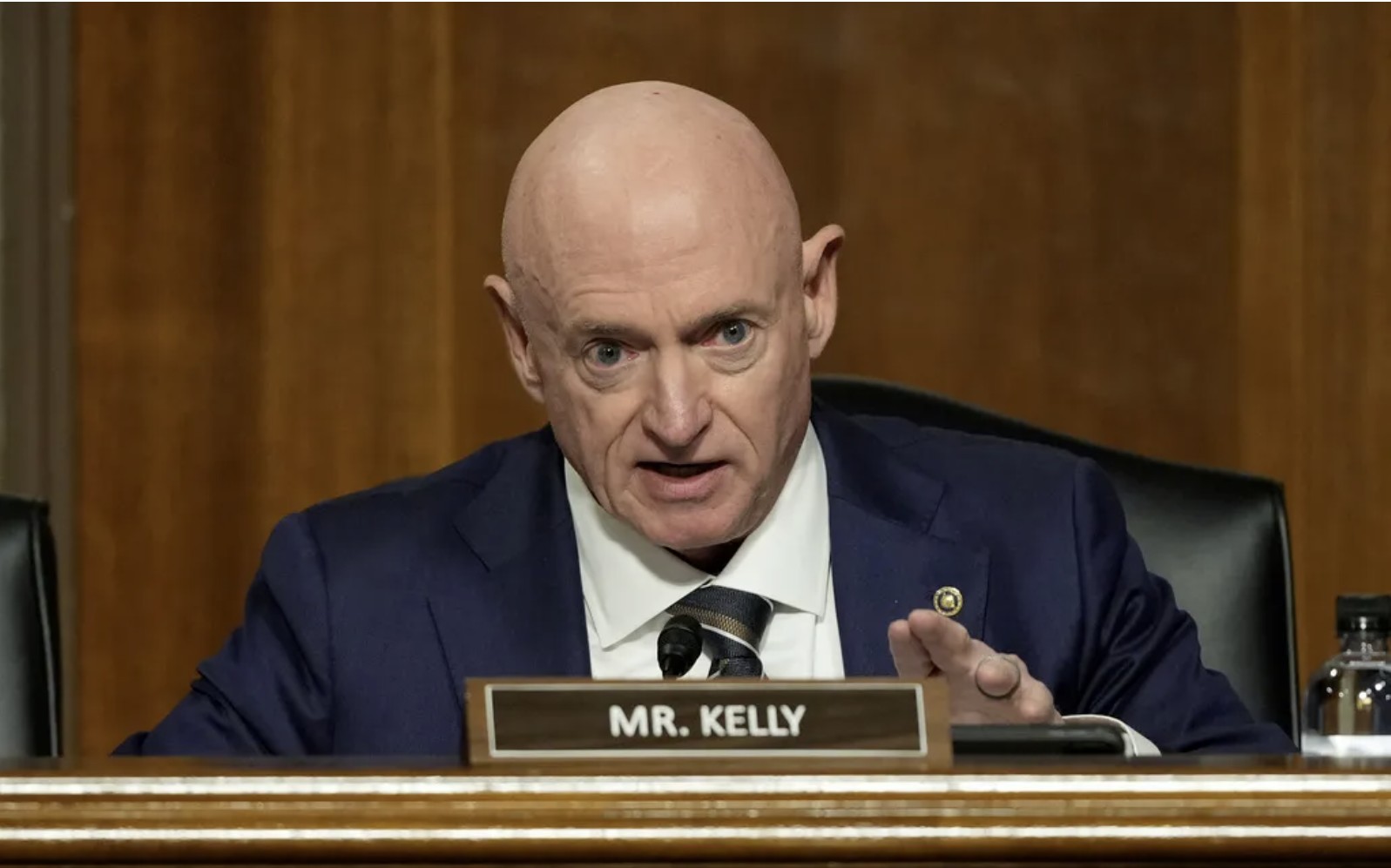
Not even on that list was Sen. Mark Kelly (D-Ariz.) — an oversight likely to change. In 2024, Kelly’s national profile rose after he was on Kamala Harris’s short list of potential vice presidential nominees, but she instead chose Minnesota Gov. Tim Walz. 

Now, the senior Arizona senator appears to be in a presidential exploratory “teasing mode.” During a July 27 CNN interview, “State of the Union” anchor Jake Tapper noted that Kelly was “videoconferencing in from Pennsylvania and recently did a town hall in Michigan.” When Tapper said, “Both of them are key battleground states” and asked, “Yes or no: Are you considering running for president in 2028?” Kelly coarsely responded, “I’m not going to give you a yes or no answer.”

Translation: Kelly is ground-testing his viability.

Also in July, Axios reported that Kelly had $7.9 million in his campaign coffers, which “can legally be transferred to a presidential campaign account.” Complicating his presidential decision is Kelly’s potential 2028 Senate reelection bid. In 2022, he won reelection with 51 percent — the same sort of narrow victory he enjoyed in the 2020 special election that gave him the remaining two years of the late Sen. John McCain’s (R-Ariz.) unfinished term. Undoubtedly, a 2028 Senate reelection campaign would be highly competitive in swing-state Arizona.

Furthermore, hinting at presidential interest, in September, Kelly was seen in South Carolina — an early, must-win primary state — speaking with key state legislators. He is a straightforward politician serving on both the Senate Armed Services Committee and the Select Committee on Intelligence. Keep an eye on Kelly’s name appearing in 2028 presidential rankings as his national media profile rises, showing that he is articulate, informed and authentic.

This week, The Hill called Kelly “a prominent centrist who is in the middle of the talks,” along with eight other Democratic senators, who are working to end the government shutdown. However, that “prominent centrist” is also an extraordinary American hero in an age when showman “celebrity” candidates and attention-seeking officials dominate the media.

Kelly, a former astronaut, flew on four Space Shuttle missions from 2001 to 2011, commanding his last two after piloting the first two. Before joining NASA in 1996, he was an experienced naval aviator and test pilot, completing 375 carrier landings and 39 combat missions during Operation Desert Storm.

In the political arena, Kelly’s distinguished military and astronaut careers should never be underappreciated, because doing so diminishes American greatness. Considering the high-tech, globally competitive era in which a world war often seems just a headline away, Kelly’s exceptional skills honed through the military, space, and science, with experience on key Senate committees, could translate into presidential leadership during these unstable times.

Personally traumatic was the horrific shooting of his wife, former Rep. Gabby Giffords (D-Ariz.). In January 2011, while holding a supermarket parking lot forum in Tucson, Ariz., Giffords survived a bullet to the head. Six of her constituents died and 12 others were wounded. Mark Kelly’s reaction was a profile in courage, love, and sacrifice. He retired from NASA six months later to help with Giffords’ recovery.

Read more..


By Myra Adams – The Hill contributor

MYRA’S COMPLETE ARCHIVE IS HERE

Reposted from The Hill: Oct. 25, 2025

Although President Trump insists he is “not a king,” he oversees a global corporate empire focused on continuously expanding the Trump brand, actively involving his “royal” family. Never in U.S. history have a president’s business interests been so openly and directly connected to government affairs under his influence.

Forbes wealth profile states that Trump “has presided over the most lucrative presidency in American history,” estimating a net worth increase from $2.3 billion in 2024 to $5.1 billion. Forbes also reports his total net worth as $7.1 billion.

Let’s review how the Trump Family Empire is enriching itself from presidential policies and access, starting with the youngest members.

Kia Trump, age 18: The president’s oldest grandchild, a high school senior and talented golfer, has skillfully branded herself and turned the Trump name into a “KT” monogrammed sweatshirt line. Priced at a steep $130, Kia (Don Jr.’s daughter) wore the sweatshirt while attending the prestigious Ryder Cup with “grandpa,” earning priceless free advertising.

Barron Trump, age 19: The only child of Trump and first lady Melania is a New York University college student who has earned $150 million through World Liberty Financial, his family’s cryptocurrency venture. (More on that below.)

The most consequential long-term reports suggest that Barron might be appointed to TikTok’s board. But first, the complicated deal must close, transferring ownership from Chinese company ByteDance to a group of American billionaires (Trump allies) and global investors. Watch for these strategic developments, which could position Barron as a power player while boosting the Trump Family Empire.

Eric Trump, age 41: He is the youngest of Trump’s three children born to Ivana Trump. During his father’s second term, Eric became a No. 1 best-selling author and global titan. In August, a Wall Street Journal article ran, titled: “How Eric Trump Became One of Crypto’s Greatest Evangelists — Real-estate executive has been at the vanguard of the first family’s rapid entry into the cryptocurrency business.”

Just weeks before the 2024 election, Eric co-founded the cyber venture World Liberty Financial with his father, two brothers and friends. Wealth has no limit when the crypto industry contributes millions to your dad’s presidential campaign. After the inaugural donations, payback came when Trump controlled crypto regulation, or the lack thereof. Recently, reportedly, the Trump Family Empire earned over $1 billion through their various crypto ventures, with Eric on record saying it’s “probably more.”

Eric Trump’s official title is “executive vice president of the Trump Organization.” His corporate bio states that “he oversees the company’s vast global real estate portfolio.”

Fortunately, when your dad is president and playing hardball without rules, doors of opportunity open worldwide. This month’s open mic exchange between President Trump and Indonesian President Prabowo Subianto illustrates why Trump.com features new developments in countries that might conflict with U.S. foreign policy. But there are no conflicts when growing the Trump Family Empire — only opportunities. Read more..


By Myra Adams – The Hill contributor

MYRA’S COMPLETE ARCHIVE IS HERE

Reposted from The Hill: Oct. 10, 2025

A person carrying an umbrella walks past the National Debt Clock, Monday, April 7, 2025, in New York. (AP Photo/Yuki Iwamura)

My pessimistic view of our nation’s future triggered me to write “Five reasons American decline appears irreversible” in January 2024. That rambunctious presidential election year now feels like ancient history. Twenty-one months later, new data and events have accelerated the decline, prompting this update. As before, we begin with the key reason.

1. Uncontrollable U.S. debt

According to the U.S. Debt Clock in mid-January 2024, the national debt stood at $34 trillion. That debt surpassed the $27.8 trillion gross domestic product, resulting in an irresponsible debt-to-GDP ratio of 122.30 percent. As of today, the national debt has increased to $37.8 trillion, while the GDP has grown to $30.3 trillion, for an alarming debt-to-GDP ratio of 124.84 percent.

In June, Treasury Secretary Scott Bessent spoke optimistically about “growing our way out of debt,” saying, “If the economy grows faster than the debt, we stabilize the country.” But “if” was a fantasy. Based on current trends, the Debt Clock predicts that by 2029, the federal debt-to-GDP ratio will be 141 percent.

Therefore, according to Bessent’s philosophy, our nation is destabilizing rapidly as interest payments on the national debt consume an ever-increasing share of the U.S. budget. Interest now exceeds $1 trillion, making it the government’s third-largest expense. Debt service has even surpassed the defense budget, a notable shift from January 2024, when interest on the national debt was the fourth-largest budget item.

2. Low student achievement

To offset the debt, robust economic growth must be driven by the next generation of educated, intelligent workers. However, America’s future is clouded by an epidemic of student underachievement.

In my January 2024 piece, I referenced the 2022 National Report Card, which found that only 29 percent of fourth-graders and 20 percent of eighth-graders were proficient in math. COVID was partially blamed, but scores were decreasing well before the pandemic closed schools and forced kids to learn online.

Last month, the 2024 National Report Card revealed 45 percent of high school seniors scored below “basic” competency in math — the lowest since 2005. Reading scores were worse, but math aptitude is especially troubling since it translates to high-tech innovation, which drives economic growth.

Sadly, our nation has fallen behind. In 2022, America’s 15-year-olds ranked 34th worldwide in math, science and reading, with a score of 465 on PISA (Program for International Student Assessment), a test conducted every three years. Singapore scored the highest with 575, followed by China at 552. Another PISA test is underway, with scores expected to be released next year.

In a technology-dominated world, low U.S. achievement necessitates a reliance on skilled foreign workers, now exacerbated by the Trump administration’s high-cost-to-work anti-immigrant policies. Furthermore, abysmal student scores perpetuate the next irreversible sign of decline. Read more..


By Myra Adams – The Hill contributor

MYRA’S COMPLETE ARCHIVE IS HERE

Reposted from The Hill: Sept. 26, 2025

Often, after severe weather events or other disasters, grocery store shelves quickly empty and are not restocked immediately. During these times, people realize that trucking is the backbone of the nation. Trucks deliver nearly 75 percent of all freight, and when they stop moving, the country grinds to a halt. In less than a week, almost every grocery shelf will be empty, followed soon by all the essential consumer goods.

For these reasons, Americans need to be aware of the long-haul trucking crisis, its impact on our daily lives, and the cost of living.

The trucking industry reflects the overall state of the American economy, grappling with significant challenges, including worker shortages, integrating new technology, rising insurance and business costs, aging infrastructure, and regulatory hurdles. Long-term, the industry’s problems mirror dramatic generational societal shifts in demographics, workplace culture and immigrant labor issues.

Simply put, truck driving is a traditional, unglamorous job with little prestige, modest pay, few opportunities for advancement, and conflicts with family life. As a result, a significant gap exists between these perceptions and the industry’s vital role in keeping America moving. Meanwhile, trucking companies struggle to recruit younger drivers, who leave at unprecedented rates, with turnover reportedly exceeding 90 percent at the largest carriers.

Trucking industry demographics reveal the root of the current and worsening crisis, with an expected shortfall of 160,000 drivers by 2030.

According to a study by the American Transportation Research Institute, dwindling baby boom generation truckers, whose average retirement age was 62, along with Generation X drivers, aged 45 to 60, account for “62 percent of the trucking workforce.” The industry is alarmed that “only 20 percent of truck drivers are under 35, compared to 35 percent of the overall labor force. That suggests the younger generations are not as interested in trucking,” the study admits.

No wonder, because for decades, the entertainment industry and society at large have stereotypically portrayed truck drivers as rough-looking, pot-bellied, white males at the bottom of the social strata. Thus, it is rare for anyone to grow up saying, “I want to be a truck driver.”

Therefore, to attract younger drivers, the trucking industry must be rebranded and restructured as a well-paying career for both men and women, taking pride in a job that contributes to making America great. Read more..


By Myra Adams – The Hill contributor

MYRA’S COMPLETE ARCHIVE IS HERE

Reposted from The Hill: Sept. 12, 2025

President Trump wanted a Department of War. Days later, he got what could be the start of World War III.

On Sept. 5, Trump signed an executive order to reinstate the name “Department of War,” which had been archived since the Department of Defense was created by the National Security Act of 1947.

At the name-change signing, “Secretary of War” Pete Hegseth acted with his usual “warrior ethos,” spouting aggressive, rehearsed phrases about how the revived name conveyed “maximum lethality, not tepid legality” and “violent effect, not politically correct,” to warn our enemies that “We’re gonna raise up warriors. Not just defenders.”

A White House fact sheet stated the name change will “signal to adversaries America’s readiness to wage war to secure its interests.”

Trump’s “readiness to wage war” is about to be tested. On Tuesday evening, NATO forces successfully scrambled jets to shoot down Russian drones that breached Polish airspace.

Since last Friday’s lethal name change, America’s most formidable adversaries, China and Russia, have been quiet about Trump’s new strategic message. That raises the question whether the Russian-launched drones over Poland were their “public statement.” Consider last week’s curious timeline.

On Sept. 2, Chinese President Xi Jinping delivered a powerful statement showcasing his own “maximum lethality” by hosting an impressive military parade in Beijing. The display featured an abundance of advanced weaponry and over 10,000 highly disciplined troops.

Watching alongside Xi were Russian President Vladimir Putin and North Korean leader Kim Jong Un. Although the parade ostensibly commemorated the end of World War II, it signaled how China is leading a new world order, fearlessly challenging eight decades of post-war military and economic dominance by the U.S.

Was Trump jealous and threatened by Xi’s spectacle of strength compared to his own much hyped but largely underwhelming military parade in Washington on July 14? Two actions could point to yes.

During Xi’s parade, Trump engaged in a bizarre act of presidential diplomacy. On Truth Social, he accused China, Russia and North Korea of conspiring against the U.S. Never has an American president publicly asked such a taunting question.

Three days later came the rebranded, more bellicose “Department of War,” which appears to be Trump’s way of countering Xi’s parade, portraying military strength through signage. Read more..


By Myra Adams – The Hill contributor

MYRA’S COMPLETE ARCHIVE IS HERE

Reposted from The Hill: August 29, 2025

Fourteen months away from Nov. 3, 2026, I feel confident making one prediction: Next year’s midterm election will be the most dramatic in American political history.

That prediction is based on the “D” in Donald Trump standing for “drama.” Meanwhile, a recent poll found 52 percent of Americans believe he is a “dangerous dictator” — a timely topic this week.

In 2023, Trump famously vowed not to be a dictator “except for day one.” Fast forward to Monday, when Trump said, “I am not a dictator,” responding to criticism about deploying militarized National Guard troops for “emergency” crime control in Washington D.C. The president also threatened to send more troops to cities in blue states, despite gubernatorial opposition.

During Tuesday’s Cabinet meeting, Trump continued his dictator talk with denials and justifications. Doubling down, he ordered Secretary of Defense Pete Hegseth to prepare National Guard units for rapid nationwide deployment.

Although Trump’s name won’t appear on the midterm ballot, his authoritarian tendencies will remain a significant issue. The president’s aggressive leadership style — characterized by fear, intimidation and intrusive actions expanding executive power — was detailed in Project 2025, Trump’s second-term manifesto, now almost half implemented.

Project 2025 is based in large part on the controversial “unitary executive theory,” justifying how the president can govern as if “I am the law.” Daily headlines demonstrate how Trump has embraced this theory with little pushback from Republicans in Congress.

All the above set the stage for the midterm and seven specific factors likely to make the 2026 elections the most contentious ever. Read more..


By Myra Adams – The Hill contributor

MYRA’S COMPLETE ARCHIVE IS HERE

Reposted from The Hill: August 1, 2025

Since 2024, I have received Trump campaign emails at least once or twice a day, emblazoned with provocative MAGA-red meat-headlines. A recent one read, “If Democrats seize power and take back the House, they’ll have one goal in mind: Impeach, Impeach, Impeach!”

Visually dominating every email is a logo, shaped like a bumper sticker, that screams “Trump-Vance Make America Great Again! 2025.” The sender address, “rnchq.com,” is the headquarters of the Republican National Committee.

These daily messages contribute to Team Trump’s very successful fundraising machine. In June, the RNC raised $16.2 million, “torching” the Democratic National Committee’s $8.6 million. These numbers signal record-breaking campaign spending for the 2026 midterm elections, already in full swing.

Although these bombastic-sounding emails clutter my inbox, I don’t unsubscribe. After the presidential election, I recognized that these messages were windows into Trump’s mind, for he is the master wizard of strategic political communication. Surely he doesn’t write them himself, but he must approve the general tone and content, or else they are at least modeled after his messages.

The emails serve multiple purposes — most prominently generating cash and confirming database information, while continually boosting and thanking his base. The messages highlight Trump’s achievements, identify targets of outrage, solidify his relationship with the recipients, promote policies, and rally support for pending legislation — all with bravado about Trump’s presidential greatness.

Read more..