Economic Crisis


By Myra Adams – The Hill contributor

MYRA’S COMPLETE ARCHIVE IS HERE

Reposted from The Hill: Nov. 7, 2025

The 2028 presidential election is exactly three years from today. Imagine a burned-out nation on the verge of a meltdown from campaign fatigue.

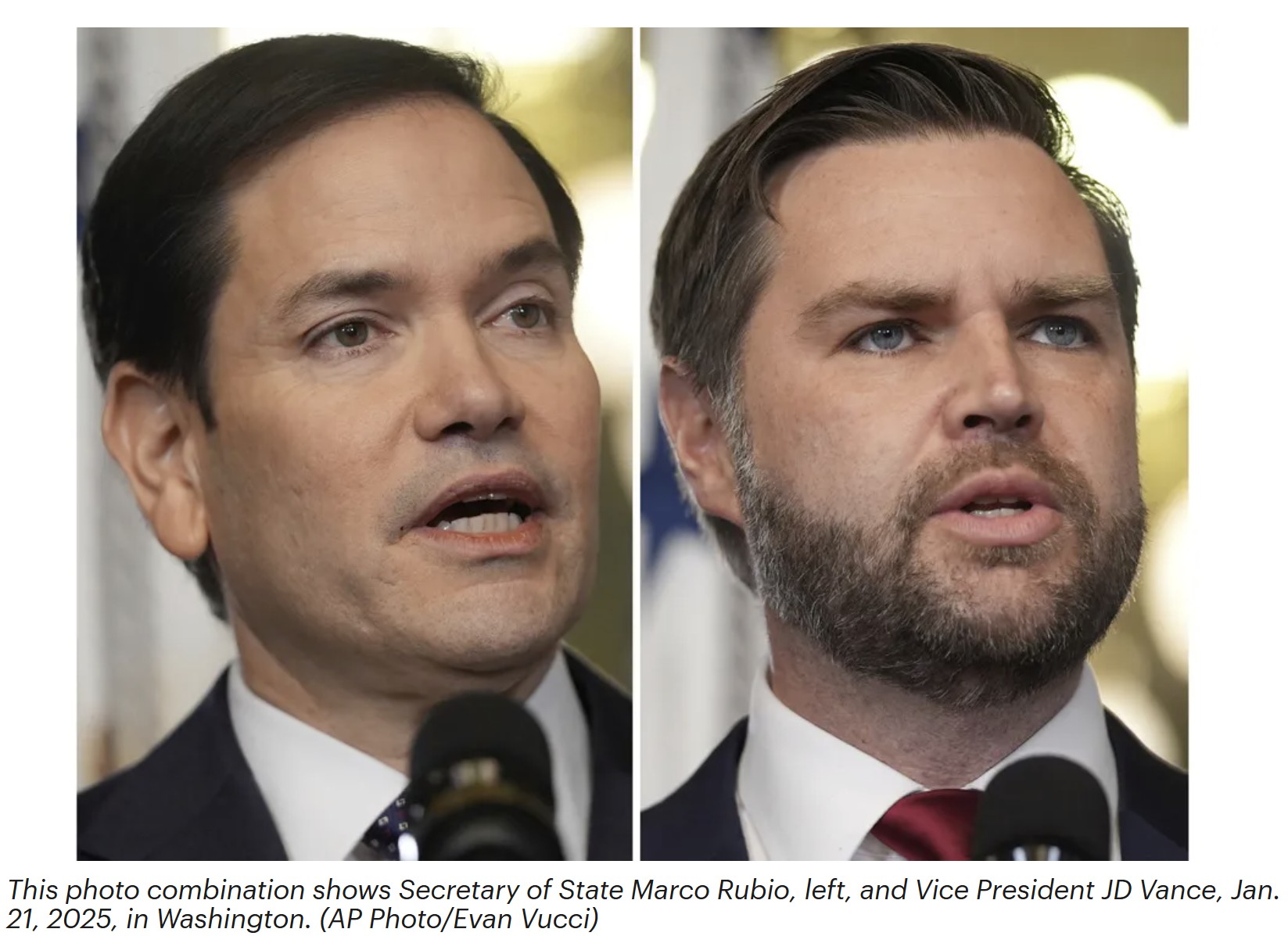
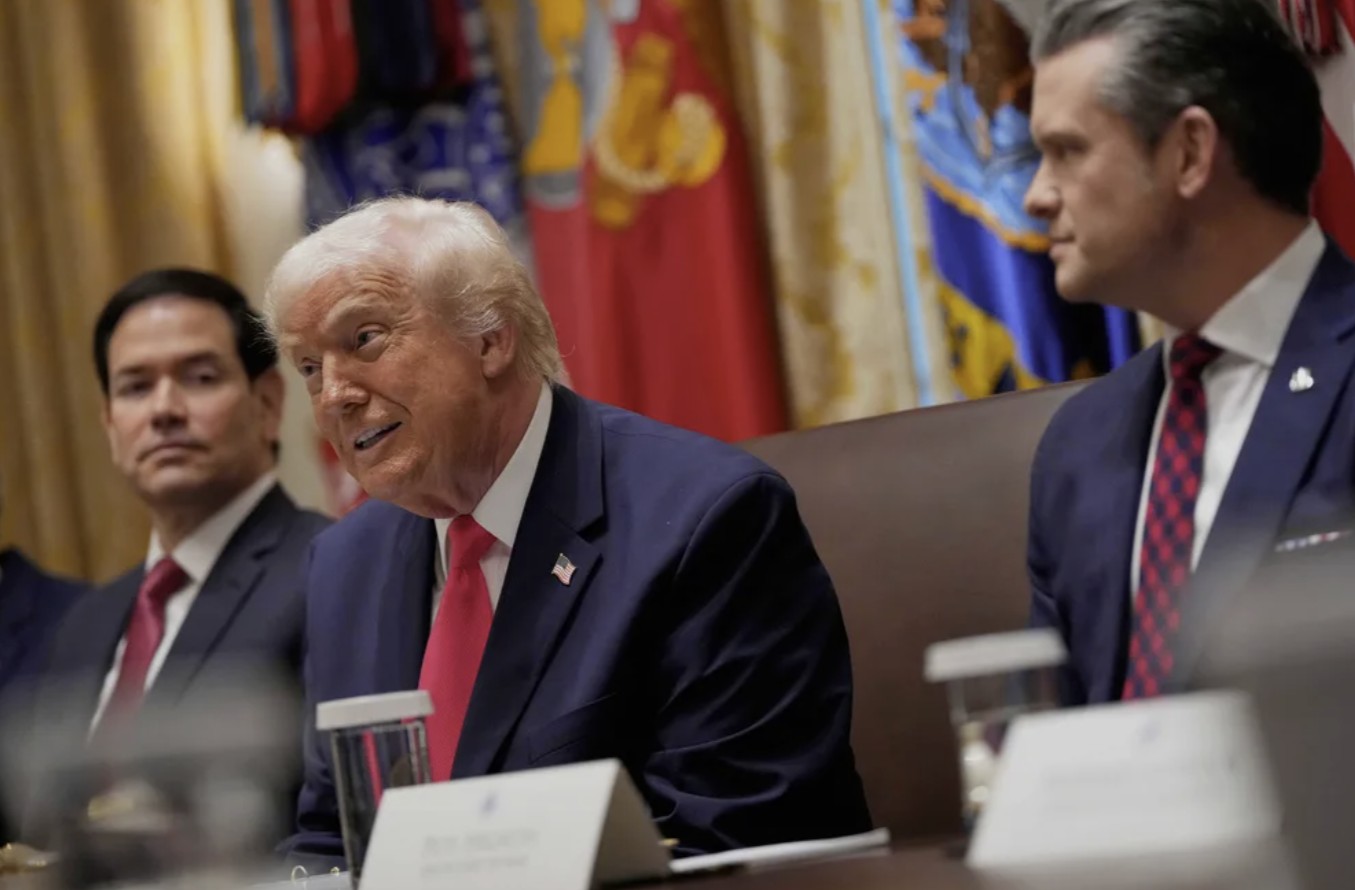
For Republicans, the question of who will be President Trump’s MAGA-man successor is already a hot-button issue. Recently, the president “endorsed” his dream ticket — Vice President JD Vance and Secretary of State Marco Rubio — and gloated, “We have JD obviously, the vice president, who’s great. Marco’s great. I’m not sure if anyone would run against those two. I think if they ever formed a group, it would be unstoppable.”

Nonetheless, Earth will orbit the sun three times before voters have their final say. Therefore, alternative Republican candidates could emerge while Republican and Independent primary voters might reject a predetermined, finger-on-the-scale ticket anointed by an unpopular lame-duck president. As shown by Tuesday’s off-year election, Trump’s name was invisibly at the top of every ballot, and he got slammed.

Assuming no seismic events occur before Nov. 7, 2028, that lead to a President JD Vance, expect Republican ticket drama to be relatively mild compared to the costly, brutal struggle that will produce a Democratic presidential nominee.   

In late September, The Hill published “Ranking the Democratic contenders for president in 2028.” California Gov. Gavin Newsom led that list of 10 names, and after Tuesday’s redistricting win, strengthened his top position.

Not even on that list was Sen. Mark Kelly (D-Ariz.) — an oversight likely to change. In 2024, Kelly’s national profile rose after he was on Kamala Harris’s short list of potential vice presidential nominees, but she instead chose Minnesota Gov. Tim Walz. 

Now, the senior Arizona senator appears to be in a presidential exploratory “teasing mode.” During a July 27 CNN interview, “State of the Union” anchor Jake Tapper noted that Kelly was “videoconferencing in from Pennsylvania and recently did a town hall in Michigan.” When Tapper said, “Both of them are key battleground states” and asked, “Yes or no: Are you considering running for president in 2028?” Kelly coarsely responded, “I’m not going to give you a yes or no answer.”

Translation: Kelly is ground-testing his viability.

Also in July, Axios reported that Kelly had $7.9 million in his campaign coffers, which “can legally be transferred to a presidential campaign account.” Complicating his presidential decision is Kelly’s potential 2028 Senate reelection bid. In 2022, he won reelection with 51 percent — the same sort of narrow victory he enjoyed in the 2020 special election that gave him the remaining two years of the late Sen. John McCain’s (R-Ariz.) unfinished term. Undoubtedly, a 2028 Senate reelection campaign would be highly competitive in swing-state Arizona.

Furthermore, hinting at presidential interest, in September, Kelly was seen in South Carolina — an early, must-win primary state — speaking with key state legislators. He is a straightforward politician serving on both the Senate Armed Services Committee and the Select Committee on Intelligence. Keep an eye on Kelly’s name appearing in 2028 presidential rankings as his national media profile rises, showing that he is articulate, informed and authentic.

This week, The Hill called Kelly “a prominent centrist who is in the middle of the talks,” along with eight other Democratic senators, who are working to end the government shutdown. However, that “prominent centrist” is also an extraordinary American hero in an age when showman “celebrity” candidates and attention-seeking officials dominate the media.

Kelly, a former astronaut, flew on four Space Shuttle missions from 2001 to 2011, commanding his last two after piloting the first two. Before joining NASA in 1996, he was an experienced naval aviator and test pilot, completing 375 carrier landings and 39 combat missions during Operation Desert Storm.

In the political arena, Kelly’s distinguished military and astronaut careers should never be underappreciated, because doing so diminishes American greatness. Considering the high-tech, globally competitive era in which a world war often seems just a headline away, Kelly’s exceptional skills honed through the military, space, and science, with experience on key Senate committees, could translate into presidential leadership during these unstable times.

Personally traumatic was the horrific shooting of his wife, former Rep. Gabby Giffords (D-Ariz.). In January 2011, while holding a supermarket parking lot forum in Tucson, Ariz., Giffords survived a bullet to the head. Six of her constituents died and 12 others were wounded. Mark Kelly’s reaction was a profile in courage, love, and sacrifice. He retired from NASA six months later to help with Giffords’ recovery.

Read more..


By Myra Adams – The Hill contributor

MYRA’S COMPLETE ARCHIVE IS HERE

Reposted from The Hill: Oct. 25, 2025

Although President Trump insists he is “not a king,” he oversees a global corporate empire focused on continuously expanding the Trump brand, actively involving his “royal” family. Never in U.S. history have a president’s business interests been so openly and directly connected to government affairs under his influence.

Forbes wealth profile states that Trump “has presided over the most lucrative presidency in American history,” estimating a net worth increase from $2.3 billion in 2024 to $5.1 billion. Forbes also reports his total net worth as $7.1 billion.

Let’s review how the Trump Family Empire is enriching itself from presidential policies and access, starting with the youngest members.

Kia Trump, age 18: The president’s oldest grandchild, a high school senior and talented golfer, has skillfully branded herself and turned the Trump name into a “KT” monogrammed sweatshirt line. Priced at a steep $130, Kia (Don Jr.’s daughter) wore the sweatshirt while attending the prestigious Ryder Cup with “grandpa,” earning priceless free advertising.

Barron Trump, age 19: The only child of Trump and first lady Melania is a New York University college student who has earned $150 million through World Liberty Financial, his family’s cryptocurrency venture. (More on that below.)

The most consequential long-term reports suggest that Barron might be appointed to TikTok’s board. But first, the complicated deal must close, transferring ownership from Chinese company ByteDance to a group of American billionaires (Trump allies) and global investors. Watch for these strategic developments, which could position Barron as a power player while boosting the Trump Family Empire.

Eric Trump, age 41: He is the youngest of Trump’s three children born to Ivana Trump. During his father’s second term, Eric became a No. 1 best-selling author and global titan. In August, a Wall Street Journal article ran, titled: “How Eric Trump Became One of Crypto’s Greatest Evangelists — Real-estate executive has been at the vanguard of the first family’s rapid entry into the cryptocurrency business.”

Just weeks before the 2024 election, Eric co-founded the cyber venture World Liberty Financial with his father, two brothers and friends. Wealth has no limit when the crypto industry contributes millions to your dad’s presidential campaign. After the inaugural donations, payback came when Trump controlled crypto regulation, or the lack thereof. Recently, reportedly, the Trump Family Empire earned over $1 billion through their various crypto ventures, with Eric on record saying it’s “probably more.”

Eric Trump’s official title is “executive vice president of the Trump Organization.” His corporate bio states that “he oversees the company’s vast global real estate portfolio.”

Fortunately, when your dad is president and playing hardball without rules, doors of opportunity open worldwide. This month’s open mic exchange between President Trump and Indonesian President Prabowo Subianto illustrates why Trump.com features new developments in countries that might conflict with U.S. foreign policy. But there are no conflicts when growing the Trump Family Empire — only opportunities. Read more..


By Myra Adams – The Hill contributor

MYRA’S COMPLETE ARCHIVE IS HERE

Reposted from The Hill: Oct. 10, 2025

A person carrying an umbrella walks past the National Debt Clock, Monday, April 7, 2025, in New York. (AP Photo/Yuki Iwamura)

My pessimistic view of our nation’s future triggered me to write “Five reasons American decline appears irreversible” in January 2024. That rambunctious presidential election year now feels like ancient history. Twenty-one months later, new data and events have accelerated the decline, prompting this update. As before, we begin with the key reason.

1. Uncontrollable U.S. debt

According to the U.S. Debt Clock in mid-January 2024, the national debt stood at $34 trillion. That debt surpassed the $27.8 trillion gross domestic product, resulting in an irresponsible debt-to-GDP ratio of 122.30 percent. As of today, the national debt has increased to $37.8 trillion, while the GDP has grown to $30.3 trillion, for an alarming debt-to-GDP ratio of 124.84 percent.

In June, Treasury Secretary Scott Bessent spoke optimistically about “growing our way out of debt,” saying, “If the economy grows faster than the debt, we stabilize the country.” But “if” was a fantasy. Based on current trends, the Debt Clock predicts that by 2029, the federal debt-to-GDP ratio will be 141 percent.

Therefore, according to Bessent’s philosophy, our nation is destabilizing rapidly as interest payments on the national debt consume an ever-increasing share of the U.S. budget. Interest now exceeds $1 trillion, making it the government’s third-largest expense. Debt service has even surpassed the defense budget, a notable shift from January 2024, when interest on the national debt was the fourth-largest budget item.

2. Low student achievement

To offset the debt, robust economic growth must be driven by the next generation of educated, intelligent workers. However, America’s future is clouded by an epidemic of student underachievement.

In my January 2024 piece, I referenced the 2022 National Report Card, which found that only 29 percent of fourth-graders and 20 percent of eighth-graders were proficient in math. COVID was partially blamed, but scores were decreasing well before the pandemic closed schools and forced kids to learn online.

Last month, the 2024 National Report Card revealed 45 percent of high school seniors scored below “basic” competency in math — the lowest since 2005. Reading scores were worse, but math aptitude is especially troubling since it translates to high-tech innovation, which drives economic growth.

Sadly, our nation has fallen behind. In 2022, America’s 15-year-olds ranked 34th worldwide in math, science and reading, with a score of 465 on PISA (Program for International Student Assessment), a test conducted every three years. Singapore scored the highest with 575, followed by China at 552. Another PISA test is underway, with scores expected to be released next year.

In a technology-dominated world, low U.S. achievement necessitates a reliance on skilled foreign workers, now exacerbated by the Trump administration’s high-cost-to-work anti-immigrant policies. Furthermore, abysmal student scores perpetuate the next irreversible sign of decline. Read more..


By Myra Adams – The Hill contributor

MYRA’S COMPLETE ARCHIVE IS HERE

Reposted from The Hill: Sept. 26, 2025

Often, after severe weather events or other disasters, grocery store shelves quickly empty and are not restocked immediately. During these times, people realize that trucking is the backbone of the nation. Trucks deliver nearly 75 percent of all freight, and when they stop moving, the country grinds to a halt. In less than a week, almost every grocery shelf will be empty, followed soon by all the essential consumer goods.

For these reasons, Americans need to be aware of the long-haul trucking crisis, its impact on our daily lives, and the cost of living.

The trucking industry reflects the overall state of the American economy, grappling with significant challenges, including worker shortages, integrating new technology, rising insurance and business costs, aging infrastructure, and regulatory hurdles. Long-term, the industry’s problems mirror dramatic generational societal shifts in demographics, workplace culture and immigrant labor issues.

Simply put, truck driving is a traditional, unglamorous job with little prestige, modest pay, few opportunities for advancement, and conflicts with family life. As a result, a significant gap exists between these perceptions and the industry’s vital role in keeping America moving. Meanwhile, trucking companies struggle to recruit younger drivers, who leave at unprecedented rates, with turnover reportedly exceeding 90 percent at the largest carriers.

Trucking industry demographics reveal the root of the current and worsening crisis, with an expected shortfall of 160,000 drivers by 2030.

According to a study by the American Transportation Research Institute, dwindling baby boom generation truckers, whose average retirement age was 62, along with Generation X drivers, aged 45 to 60, account for “62 percent of the trucking workforce.” The industry is alarmed that “only 20 percent of truck drivers are under 35, compared to 35 percent of the overall labor force. That suggests the younger generations are not as interested in trucking,” the study admits.

No wonder, because for decades, the entertainment industry and society at large have stereotypically portrayed truck drivers as rough-looking, pot-bellied, white males at the bottom of the social strata. Thus, it is rare for anyone to grow up saying, “I want to be a truck driver.”

Therefore, to attract younger drivers, the trucking industry must be rebranded and restructured as a well-paying career for both men and women, taking pride in a job that contributes to making America great. Read more..


By Myra Adams – The Hill contributor

MYRA’S COMPLETE ARCHIVE IS HERE

Reposted from The Hill: Sept. 12, 2025

President Trump wanted a Department of War. Days later, he got what could be the start of World War III.

On Sept. 5, Trump signed an executive order to reinstate the name “Department of War,” which had been archived since the Department of Defense was created by the National Security Act of 1947.

At the name-change signing, “Secretary of War” Pete Hegseth acted with his usual “warrior ethos,” spouting aggressive, rehearsed phrases about how the revived name conveyed “maximum lethality, not tepid legality” and “violent effect, not politically correct,” to warn our enemies that “We’re gonna raise up warriors. Not just defenders.”

A White House fact sheet stated the name change will “signal to adversaries America’s readiness to wage war to secure its interests.”

Trump’s “readiness to wage war” is about to be tested. On Tuesday evening, NATO forces successfully scrambled jets to shoot down Russian drones that breached Polish airspace.

Since last Friday’s lethal name change, America’s most formidable adversaries, China and Russia, have been quiet about Trump’s new strategic message. That raises the question whether the Russian-launched drones over Poland were their “public statement.” Consider last week’s curious timeline.

On Sept. 2, Chinese President Xi Jinping delivered a powerful statement showcasing his own “maximum lethality” by hosting an impressive military parade in Beijing. The display featured an abundance of advanced weaponry and over 10,000 highly disciplined troops.

Watching alongside Xi were Russian President Vladimir Putin and North Korean leader Kim Jong Un. Although the parade ostensibly commemorated the end of World War II, it signaled how China is leading a new world order, fearlessly challenging eight decades of post-war military and economic dominance by the U.S.

Was Trump jealous and threatened by Xi’s spectacle of strength compared to his own much hyped but largely underwhelming military parade in Washington on July 14? Two actions could point to yes.

During Xi’s parade, Trump engaged in a bizarre act of presidential diplomacy. On Truth Social, he accused China, Russia and North Korea of conspiring against the U.S. Never has an American president publicly asked such a taunting question.

Three days later came the rebranded, more bellicose “Department of War,” which appears to be Trump’s way of countering Xi’s parade, portraying military strength through signage. Read more..


By Myra Adams – The Hill contributor

MYRA’S COMPLETE ARCHIVE IS HERE

Reposted from The Hill: August 29, 2025

Fourteen months away from Nov. 3, 2026, I feel confident making one prediction: Next year’s midterm election will be the most dramatic in American political history.

That prediction is based on the “D” in Donald Trump standing for “drama.” Meanwhile, a recent poll found 52 percent of Americans believe he is a “dangerous dictator” — a timely topic this week.

In 2023, Trump famously vowed not to be a dictator “except for day one.” Fast forward to Monday, when Trump said, “I am not a dictator,” responding to criticism about deploying militarized National Guard troops for “emergency” crime control in Washington D.C. The president also threatened to send more troops to cities in blue states, despite gubernatorial opposition.

During Tuesday’s Cabinet meeting, Trump continued his dictator talk with denials and justifications. Doubling down, he ordered Secretary of Defense Pete Hegseth to prepare National Guard units for rapid nationwide deployment.

Although Trump’s name won’t appear on the midterm ballot, his authoritarian tendencies will remain a significant issue. The president’s aggressive leadership style — characterized by fear, intimidation and intrusive actions expanding executive power — was detailed in Project 2025, Trump’s second-term manifesto, now almost half implemented.

Project 2025 is based in large part on the controversial “unitary executive theory,” justifying how the president can govern as if “I am the law.” Daily headlines demonstrate how Trump has embraced this theory with little pushback from Republicans in Congress.

All the above set the stage for the midterm and seven specific factors likely to make the 2026 elections the most contentious ever. Read more..


By Myra Adams – The Hill contributor

MYRA’S COMPLETE ARCHIVE IS HERE

Reposted from The Hill: August 1, 2025

Since 2024, I have received Trump campaign emails at least once or twice a day, emblazoned with provocative MAGA-red meat-headlines. A recent one read, “If Democrats seize power and take back the House, they’ll have one goal in mind: Impeach, Impeach, Impeach!”

Visually dominating every email is a logo, shaped like a bumper sticker, that screams “Trump-Vance Make America Great Again! 2025.” The sender address, “rnchq.com,” is the headquarters of the Republican National Committee.

These daily messages contribute to Team Trump’s very successful fundraising machine. In June, the RNC raised $16.2 million, “torching” the Democratic National Committee’s $8.6 million. These numbers signal record-breaking campaign spending for the 2026 midterm elections, already in full swing.

Although these bombastic-sounding emails clutter my inbox, I don’t unsubscribe. After the presidential election, I recognized that these messages were windows into Trump’s mind, for he is the master wizard of strategic political communication. Surely he doesn’t write them himself, but he must approve the general tone and content, or else they are at least modeled after his messages.

The emails serve multiple purposes — most prominently generating cash and confirming database information, while continually boosting and thanking his base. The messages highlight Trump’s achievements, identify targets of outrage, solidify his relationship with the recipients, promote policies, and rally support for pending legislation — all with bravado about Trump’s presidential greatness.

Read more..


By Myra Adams – The Hill contributor

MYRA’S COMPLETE ARCHIVE IS HERE

Reposted from The Hill: July 18, 2025

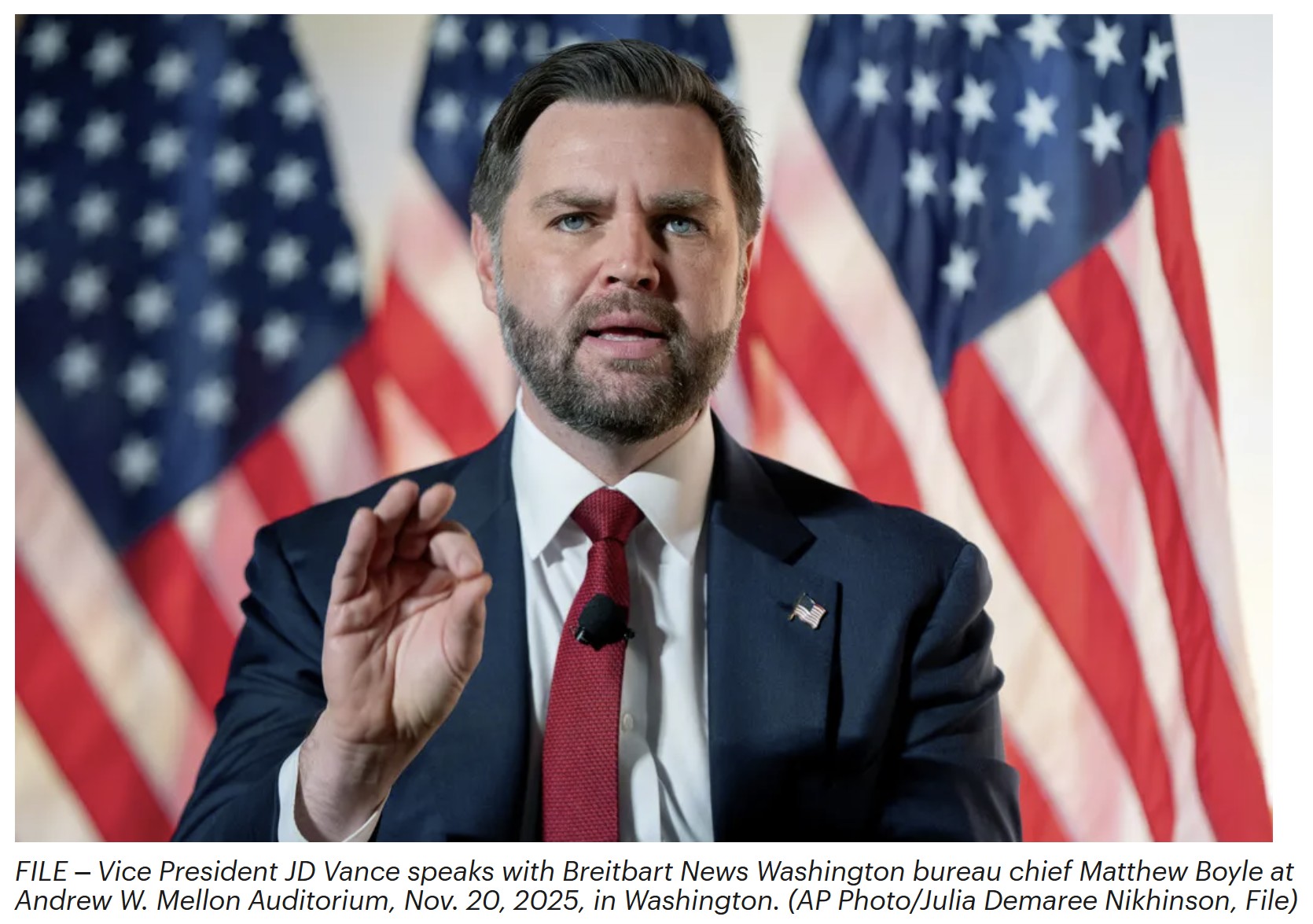
Among Republicans, Vice President JD Vance appears to be growing more powerful, popular and presidential. However, the overall RealClear poll average gives Vance just a 41 percent favorable rating, with 47 percent unfavorable.

The high-profile vice president is seen in nearly every Oval Office meeting photo, signaling a close relationship with President Trump. Such proximity is deliberate, since the “showman-in-chief” leverages optics more effectively than anyone as a powerful messaging tool.

Although the 2028 presidential campaign is three years away — centuries in political dog years — the 40-year-old Vance is on a trajectory to win the Republican nomination. In a recent Emerson poll, he garnered 46 percent support among registered Republican primary voters for 2028.

That same poll found Vance’s closest Republican rivals were Secretary of State Marco Rubio, supported by 12 percent, and Florida Gov. Ron DeSantis, at 9 percent. Rubio in 2016 and DeSantis in 2024 both had disastrous presidential runs against Trump and, in the process, alienated the MAGA base. At the time, Rubio and DeSantis were warned by political strategists to wait for more political seasoning in a future presidential cycle. Both paid a price for their unbridled ambition.

Vance knows that his 2028 prospects hinge on Republican success in the 2026 midterms, which will be linked to Trump’s sinking job approval. Therefore, in addition to his demanding day job, the vice president has been in full campaign mode since March, when he was appointed finance chair of the Republican National Committee. That strategically brilliant early move by Team Trump positioned Vance as a presidential heir, facilitating frequent interactions with the party’s most powerful donors and state party leaders.

For Vance, raising money from wealthy Republicans is relatively easy, since he has around a 50 percent chance of becoming the next president and stands a heartbeat away from replacing the 79-year-old incumbent.

But can millions of dollars translate into the millions of votes needed to keep the Republicans in control of the House and Senate when Trump is not on the ballot? For that task, Vance is Trump’s point man, and he has the most to gain or lose. Political history favors Democrats winning back the House, but if Vance can work some magic and defy the odds, he could go on to win the early 2028 primaries and quickly claim the nomination.

Some Republicans argue that the party will “waste time and money” better spent fighting Democrats if Trump does not quickly anoint Vance. The operative word is “if,” because Trump cares deeply about his legacy. A family dynasty would further solidify his place in history. Read more..


By Myra Adams – The Hill contributor

MYRA’S COMPLETE ARCHIVE IS HERE

Reposted from The Hill – July 4, 2025

Today is synonymous with fireworks, flags, parades and barbecues, but 33 percent of Americans do not plan to celebrate the nation’s 249th birthday. National pride has fallen to record lows, and a 2023 poll found that 41 percent of Americans do not know the meaning of Independence Day on the Fourth of July.

As a lead-up to next year’s 250th anniversary, a concerted effort should be made to educate citizens about the holiday and the risks the Founding Fathers took to make it happen. Little attention is paid to the collective bravery necessary to establish our country after the Declaration of Independence was signed, which severed ties with Great Britain, then a leading world power.

Most significantly, God’s role is often downplayed or ignored in the Declaration, with three godly references that altered history and remain politically relevant. For example, after President Trump authorized the bombing of Iran’s nuclear facilities last month, he addressed the American people and concluded by saying, “And I want to just thank everybody, and in particular, God. I want to just say, we love you, God, and we love our great military. Protect them. God bless the Middle East. God bless Israel, and God bless America. Thank you very much.”

While Trump expressed gratitude and love for God after a successful attack, the Founders justified their Declaration of Independence because of God. Knowing that winning freedom from Great Britain would be a David-vs.-Goliath battle, our revolutionary leaders placed God at the tip of their spear both philosophically and militarily.

Let’s analyze the three references to God in the Declaration of Independence. Read more..


By Myra Adams – The Hill contributor

MYRA’S COMPLETE ARCHIVE IS HERE

Reposted from The Hill – June 20, 2025

(As of June 22, 2025, the National Debt has reached $37 trillion.)

My Albanian-born father-in-law was an American patriot. In the mid-20th century, he served for decades as a CIA operative, quietly fighting against the spread of communism in Europe and Southeast Asia.

Before his death at age 92, he lamented America’s future, saying, “I’m glad I won’t be around to see the end.” Long before the U.S. was on the brink of World War III, I shared his bittersweet pessimism, prompted by the “death spiral math” found on the U.S. Debt Clock.

The “clock” ticks real-time government data showing the ever-growing national debt — $36.9 trillion as of this writing — the most owed by any country or empire in human history.

Nonetheless, this decades-long travesty of overspending, attributed to presidents from both parties, is still manageable if the U.S. gross domestic product — estimated at $29.2 trillion in 2024 — were to exceed the nearly $37 trillion national debt. At least, that is the economic theory recently espoused by Treasury Secretary Scott Bessent, who stated, “If the economy grows faster than the debt, we stabilize the country.”

Bessent’s philosophy of “we can grow our way out of debt” supports adding an estimated $3.3 trillion to the national debt, according to the Congressional Budget Office, if President Trump’s “Big, Beautiful Bill” were to become law.

Cue the laugh track, because Bessent’s growth fantasy is a joke when viewed through the lens of history and facts. The national debt has exceeded GDP since 2013, and the Debt Clock shows the U.S. debt-to-GDP ratio today at 123 percent. Reducing that unwieldy ratio requires a sustained economic boom not seen since the decades following World War II. Read more..