Donald Trump


By Myra Adams – The Hill contributor

MYRA’S COMPLETE ARCHIVE IS HERE

Reposted from The Hill: Sept. 27, 2024
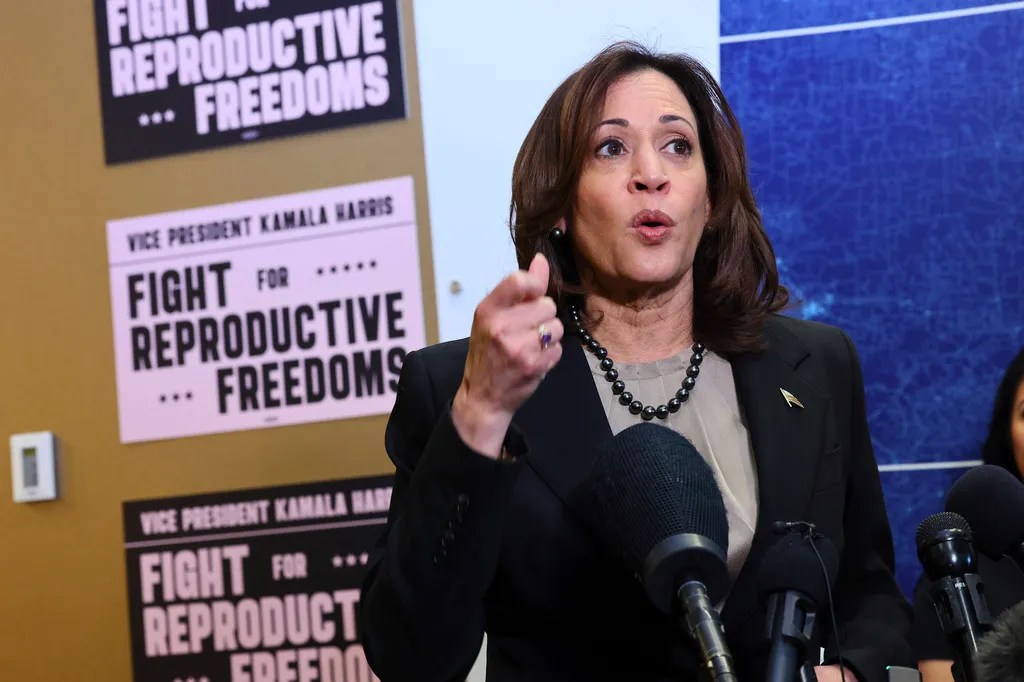
What was the first presidential election year when women voters surpassed men as a percentage of the electorate?

The answer is 1984. In that year, the electorate was 53 percent female and 47 percent male. That year, President Ronald Reagan and Vice President George H. W. Bush defeated former Vice President Walter Mondale and Rep. Geraldine Ferraro in a historic landslide. Four years earlier, in Reagan’s 1980 landslide, the electorate had been 51 percent men and 49 percent women. 

Since 1984, women have decisively outvoted men in every presidential election. Forty years later, unique social factors could motivate a record number of women to vote for Vice President Kamala Harris. But before discussing those factors, let’s review female voting data from the last two presidential elections, showing how Harris could win where Hillary Clinton lost.

Consider the 2020 election. Men were 48 percent of the electorate, and women were 52 percent, among whom Biden-Harris won by a 15-point margin. On Monday, an NBC News poll found Harris leading among women by 19 points. Trump’s advantage with men was 12 points.

Given that a larger turnout usually translates into more female voters, the vice president’s strength with women could be her path to victory if the electorate’s female voter turnout exceeds the four-point advantage of 2020.

Interestingly, in 2016, the electorate’s gender composition was the same as in 2020, with women casting 52 percent of the votes. However, of that 52 percent female electorate, Hillary Clinton won only 54 percent, compared to 57 percent for Joe Biden in 2020.

Could Harris renew Obama’s coalition with a female turnout that mirrors his 2008 and 2012 victories? In those elections, the electorate was 53 percent women and 47 percent men, a six-point difference. (Women had the most influence in 2004, when George W. Bush was reelected with women comprising 54 percent of voters.)  

Let’s turn to the “unique social factors” that might benefit Harris and stimulate record-breaking female turnout listed by uniqueness and not political importance.

First, Harris’s campaign doesn’t seem to be playing up the prospect of her becoming the first female president. Is that intentional? Maybe. Women know that a Harris victory would be historic, but most are not casting their vote because she is a woman. Today’s circumstances feel light years from Hillary Clinton’s 2016 campaign, when she was deliberately running to be the “first woman president” and “breaking the glass ceiling” and made it clear. 

Is the novelty of “President Harris” being downplayed because she has been the incumbent Vice President Harris since January 2021? Or is it because Harris’s presidential nomination was a welcome surprise alternative to the dreaded Trump-Biden rematch, and she happens to be a woman?

I can only guess why this historic first seems so understated on the campaign trail. Nonetheless, if Harris wins, her sex will be the headline, with women celebrating in the streets 104 years after receiving the right to vote.

Second, mothers, teachers and anyone involved in raising children are keenly aware of role-models and the influence of celebrities. Hence the question, “Is Donald Trump a role model for your children or students?” And also, “Is Kamala Harris a better role model than Trump?” Good or bad, the president is a role model by default.

A third potential Harris advantage is female intuition. Women voters notice that Melania Trump has not been out and about supporting her husband’s campaign. Her absence speaks volumes about his controversial character.

Instead, the former first lady has been promoting her “Melania” book, intentionally drawing attention to and defending her decades-old nude modeling career. Moreover, the book release date is October 8, a curious time if it generates bad press or flops.

The real eye-opener is that nowhere on MelaniaTrump.com is Donald Trump mentioned or pictured.

No polls will quantify Melania as an obstacle to Trump’s campaign, but women voters do think about who will be first lady or first gentleman and the loving support that person offers the president.

Fourth, where is Ivanka? Trump’s favorite offspring has disappeared from the campaign trail. Again, women notice abnormal family dynamics when making voting decisions.

Meanwhile, Trump campaigns with RNC co-chair and daughter-in-law Lara Trump, former Rep. Tulsi Gabbard (D-Hawaii) and Arkansas Gov. Sarah Huckabee Sanders (R) to attract female voters.

Recently, much attention was paid to Trump palling around with the controversial Laura Loomer, who flaunted their relationship, posting suggestive photos and headline-making videos. But Loomer has been sidelined after her toxic high profile created a short-lived MAGA civil war.

Fifth, another campaign phenomenon that could drive female turnout for Harris is the Trump campaign appearing to denigrate women who don’t have biological children. Millions of stepmothers and women who are childless by choice were deeply offended.

Sixth, abortion is a sacred life-issue turned into a political message war. Trump has been shifting his position leftward (depending on the audience) but continues to make outlandish abortion-related paternalistic statements, for example, telling women, “I am your protector.”

Harris, a long-time champion of abortion rights, has branded and positioned abortion as representing freedom, personal rights, health care and an example of government interference. The 2024 presidential election is the first since the 2022 Supreme Court Dobbs ruling, which could become a monumental driver of female turnout on both sides of this passionate issue.

In the voting booth, women consider the economy, inflation, immigration and abortion as the most critical issues in their choice between Trump and Harris. But don’t underestimate women’s intuition about family, character and the historical nature of Harris’s candidacy, all of which could generate a surprise record-breaking female turnout that the polls are not detecting.

Myra Adams is an opinion writer who served on the creative team of two Republican presidential campaigns in 2004 and 2008.

Tags Geraldine Ferraro  Hillary Clinton  Kamala Harris  Melania Trump Ronald Reagan  Walter Mondale


By Myra Adams – The Hill contributor

MYRA’S COMPLETE ARCHIVE IS HERE

Reposted from The Hill: May 10, 2024

During every modern presidential election cycle, pundits and experts have claimed the current election is “the most consequential” — whether it be “in my lifetime,” “in this century” or “since World War II.”

Thankfully, America survived all of those contests and often thrived after a course correction or pendulum swing away from the loser. Looking back, those “most consequential” presidential elections have always seemed tame compared to the next one.

But today, when it comes to 2024, “most consequential” may be tragically understated. The extreme polarization in today’s body politic rivals that of the 1860 presidential election won by Abraham Lincoln, whose inauguration was followed by the start of the Civil War just five weeks later.

Like 1860, the 2024 presidential election is fraught with explosive constitutional and institutional issues potentially threatening America’s founding principles. Millions of Americans believe that the preservation of democracy is indirectly on the ballot. So, too, is the potential consolidation of power in an executive branch poised to unbalance tri-equal power shared with the legislative and judicial branches of government.

The perception of an existential crisis for the U.S. is only enhanced by the blockbuster movie “Civil War” and a recent poll that inspired the screaming Drudge Report headline: “41 percent see Civil War ll on the horizon.”

Last month, a Pew Research Center survey found that half of registered voters would prefer replacing both Trump and Biden on the ballot. Pew’s data reinforced a March YouGov/ Yahoo News poll, in which 53 percent of voters chose a combination of dread, exhaustion or depression to describe their feelings about the 2024 rematch.

This unpopular historic Biden-Trump rematch unnerves most Americans paying attention, even many of their supporters. Whoever wins, half the nation will be disgusted, angry, pessimistic and fearful of the future, wondering how America can endure with “that guy” as president for a second term.

And four additional “minefield” issues could explode during the campaign’s final six months or before the 2025 inauguration, further exacerbating that pessimism.

1. The first pertains to whether the loser will accept the outcome. Trump has continually planted seeds for potential unrest, even predicting the end of democracy if he loses. On CNN in May 2023, Trump qualified his acceptance of the 2024 results by saying, “If I think it’s an honest election, I would be honored to.”

Recently, Trump doubled down on that qualifier. During a Milwaukee Journal Sentinel interview, he said, “If everything’s honest, I’d gladly accept the results,” adding, “If it’s not, you have to fight for the right of the country.” Trump has yet to explain that “fight” statement — perceived as a “dog whistle” for encouraging political violence — nor defined his criteria for “everything’s honest.” This is a warning.

After numerous court decisions and recounts, Trump still believes the 2020 election was stolen, making it a test of loyalty. Now, it appears not committing to accepting the 2024 results is a litmus test for his vice-presidential nominee.

If Trump loses on Nov. 5, will he again try to subvert democracy as he allegedly did on Jan. 6, 2021, for which he has been indicted? A potential minefield surrounds your voting booth.

2. America’s smooth presidential transition has always shown the world why we are a beacon of freedom and democracy, even after contentious or close elections. This is why the events of Jan. 6, 2021, unnerved our allies and delighted our enemies. That means on Jan. 20, 2025, America must prove the last transition was an aberration. A repeat of such violence could create a national security situation for our enemies to exploit.

3. In 2024, several courtrooms sit atop political minefields. Trump’s Jan. 6 trial and the Mar-a-Lago documents case are now on hold. America’s judicial system is built on faith and trust that “no person is above the law.” Nonetheless, what could be construed as a double travesty of delayed federal justice has been orchestrated by (some would say) a Trump-friendly Supreme Court and Trump-appointed Florida U.S. District Judge Aileen Cannon. Delays by both courts could ensure that neither Trump’s Jan. 6-related trial nor the Mar-a-Lago documents case trial are held before Election Day.

Sixty-four percent of Americans want the Jan. 6 trial to occur sooner. But several conservative Supreme Court justices appear much more interested in how their ruling would affect future presidents’ claims of immunity than they are about Trump’s specific claims about his actions Jan. 6. If voters are denied a verdict on whether Trump is guilty of trying to overturn the 2020 election to remain in power, there could be a voter backlash.

This week, Cannon postponed indefinitely Trump’s 37-count indictment for refusing to return top secret government documents allegedly removed from the White House. Reacting to that news, former Trump White House attorney Ty Cobb called Cannon’s decision “really inexplicable” and “tragic.”

4. The “battleground states presidential election” has reached a tipping point: A 2023 Pew Research Study found that 65 percent of American adults favor a nationwide popular vote to elect the president. Six battleground states (Michigan, Pennsylvania, Wisconsin, Georgia, Arizona, and North Carolina) will totally dominate Biden’s and Trump’s campaign to win 270 Electoral College votes, severely warping where they spend time and money. An angry sentiment that “my vote doesn’t count” has long been growing among Americans who live outside of presidentially relevant states.

If Trump or Biden wins only the unpopular Electoral College but loses the popular vote — as Trump did in 2016 — Civil War-level outrage could result.


By Myra Adams – The Hill contributor

MYRA’S COMPLETE ARCHIVE IS HERE

Reposted from The Hill: April 12, 2024

Our intelligence services are consumed with battling a new “Axis of Evil.” The updated phrase, first coined in 2002, now refers to Russia, China, Iran, and North Korea. This powerful authoritarian alliance is determined to meddle in elections, launch cyberattacks, destabilize and wage wars against America and its allied democracies around the world.

In this context, consider the likelihood that, starting next Jan. 20, sensitive secrets will be viewed by the most notorious national security risk living outside a federal penitentiary.

It sounds like a Hollywood script, but our spy services must contend with this real-life drama if Donald Trump is elected president once again.

President Biden’s campaign and those who served in Trump’s administration must convey to voters that Trump himself represents a national security risk with severe domestic and global ramifications. Even before November’s election, in mid-July 2024, after Trump is officially nominated at the Republican National Convention, he will be entitled to receive intelligence briefings that Rep. Adam Schiff (D-Calif.) hopes will be “dumbed down.” Schiff is reportedly “concerned about whether Trump could share the information.”

Intelligence agencies were always concerned and took necessary precautions during Trump’s presidency. “Officials were even more cautious about what information they provided Mr. Trump because some saw the president himself as a security risk,” the New York Times reported in 2022, quoting CIA counterintelligence official Douglas London.

That sentiment harkens back to January 2017, when an American intelligence official reportedly warned Israeli officials “that American intelligence agencies believed Russia had ‘leverages of pressure’ over President Donald Trump….The [American] official warned Israel to ‘be careful’ once Trump was inaugurated, adding that it was possible sensitive information shared with the White House and the National Security Council could be leaked to Russians.” Four months later, it actually happened.

If the election were held today, former President Trump would likely win. For the intel community, that means additional complications and distractions as they fight the Axis of Evil against threats that some believe Trump’s victory would accelerate.

This week, former CIA director John Brennan said that if elected, Trump “would give Vladimir Putin the green light to practically swallow Ukraine,” since Trump “can reduce or even stop financial and military aid to the government in Kyiv.” 

To date, Trump’s allies, such as House Speaker Mike Johnson (R-La.) and Rep. Marjorie Taylor Greene (R-Ga), have effectively blocked Ukraine aid. Last month, after Hungarian President Viktor Orbán met with Trump, Orbán told state television that Trump had said he “will not give a penny into the Ukraine-Russia war and therefore the war will end.” Brennan believes “that will encourage Putin to look hungrily at the rest of Europe.”

Trump’s enigmatic and decades-long Russia connection continues to amaze. NATO is taking extra precautions now that Trump has said Russia should be able to do “whatever the hell they want” to NATO members who don’t meet their defense spending targets.

The good news for Trump is that U.S. presidents don’t need security clearances. In November 2016, if not for Trump’s “President-elect” title, “citizen” Trump would have been denied a security clearance due to his extensive long-term business dealings with Russian oligarchs. In 2008, Donald Trump Jr. famously said, “Russians make up a pretty disproportionate cross-section of a lot of our assets,” and, “We see a lot of money pouring in from Russia.”

No wonder CIA officials saw President Trump “as a security risk.” For anyone not named Trump or Jared Kushner, the exhaustive process for obtaining a security clearance begins with the following nine-point list: “Loyalty to the United States, strength of character, trustworthiness, honesty, reliability, discretion, and soundness of judgment.” Additionally, “We also make sure you: Are free from conflicting allegiances to other countries. Are not a potential risk for blackmail. Will abide by regulations governing the use, handling, and protection of sensitive information.”

In other words, the next likely commander in chief would probably flunk most of the security criteria required of those who will brief him.

The last listed item, “handling and protecting sensitive information,” is a well-documented Trump violation. There are photos of document pieces flushed down his White House toilet. Staffers were tasked with taping together documents that Trump had ripped and discarded. In 2019, Trump tweeted a sensitive Iranian photo, as if he believed it was his personal property.

Such thinking and behavior are the reason Trump has been charged with a 32-count indictment for violating the Espionage Act. Trump allegedly moved boxes of documents, some with the highest classification, to his Mar-a-Lago residence and refused to return them as required by law. (A trial date has yet to be set.)

Topping the list of security clearance criteria is “loyalty to the United States.” Does Trump place loyalty to himself above the nation, given his encouragement of supporters to prevent certification of a lawful election on Jan. 6, 2021, for which Trump has also been indicted? What is national loyalty if not a willingness to abide by the Constitution?

Another clearance question asks if one is “free from conflicting allegiances to other countries.” What gets perhaps less attention than Putin is Trump’s active, lucrative business relationship with Saudi Crown Prince Mohammed bin Salman and the prince’s LIV Golf tournaments, some hosted at Trump courses.

Liz Peek recently asked whether bin Salman might sabotage Joe Biden’s reelection bid by cutting oil production thus raising prices, which would have adverse ripple effects on the U.S. economy. Indeed, the CIA will be watching the Trump-bin Salman connections, which would likely disqualify anyone from obtaining a federal security clearance.  

If Trump is elected, the intel community will be fighting the Axis of Evil while reporting to a president known as a security risk, and who habitually disregards intelligence that fails to mesh with or interferes with his personal interests. Flush goes the White House toilet and possibly the nation.

Myra Adams served on the creative team of two GOP presidential campaigns in 2004 and 2008.TAGS 2024 PRESIDENTIAL ELECTION DONALD TRUMP DONALD TRUMP JR. JAN. 6 CAPITOL RIOT PRESIDENT JOE BIDEN RUSSIA SAUDI ARABIA


By Myra Adams – The Hill contributor

MYRA’S COMPLETE ARCHIVE IS HERE

Reposted from The Hill Feb. 16, 2024

For the third time in a row, former President Donald Trump is expected to win the Republican nomination. His chances of becoming the 47th president are no worse than 50-50. Not only is President Biden a weak incumbent, but Trump appears to have the momentum and the lead in most of the key swing states.

Never in our nation’s history has a former president been at war with America. But, propelled by political winds, Trump has made himself a warrior-candidate, uniquely accepted by half of voters in a nation at civil war-levels of polarization, coupled with a general distrust of government amidst signs of decline.

On the primary campaign trail, Trump foments rage among his followers. In his Jan. 22 New Hampshire primary victory speech, he shouted his time-tested pronouncement: “This country has gone to hell, this country has gone to hell.”

War is hell, and Trump’s fans believe that only he has the blood and guts, energy, strength, and policies to save America.

Trump’s aggressive negativity is a sharp contrast with the traditional norms of campaign communication, a vast deviation from Ronald Reagan’s sunny optimism. His “Morning in America” television commercial amid his 1984 landslide reelection, clashes sharply with another quintessential Trumpian quote: “We’re going to bring our country back. With your vote, you’re going to put crooked Joe and his protectors on notice that we are coming in November. We’re coming to take over the beautiful, beautiful White House, and we’re going to run the country the way it’s supposed to be run, not the way it’s been.”

Not only does “General” Trump promise “to bring our country back” (from hell, one presumes), but he plans to “take over” the White House. No American presidential candidate has ever promised a “takeover” with a Trump-loyal army-in-waiting named Project 2025.

Also present on Trump’s New Hampshire victory stage was Vivek Ramaswamy, basking in the afterglow of his failed campaign. The former primary candidate has quickly morphed into Trump’s considerably more articulate sidekick. Ramaswamy encapsulated the 45th president’s 2024 “at-war” theme. “We are in the middle of a war in this country,” he said. “It’s not between black and white or even between most Democrats and Republicans. It is between those of us who love this country and a fringe minority who hates the United States of America and what we stand for, between the permanent state and the everyday citizen.”

Here’s an opposing view: “We are in the middle of a war in this country,” that Trump is waging against any person, celebrity, group, political party, branch of government, department, agency, institution, body of law, organization, or established process he deems to be “unfair” or standing between his goal of total domination. 

That list includes current and former Republican members of Congress, Trump administration cabinet officials, retired four-star generals, and the media, for consistently generating “fake news,” except when the coverage is favorable to him.

Trump’s lies and exaggerations are repeated so often that one-third of American ears have normalized his rantings as truth. Hence, Trump’s war will continue to thrive while his well-oiled multi-platform propaganda and fear machines are operational 24/7, to raise money and churn out promises that double as battle plans.

One controversial battle plan Trump announced during his Veteran’s Day message: to “root out the Communists, Marxists, Fascists, and Radical Left Thugs that live like vermin within the confines of our country, lie, steal, and cheat on elections, and will do anything possible, whether legally or illegally, to destroy America, and the American Dream.”

One of the most effective weapons in Trump’s strategic arsenal is the 38 percent of Americans who believe that Biden’s 2020 election was illegitimate — “stolen,” in Trump’s warring words.

Most often, Trump fires artillery about how the Jan. 6 attack on the U.S. Capitol would have turned out differently, had Vice President Mike Pence “done his job” refusing to certify the votes of the Electoral College. That explains why Rep. Elise Stefanik (R-N.Y.) and Sen. J..D Vance (R-Ohio), perhaps hoping to be named Trump’s running mate, recently stated they would have taken the action that Pence lawfully refused.

Meanwhile, planting political landmines on the campaign trail, Trump vows to rescue the Jan. 6 “hostages” with pardons. (After he finishes being dictator on day one?) Then and always, Trump uses his sympathy weapon, playing the “victim” card with his 91 felony counts, since Biden has weaponized the Justice Department against him.

Last year, the former president officially declared war, unveiling his political manifesto at the Conservative Political Action Conference (CPAC), when he said: “I am your warrior, I am your justice. And for those who have been wronged and betrayed, I am your retribution.” CPAC 2024 is next week, so listen as Trump throws fiery new verbal daggers to motivate the assembly of foot soldiers.

Another battlefront is an email blast I have somehow started to receive with a “Trump War” subject line, highlighted by a red siren mimicking the Drudge Report’s news alerts. “Trump War” points to an all-headline, Trump-friendly clone of Drudge’s famous 1990s-era vintage format — proving that imitation is the greatest form of flattery.   

“General” Trump and his army are psyched to fight and torpedo any legislation Trump fears could help Biden. This busy week, the general’s sword hangs over House Speaker Mike Johnson’s (R-La.) refusal to hold a floor vote for Ukraine and Israel military aid. Also, Trump “attacked” NATO and announced plans to conquer the Republican National Committee.

“I am really good at war,” Trump boasted in April 2016. That comes from a man who never wore the uniform but has readily ridiculed those who have. Undeniably, Trump is at war, and if victorious, anyone not in lockstep could become collateral damage. 

Myra Adams served on the creative team of two GOP presidential campaigns, in 2004 and 2008.TAGS 

2024 PRESIDENTIAL ELECTION DONALD TRUMP JOE BIDEN PRESIDENT JOE BIDEN


By Myra Adams – The Hill contributor

MYRA’S COMPLETE ARCHIVE IS HERE

Reposted from The Hill – Dec. 22, 2023

Raise your hand if you are dreading 2024. Keep it up if you believe it will be more traumatic than 2023.

As I was writing this piece, the news broke that the Colorado Supreme Court had ruled former President Trump is ineligible to appear on the 2024 presidential ballot, citing the Constitution’s 14th Amendment insurrection clause.

This unprecedented ruling, likely headed to the Supreme Court, illustrates how alarming, destructive, distressing events and circumstances from 2023 will continue unabated or conclude with more polarizing or dangerous consequences. Thus, 2024 could rank among the most harrowing and catastrophic in national and world history based on the following 11 “what if” questions.

1. What if a barrage of AI-generated content and social media from domestic and foreign players blur presidential campaign messaging, so that voters don’t know what is real or fake?

In April, a member of Congress stated that Russia, China and Iran prefer Trump to win over President Biden. If true, consider a chilling report from the Microsoft Threat Analysis Center, entitled “Protecting Election 2024 from foreign malign influence.” Microsoft warns that a vast operation will target and manipulate voters through extensive foreign AI, cyber, website disinformation and social media. Be aware: A toxic stew of nefarious foreign players will try to influence your vote.

2. What if House Republicans vote to impeach President Biden?

Last week’s party-line vote approved an impeachment inquiry against President Biden. By spring, if House Speaker Johnson counts enough Republican votes to pass articles of impeachment, our nation will experience its first back-to-back impeachments against successive presidents.

Democrats consider this GOP impeachment effort political theatre directed by Donald Trump. Therefore, Biden could have a unique opportunity to show strength, fight back and appeal to voters who think he is too old. And like Trump, Biden could count on an acquittal after his Senate trial.

Furthermore, what if House GOP leaders find insufficient evidence to move forward with articles of impeachment or are short of votes to impeach? Call that a politically embarrassing debacle, perhaps followed by a face-saving “Let the voters decide.” Such a pro-democracy-sounding spin message could be the end-game for this “revenge impeachment.” Undoubtedly, Trump would be furious if Biden were not impeached and lash out at the “weak” House leadership.

3. What if Biden drops out?

That unlikely but not implausible scenario would be the political equivalent of a nuclear bomb, changing the course of American history. Vice President Kamala Harris would be tough to dethrone, but unpopular and potentially beatable by Trump.

4. What if the Supreme Court rules that Trump has presidential immunity and can not stand trial on Jan. 6-related charges?

Such a ruling would be a constitutional shock to our nation and damaging to the Supreme Court’s reputation. According to George Washington University law professor Paul Schiff Berman, granting Trump immunity for criminal action while in office “goes more to the heart of whether the president is a president or a king.”

In 2024, there is no “what if,” only a series of how Trump-related Supreme Court rulings will impact and influence the presidential election.

5. What if Trump is convicted of a felony before November’s election, and polls show he still defeats Biden?

Fortunately for Trump, the Constitution does not state that a criminal conviction makes one ineligible to hold the nation’s highest office. Therefore, again, “Let the voters decide” resolves that question.

6. What if the economy keeps improving and growing with a strong stock market while inflation, interest rates and unemployment all trend lower?  

Would a strong economy translate into higher job approval for President Biden? Not necessarily. If the cost of living is still perceived as too high and the southern border immigration crisis is uncontrollable, Biden could well become a one-term president even amid a recovery.

Recently, Trump unveiled his new campaign slogan: “Better Off With Trump.” It is a personal and narcissistic twist on the traditional presidential election question: “Are you better off than you were four years ago?” Theoretically, the answer should be “yes,” since the pandemic began in 2020. Nonetheless, Trump’s communication machine and savvy showmanship skills are light years beyond Biden’s, and more voters will be thinking “No.”

7. What if Trump’s campaign rhetoric continues to sound authoritarian as he leads Biden in the polls?

The more Trump quotes his favorite dictators, the more his unorthodox speech becomes normalized and acceptable to voters. At last weekend’s New Hampshire rally, Trump unabashedly said: “Even Vladimir Putin says that Biden’s — and this is a quote — ‘politically motivated persecution of his political rival is very good for Russia, because it shows the rottenness of the American political system, which cannot pretend to teach others about democracy.’”

Trump is brilliantly employing political jujutsu with all-caps campaign signs proclaiming that “BIDEN ATTACKS DEMOCRACY.” Voters cheer because Trump is their strong man who promises, “We’re going to bring our country back from hell. It’s in hell.”

8. What if the U.S. is drawn into a Middle East war against Iran-backed groups that continue to provoke U.S. naval ships and disrupt international commercial shipping?

Speaking of hell… The Houthis are warning that their attacks will continue. How will the U.S. and its allies stop this naval and merchant ship crisis without further escalation?

9. What if, without U.S. aid, Ukraine falls to Russia?

Putin’s mission is to reconstitute the Soviet empire. If the U.S. abandons Ukraine, we will pay more later and show the world that the U.S. is an unreliable ally.

10. What if war explodes on three fronts?

What if China takes advantage of the distractions in the Middle East and Ukraine to invade Taiwan? Chinese President Xi recently warned Biden that timing is the only question.

11. What if there is a terrorist attack in the U.S., and the perpetrators(s) enter over the southern border?

According to the U.S. Border Patrol Terrorist Screening Dataset, this is an increasing threat. Should it happen, say hello to President Donald J. Trump. But no worries, He will only be a “dictator on day one.”

Potentially, 2024 will rival the domestic upheaval of 1968 and the international threats of 1939. Brace yourself for double chaos.

Myra Adams served on the creative team of two GOP presidential campaigns in 2004 and 2008.

TAGS 2024 DONALD TRUMP JOE BIDEN KAMALA HARRIS PRESIDENT JOE BIDEN


MYRA’S COMPLETE ARCHIVE IS HERE

By Myra Adams, reposted from Medium – Jan. 8, 2021

During Trump’s Georgia rally on Monday night in support of Senators Kelly Loeffler and David Perdue, the president told the large, enthusiastic crowd, “I’m going to be here in a year and a half, and I’m going to be campaigning against your governor and your crazy secretary of state, I guarantee you.”

Such electoral bravado heralded Trump’s post-presidency visions of grandeur. Before Tuesday’s election results, he was on track to become one of the most influential former presidents in history. In November, he lost reelection but won a record 74.2 million votes with “77% of Republicans believing there was widespread fraud,” according to a December Quinnipiac poll.

What follows is an assessment of Trump’s post-presidency before Monday and after Wednesday’s “Siege of Capitol Hill” — widely reported as an insurrection and assault on democracy.

BEFORE: Trump is highly motivated to prove that he was not and is not a “loser.”

For Trump’s psyche, there is nothing worse than to be labeled a “loser.” (Refer to niece Mary Trump’s bestselling book, “Too Much and Never Enough” for all the family background.) She explains why during the presidential campaign, Trump repeatedly said, “the only way we’re going to lose this election is if the election is rigged.”

Nonetheless, give Trump credit for being transparent before, and then after the election for successfully convincing his supporters (along with many Republican officeholders) that contrary to court rulings at every level, the election was “stolen.”

AFTER: The loser label has become a tattoo.

Let the record show that Trump, as leader of the Republican Party, presided over his party losing control of the executive and legislative branches of government. After Tuesday’s election debacle, he is rightly being blamed for losing the Senate after Democrats won both Georgia seats.

BEFORE: Flirting with a 2024 presidential run.

Continually teasing his 2024 plans is a ploy for Trump to remain in the media spotlight. Most important, it is a significant fundraising boost that keeps his ardent supporters engaged.

AFTER: Dead — stick a fork in it. If Trump continues the “flirt,” it will be perceived as the ravings of a mad man. The “Trumpican Party” I wrote about in June of 2020 died on Jan. 6, 2021, after its “troops” tried and failed to “take the Hill” and overturn a presidential election. Worse for Trump, due to bi-partisan disgust, there is a slight chance he could be an ex-president before his term officially ends at noon on Jan. 20. Moreover, his access to Facebook and Instagram are denied for an undetermined length of time.

BEFORE: Trump refuses to concede the presidency.

He is besieged with a strong and unending desire to avenge (in his words) the “fraudulent,” “stolen,” “illegal,” and “rigged” election worthy of a “third-world country,” repeatedly insisting that he “won in a “landslide.”

AFTER: Since Twitter froze the president’s account on Wednesday, senior adviser Dan Scavino tweeted on Jan. 7, 2021, at 3:49 AM (note the time) on Trump’s behalf:

Statement by President Donald J. Trump on the Electoral Certification:

“Even though I totally disagree with the outcome of the election, and the facts bear me out, nevertheless there will be an orderly transition on January 20th. I have always said we would continue our fight to ensure that only legal votes were counted. While this represents the end of the greatest first term in presidential history, it’s only the beginning of our fight to Make America Great Again!”

Then on Thursday night, Trump made another statement in a prerecorded video that could be perceived as a concession of sorts since he acknowledged the “new administration.”

But you know the tide has turned after Trump lost the support of Sen. Lindsey Graham.

BEFORE: Trump’s Save America PAC raises at least $66 million.

Fighting the “fraudulent” election is very lucrative.

At Trump’s disposal are at least $66 million in the coffers of his Save America PAC he can use for “political activities” to support/fight any incumbent or new candidate, cause, or issue that serves his needs or agenda.

AFTER: How “political activities” will be defined by Team Trump is anyone’s guess, but millions have a good chance of being spent on legal bills. How toxic Trump’s brand becomes during his post-presidency will determine if any candidates want his financial support.

BEFORE: Holding rallies as a “kingmaker” and Republican Party leader.

At rallies that Trump inevitably planned to have to maintain and solidify his standing as a “winner” and leader of the Republican Party, one could surmise that the “stolen” election was inevitably going to be acentral theme.

AFTER: Ifrallies resume at all, they are likely to be greatly diminished. As a result of what looks to be the last rally of his presidency, Trump is blamed for inciting the violent takeover attempt of the Capitol. The timing was planned to occur while Congress was in a joint session certifying the Electoral College results declaring Joe Biden as the 46th president.

If you are unsure whether Trump deserves blame for the Capitol siege, read the 1.13-hour rally speech for more insight.

The rally and speech were meant to energize the thousands of MAGA troops proudly waving Trump banners. Keep in mind the event was planned and promoted for weeks, designed to bring his most loyal supporters to Washington for the last stand to “stop the steal.” Here is what Trump said at the end of his now infamous rally:

“And we fight. We fight like Hell and if you don’t fight like Hell, you’re not going to have a country anymore.”

“We’re going to try and give our Republicans, the weak ones, because the strong ones don’t need any of our help, we’re going to try and give them the kind of pride and boldness that they need to take back our country.”

Trump gave “walking” orders to the Capitol and the rest is history.

BEFORE: Trump’s narcissistic need to stay in the headlines as the center of attention.

Media attention is a proven way for him to stay “powerful” to enhance his “winning” Trump brand in politics, business, and upcoming court battles.

AFTER: He will still garner attention for as long as he lives. But most likely, his post-presidency influence will dramatically fade.

BEFORE: An aura of fear.

Fear that Trump will attack anyone who is not sufficiently loyal to him (assisted by his 88.7 million Twitter followers and “Trump media.”)

AFTER: Trump will resume tweeting in his post-presidency but perhaps somewhat defanged. He will go down in history with very mixed reviews. But ultimately, as an impeached president (remember that?) who tried to overturn his reelection defeat by inciting followers who damaged the building (literally and figurately) — the symbol of a great nation that stands for the virtues of democracy throughout the world.

BEFORE: “Best President since Reagan” or “Lincoln” — take your pick.

In January 2020, I wrote a piece with the headline quote, ‘If Trump Wasn’t Trump, He’d Be Reagan.’ Within, I requoted the Palm Beach Post reporting a Republican National Committee official who said, “‘I used to say that President Trump is our best president since Ronald Reagan. I don’t say that anymore. I say President Trump is our best president since Abraham Lincoln,’ he said to cheers.”

Need I say more? Seriously, this was the thinking of “mainstream” Trump supporters.

AFTER: Trump’s post-presidency could get weird or turn tragic. Reports about pardoning himself could drown his legacy in a sea of scorn and disdain.

On the brighter side, Trump could stage a comeback. And perhaps that effort began Thursday night in the previously mentioned “concession” video when he ended saying, “And to all of my wonderful supporters, I know you are disappointed. But I also want you to know that our incredible journey is only just beginning.”

Will his loyal supporters go along for the ride? Politico’s Thursday night headline read, “Trump’s grip on GOP grassroots holds fast” with the subhead, quoting a Florida GOP leader, “ ‘The Trump name in the Republican Party is stronger than it has ever been.’ ”

Remember, with Donald J. Trump, never count him out and always expect the unexpected.


MYRA’S COMPLETE ARCHIVE IS HERE

Reposted from RealClearReligion on Oct. 30, 2020

Whether you are voting for Donald Trump, Joe Biden, or another candidate, my Election Day advice is the same: Pray for a peaceful outcome.

Remember, this is America, the world’s oldest democracy that many believe the Almighty had a hand in birthing. Our nation grew into a proud example of representative government without election-related violence ever associated with the quadrennial exercise of choosing our next leader.

Yet today, there are numerous mainstream media reports of militias forming. For example, at NPR: “Five states – Georgia, Michigan, Pennsylvania, Wisconsin and Oregon – have the highest risk of seeing increased militia activity around the elections: everything from demonstrations to violence.”

On Sunday, a veteran Republican strategist told me he firmly believes a civil war is imminent if Trump wins. And I say perhaps the reverse is possible if Biden wins. After all, on several occasions, the president has publicly stated that if he loses, the election was “rigged.” Not surprising, since I know many Republicans who think that all this talk about a landslide is good news for Trump, not Biden. (Check out Rush Limbaugh’s radio show transcript from October 14.)

Then a handful of Republicans and boatloads of Democrats have told me that a Biden landslide would guarantee the most peaceful outcome. How could Trump rally his troops for an uprising if the results are indisputable?

That is one question on a list of thoughts, observations, and prayers for my last column of this nature before Election Day.

Topping the list is a strong feeling that Americans are totally fed up with the Electoral College. If an alien from Pluto observed the election campaign, it would think that the United States had only six states. The alien would beam back to the Mothership that two of those states reigned supreme – Pennsylvania and Florida – and those voters ruled over Michigan, Wisconsin, North Carolina, and Arizona.

Currently, Republicans generally oppose ending the Electoral College after losing the popular vote in 2000 and 2016 and still winning the White House. Moreover, the GOP thinks that big “blue” population states would tilt the election to the Democratic nominee. But, if (BIG if) Biden were to win Texas – the “red” state “crown jewel” with 38 electoral votes – Republicans could quickly have a change of heart and start embracing a direct presidential popular vote.

Furthermore, a blue Texas under the electoral vote system would mean a significant chunk of the 2024 presidential campaign energy and attention would shift to winning the Lone Star State. Watch closely because, according to the RealClearPolitics Texas poll averages, Trump only leads Biden by 2.3 percentage points – within the margin of error in a state that Trump won by nine percentage points in 2016. If you are a Republican, pray that Texas does not go “blue.”

Second on my observation list, if Trump loses, his refusal to appeal to swing voters might prove to be his reelection campaign’s most egregious strategic error.

In June 2019, I wrote an RCP piece headlined “How GOP Insiders View Trump’s ‘Base-Only’ 2020 Strategy,” after being prompted and intrigued by a Trump quote in a Time Magazine interview. When asked if the president should reach out to swing voters, Trump replied, “I think my base is so strong, I’m not sure that I have to do that.”

Yikes, bravado red flag warning!

At that time, the economy was humming along strong, and “Contagion” was a virus horror movie. Still, Trump’s RCP job approval average in mid-2019 hovered around 44% – exactly where it is today – a remarkedly stable number that would foretell a tough reelection.

It’s worth quoting Mark McKinnon’s prescient quote from my piece. McKinnon was speaking from experience as the chief media strategist for George W. Bush’s 2004 reelection campaign. Talking about Trump’s base-only strategy, he said, “It’s a risky strategy because in order to be successful, it means the campaign has to suppress turnout with Democrats to a level at or lower than it was in 2016. And given what we saw in 2018, Democratic turnout is likely to be significantly higher.”

Today’s record early-voting turnout and accusations of Republicans trying to suppress the vote are double scourges striking Team Trump that point to the inherent flaws of a base-only strategy. Not only lousy public relations for the GOP but when the voting pie grows, even a solid, static base serves up a smaller piece.

However, since the election is not over and if the president wins through prayers and Divine Intervention, then his base-only strategy will be considered brilliant but risky and non-traditional – like so much of Trump’s presidency.

Third on my list is a Trump action that could be looked back upon as a crucial turning point that did immense harm if he were to lose reelection. A poignant example of Trump serving his base with a “red meat all the time and to hell with blue land” attitude, this event took center stage Monday night when Amy Coney Barrett was sworn in as the Supreme Court’s newest member. Justice Barrett, a lovely, brilliant, pious, well-qualified woman, offers Trump the opportunity to please his base, especially “values voters” like no other presidential act.

Yet, rushing her through Senate confirmation in record time could yield some Election Day consequences, impact Supreme Court decisions for decades to come, and result in “court packing” if Biden wins. But for this discussion, let’s focus on the Senate optics.

The nation is hurting. No new COVID-related economic relief packages were passed, and now the Senate is adjourned until after the election. What signal does that send to non-base voters? Trump and GOP Senate leaders only had the base in mind when they rammed Barrett through while millions were in the process of voting. Furthermore, were those antics on the minds of record numbers of women and minority voters waiting in long lines to vote on Monday and through Election Day?

My last and overarching thoughts about the 2020 election is that Americans are sick of division. They are tired of all the Trump drama. Americans want to be unified, and Joe Biden, flawed as he is, offers that hope for millions of voters. Will this be a “hope over fear” election where unity wins over division? Or will Americans vote to keep the status quo? Never forget that for the vast majority of religious Republicans, Trump is their hope for a better America and with thousands of prayer groups asking to keep him in office.

Nevertheless, if “Blue America” defeats Trump and the Republican Party with resounding force, then the president and GOP leaders should look in the mirror and say, “We were the dividers. We fostered fear over hope. But we will be back in 2022 and 2024 when the Democrats overreach and with a kinder gentler message.”

In the end, no matter who wins, America will be transformed with God’s help.

But in the meantime and on Election Day, pray for peace. And depending on the outcome, an orderly transition, if that be His Will.


Myra Adams is a media producer and conservative political and religious writer with numerous national credits. She is also Executive Director of www.SignFromGod.org, a ministry dedicated to educating people about the Shroud of Turin. Contact: MyraAdams01@gmail.com or on Twitter @MyraKAdams.