Page 2 of 17


By Myra Adams – The Hill contributor

MYRA’S COMPLETE ARCHIVE IS HERE

Reposted from The Hill: August 29, 2025

Fourteen months away from Nov. 3, 2026, I feel confident making one prediction: Next year’s midterm election will be the most dramatic in American political history.

That prediction is based on the “D” in Donald Trump standing for “drama.” Meanwhile, a recent poll found 52 percent of Americans believe he is a “dangerous dictator” — a timely topic this week.

In 2023, Trump famously vowed not to be a dictator “except for day one.” Fast forward to Monday, when Trump said, “I am not a dictator,” responding to criticism about deploying militarized National Guard troops for “emergency” crime control in Washington D.C. The president also threatened to send more troops to cities in blue states, despite gubernatorial opposition.

During Tuesday’s Cabinet meeting, Trump continued his dictator talk with denials and justifications. Doubling down, he ordered Secretary of Defense Pete Hegseth to prepare National Guard units for rapid nationwide deployment.

Although Trump’s name won’t appear on the midterm ballot, his authoritarian tendencies will remain a significant issue. The president’s aggressive leadership style — characterized by fear, intimidation and intrusive actions expanding executive power — was detailed in Project 2025, Trump’s second-term manifesto, now almost half implemented.

Project 2025 is based in large part on the controversial “unitary executive theory,” justifying how the president can govern as if “I am the law.” Daily headlines demonstrate how Trump has embraced this theory with little pushback from Republicans in Congress.

All the above set the stage for the midterm and seven specific factors likely to make the 2026 elections the most contentious ever. Read more..


By Myra Adams – The Hill contributor

MYRA’S COMPLETE ARCHIVE IS HERE

Reposted from The Hill: August 1, 2025

Since 2024, I have received Trump campaign emails at least once or twice a day, emblazoned with provocative MAGA-red meat-headlines. A recent one read, “If Democrats seize power and take back the House, they’ll have one goal in mind: Impeach, Impeach, Impeach!”

Visually dominating every email is a logo, shaped like a bumper sticker, that screams “Trump-Vance Make America Great Again! 2025.” The sender address, “rnchq.com,” is the headquarters of the Republican National Committee.

These daily messages contribute to Team Trump’s very successful fundraising machine. In June, the RNC raised $16.2 million, “torching” the Democratic National Committee’s $8.6 million. These numbers signal record-breaking campaign spending for the 2026 midterm elections, already in full swing.

Although these bombastic-sounding emails clutter my inbox, I don’t unsubscribe. After the presidential election, I recognized that these messages were windows into Trump’s mind, for he is the master wizard of strategic political communication. Surely he doesn’t write them himself, but he must approve the general tone and content, or else they are at least modeled after his messages.

The emails serve multiple purposes — most prominently generating cash and confirming database information, while continually boosting and thanking his base. The messages highlight Trump’s achievements, identify targets of outrage, solidify his relationship with the recipients, promote policies, and rally support for pending legislation — all with bravado about Trump’s presidential greatness.

Read more..


By Myra Adams – The Hill contributor

MYRA’S COMPLETE ARCHIVE IS HERE

Reposted from The Hill: July 18, 2025

Among Republicans, Vice President JD Vance appears to be growing more powerful, popular and presidential. However, the overall RealClear poll average gives Vance just a 41 percent favorable rating, with 47 percent unfavorable.

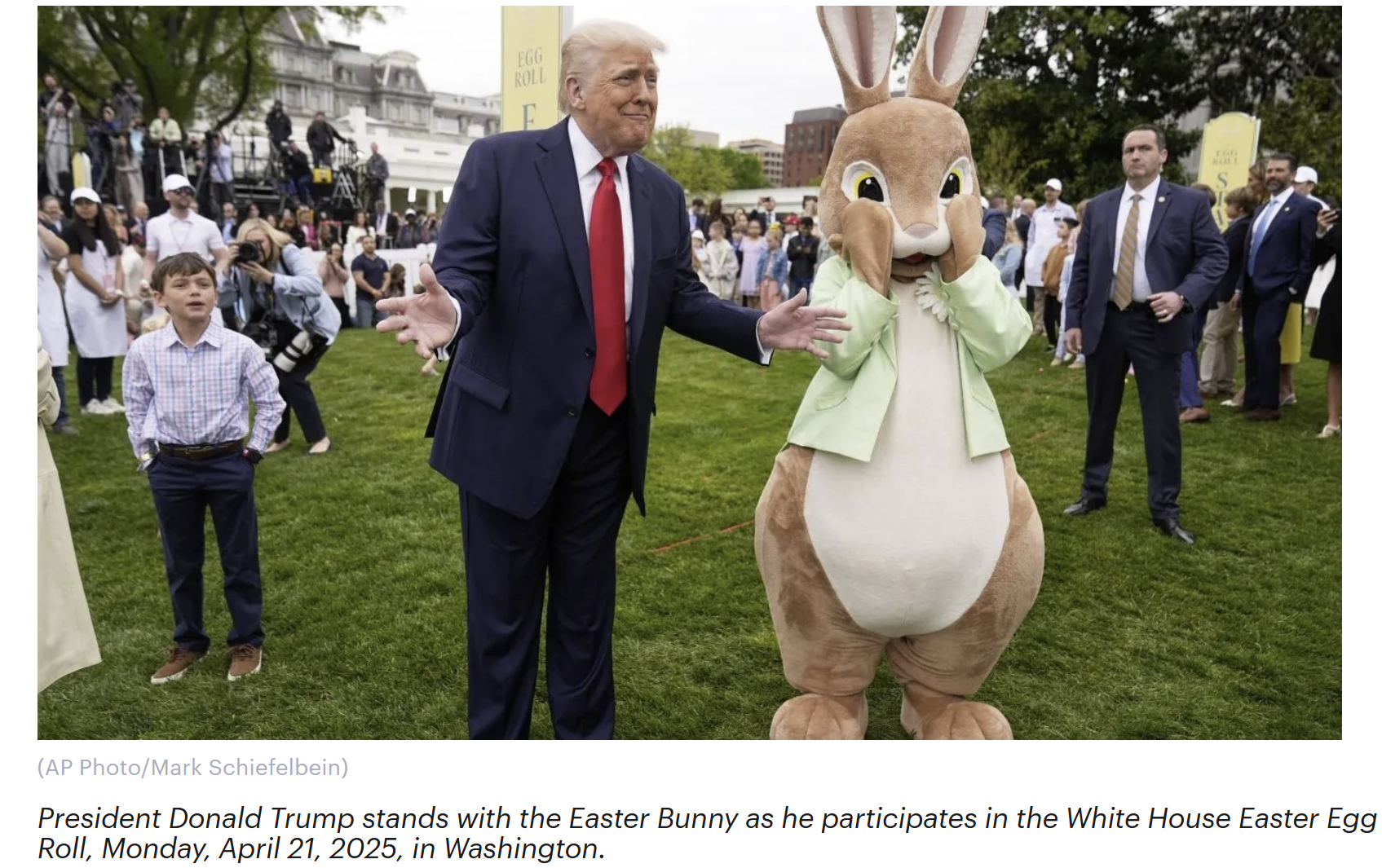
The high-profile vice president is seen in nearly every Oval Office meeting photo, signaling a close relationship with President Trump. Such proximity is deliberate, since the “showman-in-chief” leverages optics more effectively than anyone as a powerful messaging tool.

Although the 2028 presidential campaign is three years away — centuries in political dog years — the 40-year-old Vance is on a trajectory to win the Republican nomination. In a recent Emerson poll, he garnered 46 percent support among registered Republican primary voters for 2028.

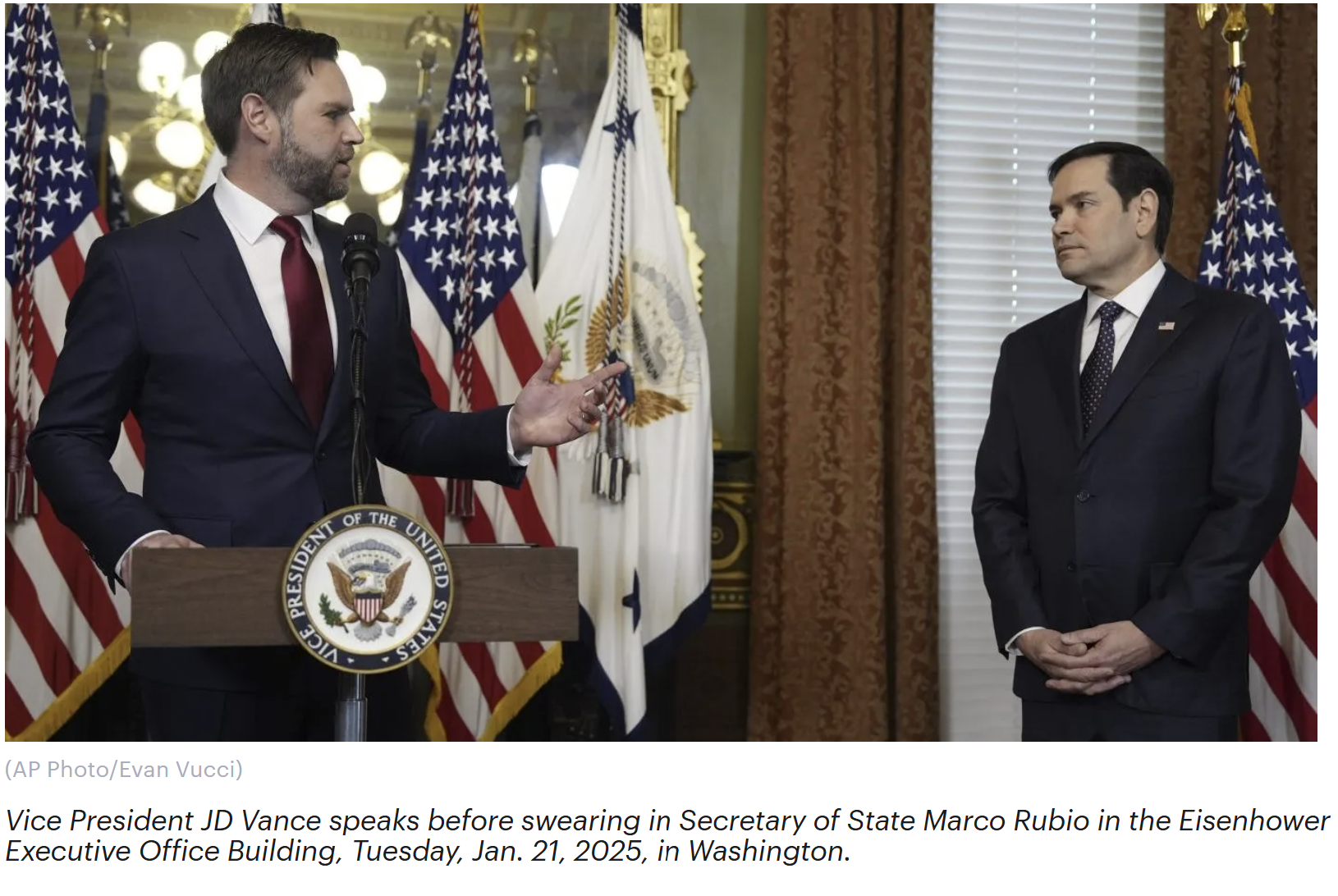
That same poll found Vance’s closest Republican rivals were Secretary of State Marco Rubio, supported by 12 percent, and Florida Gov. Ron DeSantis, at 9 percent. Rubio in 2016 and DeSantis in 2024 both had disastrous presidential runs against Trump and, in the process, alienated the MAGA base. At the time, Rubio and DeSantis were warned by political strategists to wait for more political seasoning in a future presidential cycle. Both paid a price for their unbridled ambition.

Vance knows that his 2028 prospects hinge on Republican success in the 2026 midterms, which will be linked to Trump’s sinking job approval. Therefore, in addition to his demanding day job, the vice president has been in full campaign mode since March, when he was appointed finance chair of the Republican National Committee. That strategically brilliant early move by Team Trump positioned Vance as a presidential heir, facilitating frequent interactions with the party’s most powerful donors and state party leaders.

For Vance, raising money from wealthy Republicans is relatively easy, since he has around a 50 percent chance of becoming the next president and stands a heartbeat away from replacing the 79-year-old incumbent.

But can millions of dollars translate into the millions of votes needed to keep the Republicans in control of the House and Senate when Trump is not on the ballot? For that task, Vance is Trump’s point man, and he has the most to gain or lose. Political history favors Democrats winning back the House, but if Vance can work some magic and defy the odds, he could go on to win the early 2028 primaries and quickly claim the nomination.

Some Republicans argue that the party will “waste time and money” better spent fighting Democrats if Trump does not quickly anoint Vance. The operative word is “if,” because Trump cares deeply about his legacy. A family dynasty would further solidify his place in history. Read more..


By Myra Adams – The Hill contributor

MYRA’S COMPLETE ARCHIVE IS HERE

Reposted from The Hill – July 4, 2025

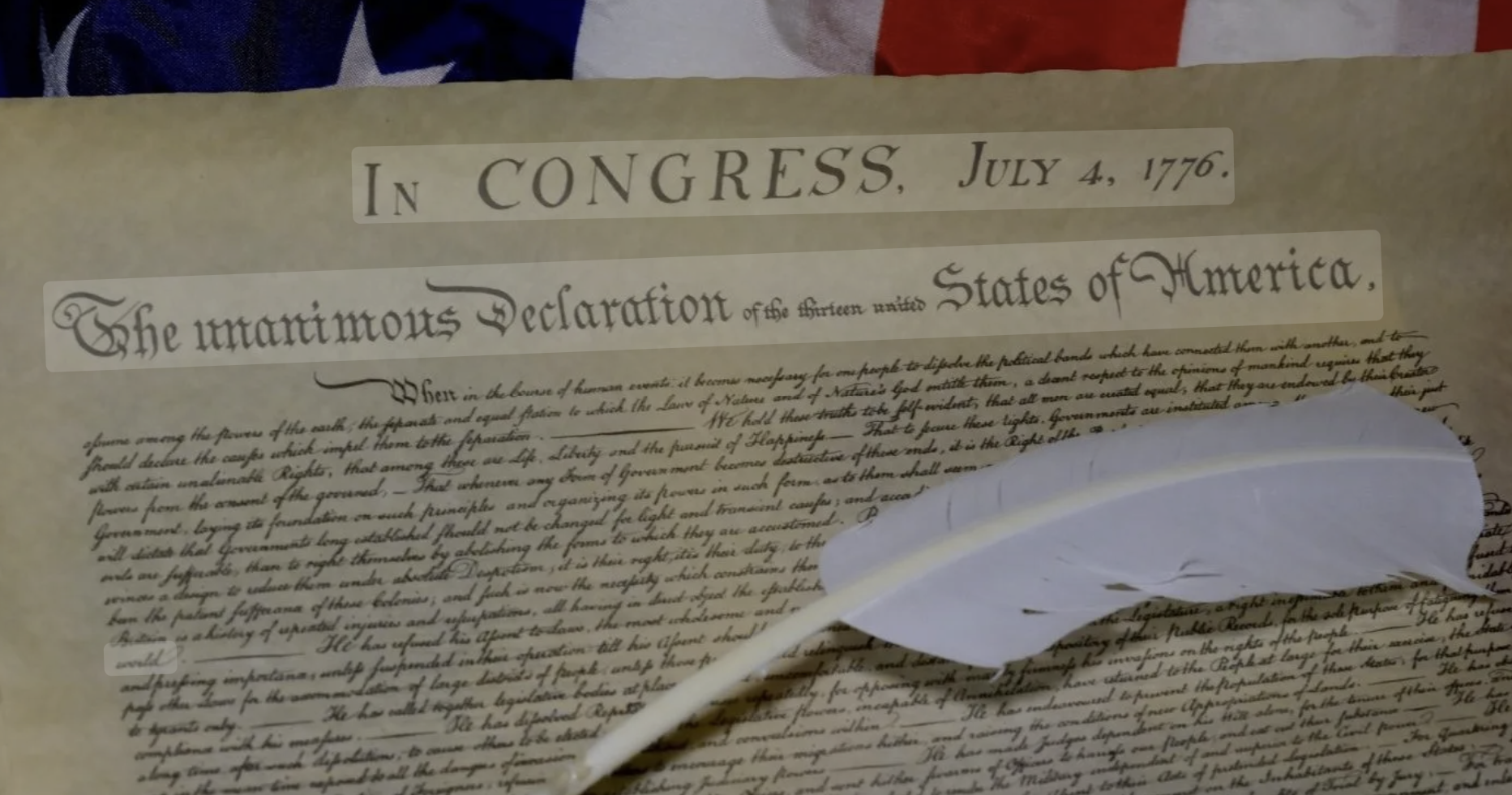
Today is synonymous with fireworks, flags, parades and barbecues, but 33 percent of Americans do not plan to celebrate the nation’s 249th birthday. National pride has fallen to record lows, and a 2023 poll found that 41 percent of Americans do not know the meaning of Independence Day on the Fourth of July.

As a lead-up to next year’s 250th anniversary, a concerted effort should be made to educate citizens about the holiday and the risks the Founding Fathers took to make it happen. Little attention is paid to the collective bravery necessary to establish our country after the Declaration of Independence was signed, which severed ties with Great Britain, then a leading world power.

Most significantly, God’s role is often downplayed or ignored in the Declaration, with three godly references that altered history and remain politically relevant. For example, after President Trump authorized the bombing of Iran’s nuclear facilities last month, he addressed the American people and concluded by saying, “And I want to just thank everybody, and in particular, God. I want to just say, we love you, God, and we love our great military. Protect them. God bless the Middle East. God bless Israel, and God bless America. Thank you very much.”

While Trump expressed gratitude and love for God after a successful attack, the Founders justified their Declaration of Independence because of God. Knowing that winning freedom from Great Britain would be a David-vs.-Goliath battle, our revolutionary leaders placed God at the tip of their spear both philosophically and militarily.

Let’s analyze the three references to God in the Declaration of Independence. Read more..


By Myra Adams – The Hill contributor

MYRA’S COMPLETE ARCHIVE IS HERE

Reposted from The Hill – June 20, 2025

(As of June 22, 2025, the National Debt has reached $37 trillion.)

My Albanian-born father-in-law was an American patriot. In the mid-20th century, he served for decades as a CIA operative, quietly fighting against the spread of communism in Europe and Southeast Asia.

Before his death at age 92, he lamented America’s future, saying, “I’m glad I won’t be around to see the end.” Long before the U.S. was on the brink of World War III, I shared his bittersweet pessimism, prompted by the “death spiral math” found on the U.S. Debt Clock.

The “clock” ticks real-time government data showing the ever-growing national debt — $36.9 trillion as of this writing — the most owed by any country or empire in human history.

Nonetheless, this decades-long travesty of overspending, attributed to presidents from both parties, is still manageable if the U.S. gross domestic product — estimated at $29.2 trillion in 2024 — were to exceed the nearly $37 trillion national debt. At least, that is the economic theory recently espoused by Treasury Secretary Scott Bessent, who stated, “If the economy grows faster than the debt, we stabilize the country.”

Bessent’s philosophy of “we can grow our way out of debt” supports adding an estimated $3.3 trillion to the national debt, according to the Congressional Budget Office, if President Trump’s “Big, Beautiful Bill” were to become law.

Cue the laugh track, because Bessent’s growth fantasy is a joke when viewed through the lens of history and facts. The national debt has exceeded GDP since 2013, and the Debt Clock shows the U.S. debt-to-GDP ratio today at 123 percent. Reducing that unwieldy ratio requires a sustained economic boom not seen since the decades following World War II. Read more..


By Myra Adams – The Hill contributor

MYRA’S COMPLETE ARCHIVE IS HERE

Reposted from The Hill – May 30, 2025

President Trump’s war against diversity, equity and inclusion is reverberating throughout nearly every sector, igniting a civil rights pushback. But his executive orders ending DEI cannot halt the historic pace of national racial diversity.

According to the Census Bureau, the “white only” share of the population is now 58.4 percent. Non-Hispanic whites are projected to fall below 50 percent by 2045.

So the “D” in DEI represents America’s destiny. Although contentious race-based policy debates will continue, diversity is the new America and must be embraced.

The DEI acronym, along with tariffs, ranks among Trump’s most frequent utterances. But due to overuse and clouded meaning, change is afoot to rename DEI, starting with the “Office of Belonging” at the renowned Mayo Clinic.

Therefore, I propose changing DEI to mean “drama, exaggeration and incoherence,” reflecting Trump’s unique communication and governing style.

“Drama” captures the daily, head-splitting, inescapable second Trump term. Every day is Trump Day, as Americans are surrounded by media and compelled to tune in. The president’s insatiable desire to consolidate power, combined with his unconventional need to create drama, leads to constant breaking news that affects every citizen’s life to some degree.

Such intentional “drama by design” could be perceived as a subtle form of domination. Through daily headlines — regardless of whether the news is good or bad, since bad news is spun, justified or rationalized as good — Trump keeps himself prominently on your screen. He “wins the day” by overshadowing or blotting out others.

His need to be on your screen evokes George Orwell’s classic dystopian novel “1984,” written long before screen viewing became a daily ritual. In “1984,” a totalitarian state dominates and controls its people through pervasive surveillance via their “telescreen.” Maintaining a constant screen presence is “Big Brother,” the all-powerful leader who is always watching and enforcing ideological purity throughout the land. Read more..


By Myra Adams – The Hill contributor

MYRA’S COMPLETE ARCHIVE IS HERE

Reposted from The Hill: May 16, 2025

President Trump sparked what is likely to be a brutal battle for the 2028 Republican nomination during his May 4 interview on “Meet the Press.” After extinguishing his ongoing “third-term” tease, Trump name-checked the two leading candidates to succeed him: Vice President JD Vance (as expected) and Secretary of State Marco Rubio (very unexpected).

This week, questions about Rubio’s own birthright citizenship (neither of his parents was a citizen when he was born in Florida) generated headlines, so watch this developing issue.

Rubio, formerly a third-term U.S. senator from Florida, had been a critical rival of candidate Trump in the 2016 presidential primary. Rubio, whom Trump degradingly taunted as “Little Marco,” has suddenly morphed into powerful “Big Marco,” concurrently serving in four separate leadership positions: Secretary of State, interim National Security Advisor, acting administrator of the U.S. Agency for International Development and acting archivist for the National Archives and Records Administration.

Trump’s recent unleashing of a Vance vs. Rubio rivalry will effectively sustain media interest over the next three years. Once again, the president proves he is a master manipulator of the 24/7 news cycle.

Now, during any Trump-news lull, he can tease a Vance vs. Rubio “Truth Social” post about the state of their rivalry. He can also inject new possible successors, tease a potential 2028 endorsement or adopt the firm non-endorsement strategy of “let the MAGA primary voters decide.” This continues his reign as the all-powerful lame-duck kingmaker, while 2028 hopefuls kowtow for his favor.

In any case, expect the GOP presidential primary to be 100 percent Trump-centric, with entangled high-stakes drama and factors at play. Such factors include enshrining Trump’s all-important personal and presidential legacy, a potential family dynasty, and ensuring the nomination of a “MAGA movement heir” worthy of that title who could capture 270 electoral votes in Trump’s name.

Recognizing and satisfying that checklist is why Trump’s “succession reality show contest” began this month. The president is known to enjoy extended chaos and infighting when he controls the situation.

Read more..


By Myra Adams – The Hill contributor

MYRA’S COMPLETE ARCHIVE IS HERE

Reposted from The Hill: May 2, 2025

In his inaugural address, President Trump boldly declared the beginning of America’s “Golden Age.” Instead, with news and headlines that screamed “lowest 100-day approval in 80 years,” Trump’s Golden Age appears to be founded on “fool’s gold.” Those minerals with gold color that “flake, powder or crumble” aptly describe plunging consumer confidence amid overwhelming economic cynicism.

While ABC and CNN polls found that 72 percent of adults believe Trump’s policies will cause a recession, and tariffs will hurt the economy, the Golden Age began in the Oval Office with new blinged-out decor.

Given widespread dismal polling and a shrinking economy, Trump’s first 100 “daze” could be described by repetitive words and phrases that should be retired like a sports star’s jersey when Trump exits the White House in January 2029. (If he does exit.)

The first retired word should be “deal” — the “king” of Trump’s vocabulary, used ad nauseam. For Trump, “deal” is not just a transactional word but also his brand identity. The president’s never-stop-fighting persona is inseparable from a “never-lose” dealmaker who always comes out on top.

Trump indiscriminately applies “deal” to any conflict needing resolution involving allies or enemies, concerning all possible matters, international and domestic. With such widespread overuse, “deal” often sounds harsh and out of place for situations that require more nuance and sensitivity, especially when conducting the diplomacy of war, peace and its aftermath.

For example, Trump often uses “deal” when negotiating or discussing the Ukraine-Russia war, resulting in the rare minerals deal that Ukraine finally and desperately signed this week.

Contrast that transaction with the 1948 Marshall Plan, by which the U.S. helped rebuild Europe after World War II. At the cost of $13.3 billion ($176.4 billion in today’s dollars), the Marshall Plan was never thought of or characterized as a “deal.”

Surely, “deal” rhetoric makes the president feel more powerful and in control of the narrative. However, a deeper philosophical reason was revealed in “The Art of the Deal,” Trump’s 1987 best-selling business advice-autobiography, ghostwritten by Tony Schwartz. Schwartz wrote, channeling Trump’s voice, “Deals are my art form. Other people paint beautifully on canvas or write wonderful poetry. I like making deals, preferably big deals. That’s how I get my kicks.” Read more..


By Myra Adams – The Hill contributor

MYRA’S COMPLETE ARCHIVE IS HERE

Reposted from The Hill: April 18, 2025

Donald Trump 2.0 is the first “I can do anything” president.

To facilitate that governing philosophy, his squad of four powerful female enablers mirrors his cocky, bullying leadership style of never backing down and never admitting mistakes.

These fine-looking ladies are always camera-ready for their frequent Fox News and social media appearances. They have the “MAGA look,” with long hair, perfect makeup and stylish wardrobes, so pleasing to the president to whom they owe their jobs and influence.

But for anyone suffering from, or negatively affected by, the president’s policies, these foot soldiers in designer heels might be called the “MAGA Mean Girls.”

Although Trump declared April 2 “Liberation Day,” the women discussed below have been “liberating” America from its Constitution every day since Jan. 20. At the behest of their boss, they are bullying into submission two of the three co-equal branches of government, resulting in the most powerful executive branch since President Franklin Roosevelt. Read more..


By Myra Adams – The Hill contributor

MYRA’S COMPLETE ARCHIVE IS HERE

Reposted from The Hill: April 4, 2025

In the media world, the phrase “developing story” refers to the potential for new facts and changing circumstances that can alter the reporting. Thus, Vice President JD Vance’s apparent quest to win his boss’s job three and a half years from now is the perpetually “developing story” that began less than 24 hours after President Trump’s second inauguration.

Officially, “Vance 2028” is merely political speculation. The vice president has not announced his presidential intentions, commented, hinted, or established any campaign infrastructure, except for various iterations of JDVance2028.com, reserved at GoDaddy.

Any Vance influencer can still buy www.electJDVance.com for only $47,000 if enticed by the sales pitch: “This domain is more than just a web address; it’s a digital platform for those who believe in his policies, his vision for the future, and his potential to lead the nation to greatness from the Oval Office.”

Read more at The Hill.