Forty-six years have passed since I first joined College Republicans. Sadly, after decades of embracing (and often defending) my Republican identity, I am re-registering as an independent voter. Psychologically this action equates to a painful divorce, leaving me disheartened, discouraged and alone.
But I am not alone. There are tens of thousands, perhaps even millions, of former Republicans newly estranged from the “Trumplican” Party — aptly named for the man who highjacked what used to be a “big tent” party. That’s the Republican Party I remember joining when those with diverse opinions were still welcomed.
In the Trumplican-era, RINOs (Republicans In Name Only), including those who worked for either of the President Bushes, Sens. John McCain and Mitt Romney, have been routinely demeaned, marginalized and branded with the most “despised” moniker — “Never Trumpers.”
Starting in mid-2016 after Trump won the presidential nomination, the old Grand Old Party whittled away, and the “big tent” was exclusively used for MAGA rallies. Rising from the passion was party leadership with cult-like allegiance to Donald J. Trump.
Organically starting at the county level, the adoration virus spread to the state parties and infected the Republican National Committee. Then came a historic political transformation: After decades of idolizing Ronald Reagan, the faithful started believing President Donald Trump was greater than Reagan. The shift was intolerant and arrogant, and it was not uncommon to hear that Trump was the “best president ever,” even better than Lincoln.
A friend from a swing state who served in Republican club leadership positions grew disgusted by the “blind” Trumplican allegiance. Yesterday in an email, she wrote, “I am saddened by the Republican Party. Donald Trump turned the values of the party upside down and pitted people against each other. He was never a true Republican but a divider who wanted to control it all.”
The notion of “pitting people against each other” eventually turned deadly, turning off some long-time GOP voters. This week, unprompted, a non-political professional told me he has left the Republican Party, as have his associates after holding Trump responsible for the Capitol attack.
Indeed it is comforting to know other former Republicans, but the question is: Where do we go? Certainly not to the Democratic Party, after reading President Biden’s initial avalanche of predictable liberal-leaning executive orders. Among them are controversial “transgender protections” that may effectively end some female sports by allowing biological males to compete on the same playing field. For a newly-minted president who championed and campaigned on unity, many of Biden’s executive orders have inflamed Republicans.
Amazingly, in his inaugural address, Biden asked the nation to “end this uncivil war” with Civil War-era levels of polarization resulting in what he called “a broken land.”
Meanwhile, over at my broken former party, a new civil war has begun between Trump supporters and those who know the party can never win another national election with Trump as the king or kingmaker. Ironically, during the 2020 campaign, the GOP had never been so unified. Such lock-step solidarity was easily explained: Trump ruled by fear, especially with elected officials terrified they would be subject to tyrannical tweets with threats of being “primaried.”
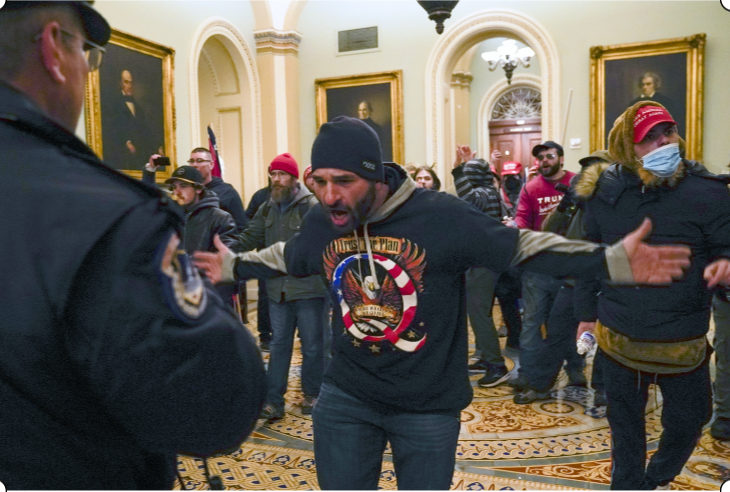
Then came Nov. 3, followed by two months of Trump perpetuating the “Big Lie” that the election was stolen and that he had won in a landslide. On Jan. 6, the day after the GOP blamed Trump for losing the Senate, he incited a deadly insurrection to overturn the Electoral College certification. A week later, the House of Representatives impeached Trump for a second time, and homeless Republicans thought, “now everything will change.”
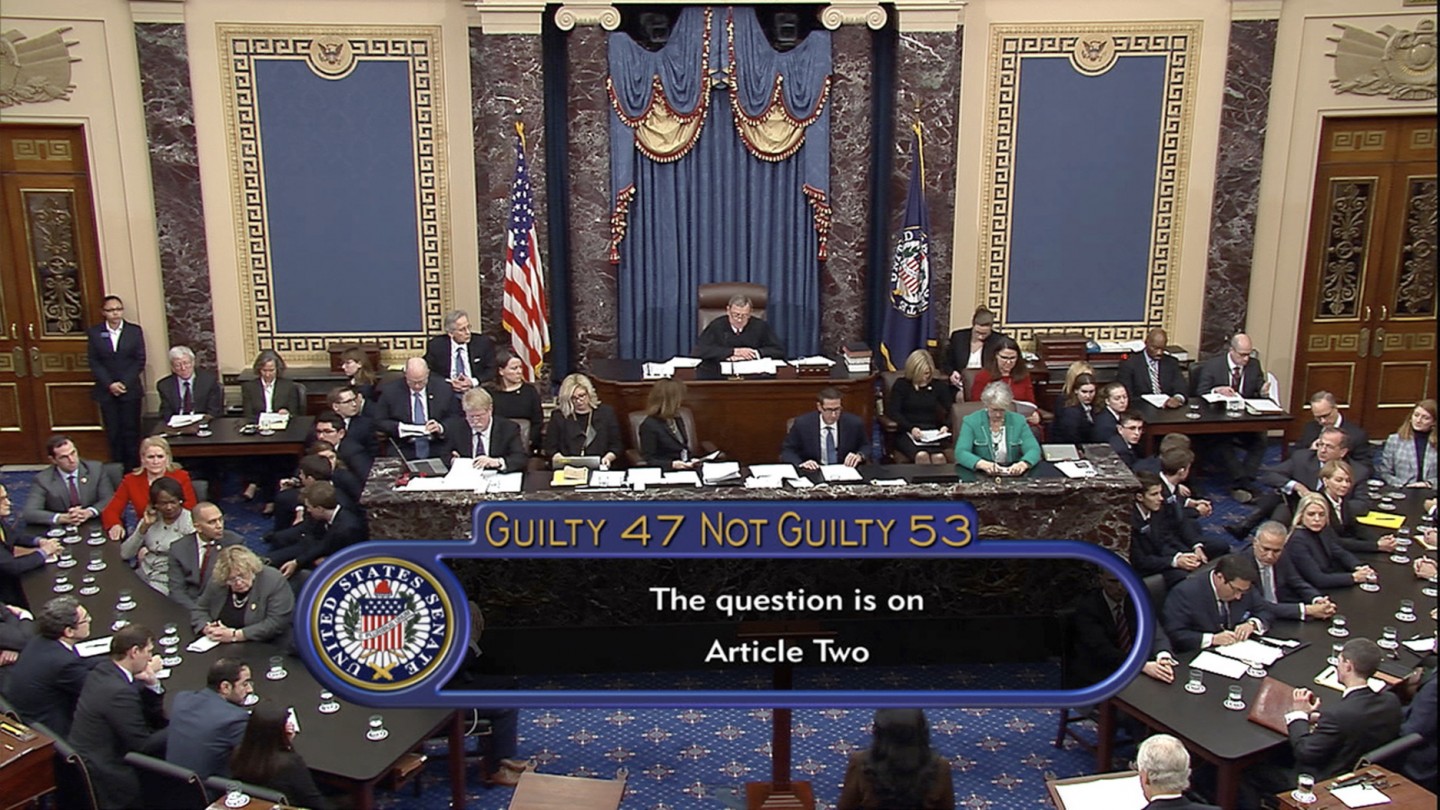
But never underestimate the power of a cult of personality. This week after a preliminary vote, it became clear that an overwhelming majority of Republican senators still fear the former president and would not vote to convict. Why not erase the Constitution’s impeachment clause at the same time? God forbid if a future president uses Trump as a governing role model.
While many Republicans shamelessly cower to Trump and his loyal base, an inevitable Senate acquittal will further embolden him and his elected acolytes to inflict pain upon GOP leaders who voted for impeachment and conviction. It is ludicrous that Trump threatened to start a third party while he controls a party that chiefly exists to serve and defend him. In the foreseeable future, Trump’s iron rule will continue to squelch any rebel voices of reason.
Ultimately, Republicans can’t live with or without Trump. I can’t live with the Democrats, so for now I live in my tent, politically homeless.
A “benefit” to being an aging baby boomer is a historical perspective on catastrophic postwar tragedies that changed everything. By “everything,” I mean events that so dramatically altered the course of history in one 24-hour period that the “day after” ushered in a new era.
I would argue the following three dates/events fall into that horrific category:
Nov. 22, 1963: The assassination of President John F. Kennedy.
Sept. 11, 2001: The terrorist attacks on New York and Washington.
Jan. 6, 2021: The U.S. Capitol attack.
The latter is still raw and smoldering. There is much footage and evidence waiting to be reviewed. Many facts, villains, perpetrators, and collaborators are to be determined, with more arrests sure to come. Figuratively, tidal waves continue to crash on the shores of the Potomac from this political tsunami — an insurrection incited by former President Trump against a co-equal branch of government and his loyal vice president. Have we met the enemy, and he is “us,” chanting “USA, USA”?
The Capitol remains a fortress and a crime scene. Hence, it is too early for grand conclusions about precisely how Jan. 6 will alter and impact U.S. history, except to say that it will. As points of comparison, let’s revisit JFK’s death and Sept.11, 2001.
JFK Assassination
On the day John Kennedy was shot, I was a third-grader in Needham, Mass., a suburb of his Boston hometown. Seared into my memory is watching a classroom television when Walter Cronkite announced, “President Kennedy died at 1 p.m. Central Standard Time.”
Two days later, another mind-branded memory took root. Watched live by most Americans, alleged assassin Lee Harvey Oswald was himself shot by Jack Ruby.
Years ago, veteran CBS journalist Bob Schieffer famously wrote that the JFK killing was “when America lost its innocence.” He explained, “As the entire nation watched in horror and shock as the events of that weekend unfolded on television in real-time — the FIRST time that had ever happened — our national confidence was shaken to the core.”
While JFK’s untimely death gripped the nation in unified mourning, newly sworn-in President Lyndon Johnson vowed to continue Kennedy’s visions for a better and more equal America. JFK’s passing, coupled with Johnson’s political savvy as a former Senate majority leader, resulted in numerous groundbreaking legislative achievements and social programs under the “Great Society” umbrella. The first was the landmark Civil Rights Act, signed on July 2, 1964. Now-familiar programs such as Medicare and Medicaid became law the following year.
Although Kennedy’s violent death negatively impacted Americans of all ages, few were more affected than the first wave of baby boomers, then in their teens. Less than three months later, a performance phenomenon united and infused the nation’s youth with new hope and turned the tide of their mourning. The Beatles made their U.S. debut on “The Ed Sullivan Show,” Feb. 9, 1964. They were watched by 45.3% of households — 73 million Americans. The “Fab Four’s” music helped spark the period of cultural/social changes and political upheaval we now speak of simply as “the sixties.” But the first domino fell with the violence of Nov. 22, 1963.
Sept. 11, 2001
On a sunny September morning 38 years later, “everything” changed again.
Four commercial airliners loaded with fuel for their east to west journeys across the U.S. were hijacked and turned into suicide missiles by 19 Islamic terrorists. The attacks targeting America’s most iconic financial, military, and government buildings took nearly 3,000 lives and launched the “Global War on Terror.”
Although Congress had not “officially” declared war, enabling legislation granted President George W. Bush all the authority and resources needed to conduct operations abroad and at home. Most notable was the Authorization for Use of Military Force (AUMF), signed on Sept. 18, 2001, and soon followed by the Patriot Act on Oct. 26. The attacks also facilitated a massive government reorganization that, for starters, birthed the Department of Homeland Security. Moreover, significant flaws in the nation’s vast web of intelligence agencies, which had led to a failure to “connect the dots” and share information, were exposed.
Collectively, Americans had never been more unified in their patriotism and outrage. Meanwhile, however, amid the fear of more attacks was apprehension about lost privacy and personal data collection.
All Americans were impacted by tighter security measures, especially on planes and in airports. Furthermore, thousands of young men and women were motivated to join the military and fight back. What now are called “endless wars” began first in Afghanistan, followed by Iraq.
As with JFK’s assassination, most of us will always remember where we were upon hearing the catastrophic news of Sept. 11, 2001. On that day, American life forever changed as we were all infused with an awareness of terrorist threats embodied in the popular, actionable slogan “See something, say something.”
Jan. 6, 2021
This was the first time the Capitol had been attacked since the War of 1812.
Though facts and fallout from Jan. 6 are still unfolding, over time that date will equate to 9/11 with its potential for long-term political consequences, policy changes, legislative action, and national vulnerability.
To best frame the discussion, what follows are questions that eventually will be answered – some within weeks, others in months. Still others will take considerably longer.
–How will we label Jan. 6, 2021? Will it be known as the Capitol Hill Siege? Will it be “officially” remembered each year with solemnity?
–Did the attack prove that our democracy is fragile or strong? Remember, later that evening Congress reconvened and certified the Electoral College results for Joe Biden’s victory. The following Wednesday, the House of Representatives voted to impeach President Trump. This Wednesday, Biden’s inauguration went smoothly, though the Capitol was turned into an armed fortress. Three consecutive Wednesdays in January that a fiction writer could never have imagined.
–When will the Capitol building and grounds get back to normal levels of security? Or will there forever be a “new normal”?
–What was the root cause of the attack? Increasing white nationalism that turned into domestic terrorism? Overzealous mobs egged on by Donald Trump’s “Big Lie” that the election was “stolen” and could be overturned on Jan. 6?
–Will there be any long-term impact on the Republican Party? What happens to the ambitious careers of two Jan. 6 “ringleaders,” Sens. Ted Cruz and Josh Hawley?
–Will Trump be convicted in the Senate for inciting an insurrection? If not, does that “weaken” the Constitution’s impeachment clause?
–How will Jan. 6 impact Trump’s “brand” in the short term? What about his legacy?
–In the future, will the losing party be more apt to challenge presidential elections?
–How will the Jan. 6 events impact Joe Biden’s presidency in the first 100 days when a Senate trial is likely to be convened?
–How was the Capital so easily breached on Jan. 6? Did the mob have inside help?
–How many Capitol attackers will be convicted?
–Will there be fallout for Christians considering the appalling footage of Capitol attackers praying in the name of Jesus in the House chamber?
–How will Jan. 6 impact the ongoing debate about free speech and the power of tech giants to de-platform social media accounts?
–Will there be a congressionally authorized “January 6 Commission” similar to the 9/11 Commission? Will it have separate Republican and Democrat conclusions?
–Given the haste of Trump’s second impeachment, will that tool be used more frequently by the opposing party against future presidents?
So many questions, so many complicated answers (where any can be discerned).
The passing of time will clarify the issues and concerns unleashed by the Capitol attack. That understanding will then translate into steps sure to shape our national identity and impact political discourse well into the 21st century. As with 11/22/63 and 9/11/01, 1/6/21 will echo long in our lives.
Myra Adams is a media producer and writer with numerous national credits. She served on the McCain Ad Council during the GOP nominee’s 2008 campaign and on the 2004 Bush campaign creative team. She can be reached at MyraAdams01@gmail.com or @MyraKAdams on Twitter. Related Topics: JFK Assassination, 9/11, Capitol Siege, U.S. Capitol Assault
On Wednesday, Donald Trump made history as a twice-impeached president. One could argue that Article 1, “Incitement of Insurrection,” reflects Trump firing the first shots of Civil War 2.0 with red MAGA hats and Trump 2020 banners replacing the Confederate flag.
Given the intense partisan political and cultural divide between red and blue America, such a conflict was inevitable, flammable, and waiting for a spark. Yet, nobody foresaw the opening battle would be an attempted siege of the Capitol — followed a week later by Trump’s second impeachment.
Moving into Joe Biden’s inauguration week, we will learn whether hard-core MAGA militia members are as dedicated to giving their lives and shedding blood for Trump as Confederate soldiers were for “The Cause.”
Follow Trump “to the ends of the earth”
For instance, “I say, take the hill or die trying” was a reader comment on MyMilitia.com — a site that “urged violence if senators made official the victory of President-elect Joe Biden,” as reported by ProPublica. In its piece titled “Capitol Rioters Planned for Weeks in Plain Sight. The Police Weren’t Ready,” the authors cite an extremist pro-Trump leader threatening violence after writing on Parler a week before, “If D.C. escalates…so do we.”
Such bravado, even if limited to extremist pockets, is compatible with what Eric Trump told the Associated Press on Tuesday — that “his father will leave the presidency with a powerful brand backed by millions of voters who will follow him, ‘to the ends of the Earth.’ ”
Eric’s assessment of loyalty is reminiscent of what his father famously said at an Iowa campaign stop on Jan. 23, 2016: “Polls say I have the most loyal people, did you ever see that? Where I could stand in the middle of Fifth Avenue and shoot somebody, and I wouldn’t lose any voters, OK?”
Not OK. And it’s why, five years later, Trump galvanized the actions of his most extreme cult-like loyalists into attacking the Capitol after two months of repeatedly hearing the president spew charges of election fraud to his 88.7 million Twitter followers.
Unfortunately, the most violence-prone of the thousands of mostly peaceful protesters who gathered for the Jan. 6 “Save America” rally were inspired to show “loyalty” by doing the president’s dirty work as Congress was certifying the Electoral College votes for Joe Biden.
“Trump truth”
For those MAGA militia members, the only truth is “Trump truth” — the president “won in a landslide,” and the “election was stolen.” In Trump’s name, these patriots are “taking back their country,” so let the fight begin.
However, impeaching Trump for a second time does not solve another problem fueling Civil War 2.0. The issue at hand is the millions of Trump voters angry with Republican Party leaders who have recently turned against the president. They see Vice President Mike Pence, Senate Majority Leader Mitch McConnell, Rep. Liz Cheney as the worst offenders, and on some days, Sen. Lindsey Graham too, with House Minority Leader Kevin McCarthy leaning in that direction.
In MAGA-land, showing loyalty to Trump is always paramount. Since 2016, the grassroots of the GOP were conquered by the “Trumpican Party,” which grew in strength and zeal.
As proof of Trump’s domination, an October Wall Street Journal/NBC News poll found 54% of Republican voters supported Trump over the party — compared to 38% who were Republicans first.
This week the numbers have flipped. An Axios-Ipsos survey reported that “a majority of Republicans in the poll — 56% — consider themselves traditional Republicans; 36% call themselves Trump Republicans.” Still, that 36% is a powerful, influential bloc of voters who will followTrump “to the ends of the Earth.”
Greatest president since Reagan or Lincoln
Is there hope for my former party? Having been an active and loyal Republican for over four decades, I can attest that, in the past four years, if one did not believe that Trump was the greatest president since Reagan or Lincoln, you had better find a new party. (That’s the reason I am currently politically homeless, waiting for an “under new management” sign or perhaps even a new party to be formed by disgruntled former Republicans, of which there are millions.)
Fortress Washington looks like Civil War 2.0 has begun
With Trump’s abandonment of leadership, the nation’s capital has physically been transformed into a fortress. Not since the first Civil War has the “Union” military presence throughout Washington, D.C., been at today’s levels. There are over 20,000 troops deployed for Biden’s inauguration, with an IED threat making headlines. When will it be safe for these soldiers to disperse — weeks, months? Years? (Never?) Moreover, the FBI is warning of inaugural-related violence throughout the nation with state capitals also on guard. Let’s hope our global enemies don’t further complicate matters. Undoubtedly, our national turmoil makes us a soft target while the twice impeached president runs out the clock.
Another passion-stirring event that could explode Civil War 2.0 is the Senate impeachment trial. Soon-to-be Minority Leader McConnell announced that the trial is delayed until after Trump leaves office, thus placing it in Chuck Schumer’s lap. Indeed, “split-screen” optics with Trump’s trial and Biden’s new administration initiatives would send an off-kilter message to the nation and the world.
Can GOP leaders “purge” Trump?
The critical question is whether two-thirds of the Senate will vote to convict, and bar Trump from holding public office again. If they do, then McConnell could theoretically “purge Trump” from the party and win back control of the chamber in 2022. But if Trump is acquitted and wants to run in 2024, McConnell should consider the findings of a Morning Consult/Politico poll conducted Jan. 8–11, which showed support is strong for a Trump comeback: If the Republican primary for the 2024 presidential election were held now, Trump would win 42% of Republican voters. (The poll was taken before impeachment, which could improve those numbers.)
By comparison, the same question, asked Nov. 21–23, found that 54% chose Trump. Though the latest survey shows a decline of 12 percentage points, that still leaves a significant chunk of Trump voters not wanting to “purge” their leader, thus illustrating why Civil War 2.0 is likely to continue.
The “Big Lie” is fueling Civil War 2.0
And here is another reason. Last Friday, Biden referenced the “Big Lie” concept that originated with Joseph Goebbels. He was one of Adolf Hitler’s henchmen who infamously said, “If you tell a lie big enough and keep repeating it, people will eventually come to believe it.”
The Big Lie this time was perpetrated by an insecure president who could not accept defeat and fears the “loser” label. Despite recounts, court rulings, and state certifications to the contrary, Trump truth prevailed among his devotees. Now, “Experts warn that Trump’s ‘big lie’ will outlast his presidency,” a CNN headline announced this week.
How big was the big lie? A December Quinnipiac poll found 77% of Republicans believed the election results were riddled with widespread fraud. Overall, “60% of registered voters polled believe that Biden’s victory was legitimate, but 34% do not.”
The big lie is a big problem for Biden, who must resolve the fraud-charge issue, with Republicans help, for the good of the nation.
Only 23% of Republicans believe Trump incited Jan. 6 violence
More Trump truth: A CBS/You Gov poll released Wednesday found that only 23% of Republicans “think Donald Trump encouraged violence at the Capitol” compared to 59% of all Americans, 90% of Democrats, and 58% of independents.
Such opinion gaps are why our nation will be fighting Civil War 2.0, alongside a pandemic of Biblical proportions and a wounded, weak economy, for some time to come. Then, there is the explosive, passionate issue of free speech. With high-tech giants de-platforming conservatives on major sites and shutting down right-wing alternatives such as Parler, a new “Battle of Gettysburg” could be in the making.
The list of catastrophic problems plaguing our homeland awaiting the new 78-year-old president is seemingly endless.
“A house divided against itself will not stand”
Biden’s stated goal is to unify, and that stance should be applauded. Moreover, unification is necessary, considering President Abraham Lincoln’s pre-Civil War warning that “a house divided against itself will not stand.” And it did not, at least not without a fight.
Even though Lincoln’s words (quoting Jesus) are an overused cliché, they remind us of the devastation unleashed 160 years ago. And since we are one nation under God, let’s pray for national unification at this critical juncture.
Let that be our new “cause” and one that must not be lost.
During Trump’s Georgia rally on Monday night in support of Senators Kelly Loeffler and David Perdue, the president told the large, enthusiastic crowd, “I’m going to be here in a year and a half, and I’m going to be campaigning against your governor and your crazy secretary of state, I guarantee you.”
Such electoral bravado heralded Trump’s post-presidency visions of grandeur. Before Tuesday’s election results, he was on track to become one of the most influential former presidents in history. In November, he lost reelection but won a record 74.2 million votes with “77% of Republicans believing there was widespread fraud,” according to a December Quinnipiac poll.
What follows is an assessment of Trump’s post-presidency before Monday and after Wednesday’s “Siege of Capitol Hill” — widely reported as an insurrection and assault on democracy.
BEFORE:Trump is highly motivated to prove that he was not and is not a “loser.”
For Trump’s psyche, there is nothing worse than to be labeled a “loser.” (Refer to niece Mary Trump’s bestselling book, “Too Much and Never Enough” for all the family background.) She explains why during the presidential campaign, Trump repeatedly said, “the only way we’re going to lose this election is if the election is rigged.”
Nonetheless, give Trump credit for being transparent before, and then after the election for successfully convincing his supporters (along with many Republican officeholders) that contrary to court rulings at every level, the election was “stolen.”
AFTER: The loser label has become a tattoo.
Let the record show that Trump, as leader of the Republican Party, presided over his party losing control of the executive and legislative branches of government. After Tuesday’s election debacle, he is rightly being blamed for losing the Senate after Democrats won both Georgia seats.
BEFORE:Flirting with a 2024 presidential run.
Continually teasing his 2024 plans is a ploy for Trump to remain in the media spotlight. Most important, it is a significant fundraising boost that keeps his ardent supporters engaged.
AFTER: Dead — stick a fork in it. If Trump continues the “flirt,” it will be perceived as the ravings of a mad man. The “Trumpican Party” I wrote about in June of 2020 died on Jan. 6, 2021, after its “troops” tried and failed to “take the Hill” and overturn a presidential election. Worse for Trump, due to bi-partisan disgust, there is a slight chance he could be an ex-president before his term officially ends at noon on Jan. 20. Moreover, his access to Facebook and Instagram are denied for an undetermined length of time.
BEFORE:Trump refuses to concede the presidency.
He is besieged with a strong and unending desire to avenge (in his words) the “fraudulent,” “stolen,” “illegal,” and “rigged” election worthy of a “third-world country,” repeatedly insisting that he “won in a “landslide.”
AFTER: Since Twitter froze the president’s account on Wednesday, senior adviser Dan Scavino tweeted on Jan. 7, 2021, at 3:49 AM (note the time) on Trump’s behalf:
Statement by President Donald J. Trump on the Electoral Certification:
“Even though I totally disagree with the outcome of the election, and the facts bear me out, nevertheless there will be an orderly transition on January 20th. I have always said we would continue our fight to ensure that only legal votes were counted. While this represents the end of the greatest first term in presidential history, it’s only the beginning of our fight to Make America Great Again!”
Then on Thursday night, Trump made another statement in a prerecorded video that could be perceived as a concession of sorts since he acknowledged the “new administration.”
But you know the tide has turned after Trump lost the support of Sen. Lindsey Graham.
BEFORE: Trump’s Save America PAC raises at least $66 million.
Fighting the “fraudulent” election is very lucrative.
At Trump’s disposal are at least $66 million in the coffers of his Save America PAC he can use for “political activities” to support/fight any incumbent or new candidate, cause, or issue that serves his needs or agenda.
AFTER: How “political activities” will be defined by Team Trump is anyone’s guess, but millions have a good chance of being spent on legal bills. How toxic Trump’s brand becomes during his post-presidency will determine if any candidates want his financial support.
BEFORE: Holding rallies as a “kingmaker” and Republican Party leader.
At rallies that Trump inevitably planned to have to maintain and solidify his standing as a “winner” and leader of the Republican Party, one could surmise that the “stolen” election was inevitably going to be acentral theme.
AFTER: Ifrallies resume at all, they are likely to be greatly diminished. As a result of what looks to be the last rally of his presidency, Trump is blamed for inciting the violent takeover attempt of the Capitol. The timing was planned to occur while Congress was in a joint session certifying the Electoral College results declaring Joe Biden as the 46th president.
The rally and speech were meant to energize the thousands of MAGA troops proudly waving Trump banners. Keep in mind the event was planned and promoted for weeks, designed to bring his most loyal supporters to Washington for the last stand to “stop the steal.” Here is what Trump said at the end of his now infamous rally:
“And we fight. We fight like Hell and if you don’t fight like Hell, you’re not going to have a country anymore.”
“We’re going to try and give our Republicans, the weak ones, because the strong ones don’t need any of our help, we’re going to try and give them the kind of pride and boldness that they need to take back our country.”
Trump gave “walking” orders to the Capitol and the rest is history.
BEFORE:Trump’s narcissistic need to stay in the headlines as the center of attention.
Media attention is a proven way for him to stay “powerful” to enhance his “winning” Trump brand in politics, business, and upcoming court battles.
AFTER: He will still garner attention for as long as he lives. But most likely, his post-presidency influence will dramatically fade.
BEFORE:An aura of fear.
Fear that Trump will attack anyone who is not sufficiently loyal to him (assisted by his 88.7 million Twitter followers and “Trump media.”)
AFTER: Trump will resume tweeting in his post-presidency but perhaps somewhat defanged. He will go down in history with very mixed reviews. But ultimately, as an impeached president (remember that?) who tried to overturn his reelection defeat by inciting followers who damaged the building (literally and figurately) — the symbol of a great nation that stands for the virtues of democracy throughout the world.
BEFORE: “Best President since Reagan” or “Lincoln” — take your pick.
In January 2020, I wrote a piece with the headline quote, ‘If Trump Wasn’t Trump, He’d Be Reagan.’ Within, I requoted the Palm Beach Post reporting a Republican National Committee official who said, “‘I used to say that President Trump is our best president since Ronald Reagan. I don’t say that anymore. I say President Trump is our best president since Abraham Lincoln,’ he said to cheers.”
Need I say more? Seriously, this was the thinking of “mainstream” Trump supporters.
AFTER: Trump’s post-presidency could get weird or turn tragic. Reports about pardoning himself could drown his legacy in a sea of scorn and disdain.
On the brighter side, Trump could stage a comeback. And perhaps that effort began Thursday night in the previously mentioned “concession” video when he ended saying, “And to all of my wonderful supporters, I know you are disappointed. But I also want you to know that our incredible journey is only just beginning.”
Will his loyal supporters go along for the ride? Politico’s Thursday night headline read, “Trump’s grip on GOP grassroots holds fast” with the subhead, quoting a Florida GOP leader, “ ‘The Trump name in the Republican Party is stronger than it has ever been.’ ”
Remember, with Donald J. Trump, never count him out and always expect the unexpected.
We’ve all been deluged with lists of 2020 winners, losers, and reasons why everyone is saying good riddance to this challenging, tragic, chaotic, and unusual year.
This one has a different slant: Five “never before and never again” phenomena unique to 2020. (Yes, I know that one must “never say never,” but the following qualify as two-headed freaks of politics and economics.)
We Saw the First President to Be Impeached and Then Run for Reelection
Notably, Trump’s status as only the third U.S. president to be impeached was practically never mentioned during the campaign. (Obviously, both Democrats and Republicans had good reasons to conveniently forget.) But still, the notion of an impeached president running for reelection after winning the nomination of a major party, virtually uncontested, is a political abnormality befitting the plot of a Netflix series. Over time, historians will view this feat as a highly irregular chapter in presidential history, likely never to be repeated.
Both the Losing and Winning Presidential Candidates Won More Popular Votes Than Any President in U.S. History
Therein lies the factual justification for President Trump’s frequent insistence that his winning a record-breaking 74.2 million votes is why he “won” the election. The problem is President-elect Joe Biden holds the overall record with 81.2 million votes. Still, when comparing the number of presidential ballots cast over the last 20 years, Trump’s popular vote “loss” places him in the winner’s circle. Also, remember that he blew past his 2016 total of 62.9 million votes.
It is essential to recognize that never before have presidential candidates won over 70 million votes. Clinton in 2016 won 65.8 million. Obama in 2012 won 65.9 million with 69.4 million in 2008. Bush in 2004 won 62 million, and 50.4 million in 2000.
In 2020, voter participation at 66.7% of the electorate accounts for Trump and Biden’s historical totals. How does that percentage compare to the last five presidential elections? Take a look:
2016 – 61.4%
2012 – 61.8%
2008 – 63.6%
2004 – 63.8%
2000 – 59.5%
Whether voting participation at 66.7% is a 2020 “never again” abnormality is a good question. Indeed, it was due to the extreme partisanship and dire circumstances facing the nation – which one hopes will never be repeated. But for clues, watch the 2022 midterm elections. During the 2018 midterms, there was a record participation rate of 53.4%, up from 41.9% in 2014, and 2018 heralded 2020’s record turnout.
The First President From the “Silent Generation”
At age 78, Joe Biden is the oldest president to be elected and the first from the “Silent Generation” born between 1928 and 1945.
After Dwight Eisenhower, every postwar president was born either part of the Greatest Generation (1901 to 1927) or a Baby Boomer (1946 to 1964). The switch between these two large and influential generations occurred in 1992 with no going back — until Biden broke the chain.
Here are the seven Greatest Generation presidents in order of serving and their birth year:
John Kennedy: 1917
Lyndon Johnson: 1908
Richard Nixon: 1913
Gerald Ford: 1913
Jimmy Carter: 1924
Ronald Reagan: 1911
George H. W. Bush: 1924
Followed by five Baby Boomer presidents:
Bill Clinton: 1946
George Bush: 1946
Barack Obama: 1961
Donald Trump: 1946
Back to Silent Generation:
Joe Biden: 1942
In modern American presidential history, once a generation comes of age and gains a White House foothold, that generation serves for decades — even fending off attempts to go backward. For example, in 1996, the Greatest Generation’s Bob Dole lost to Bill Clinton. Then in 2008, the Silent Generation’s John McCain lost to Barack Obama. Whether or not the Baby Boom generation has run its presidential course remains to be seen. (VP-elect Kamala Harris was born in 1964 at the tail end.) And for now, Joe Biden’s generation is no longer “silent” in the White House, with the “going back” quirk just another abnormal political occurrence in a bizarre year.
Largest GDP Quarterly Decline Followed by Largest Quarterly Increase
Never in U.S. history has there been such a severe decline in the gross domestic product as we saw in the second quarter of 2020 with -31.4%.
That is what happened when a robust economy was forced to shut down due to the COVID pandemic. No previously recorded quarterly decline even comes close to what occurred during April, May, and June. For comparison, during the Great Recession (2007-2009), the largest GDP decline was “only” 8.4%, recorded during the fourth quarter of 2008. Decades earlier, in the first quarter of 1958, there was a 10% decline.
Then, in the third quarter of 2020, growth was 33.4%, a phenomenal swing.
Never before and likely never again will our nation experience such back-to-back lows to highs. Meanwhile, recovery is happening, albeit slowly. According to Kiplinger’s 2020 forecast, the estimated GDP growth rate will be -3.5%. Another organization predicts GDP will shrink by -3.6%.
By comparison, the GDP growth rate in 2019 was 2.3%, down from 2.9% in 2018.
A notable frame of reference was in 1932, the worst year of the Great Depression, when GDP shrunk by -13%.
Therefore, even though the U.S. economy experienced a “never before” swing between the second and third quarters, potentially ending 2020 with “only” about a -3.5% decline in growth is still terrible, but not catastrophic.
Record-Breaking One Year Increase in the National Debt
At this writing, the national debt is $27.5 trillion, up from $22.7 trillion in 2019. This one year increase of $4.8 trillion is a “never before” statistic. But “never again” is unlikely based on this number: The U.S. Debt Clock projects that in 2024, at current rates of spending, the national debt will increase to $49.1 trillion. That averages to a $5.4 trillion increase every year over the next four years.
In perspective, and for now, the current one-year debt increase is alarming. For example, in 1980, the debt was $934 billion. Ten years later, in 1990, it had jumped to $3.2 trillion. Then in 2000, it was $5.6 trillion. By 2004 it climbed to $7.5 trillion. And in 2017, the debt had crept up to $20.2 trillion. Currently, and only three years later, the national debt has increased by $7.3 trillion to $27.5 trillion and climbing fast.
Remember when Republicans were the party of fiscal responsibility? Now, get ready for the “tax and spend” Democrats.
Though 2020 has been a year with numerous “never again/never before” events and occurrences, the one-year national debt increase of $4.8 trillion represents a future acceleration due to off-the-charts spending that will continue unabated — and could be our national undoing.
At noon on Jan. 20, 2021, Donald J. Trump’s presidential term expires. Whether he plans to attend Joe Biden’s inauguration is the subject of much speculation, even amusement, but important consequences hang in the balance. We’re left to wonder: Will the great American “smooth transition of power” exhibit rough edges?
On Sunday morning, during a “Fox & Friends” airing of an interview with President Trump conducted a day earlier, host Brian Kilmeade dared to broach the touchy subject of inaugural attendance. The president bluntly responded, “I don’t want to talk about that.” (Note: Even having to put that question to an outgoing U.S. president is far outside the norm since attendance is assumed.)
If Trump takes a pass, he would be only the fourth U.S. president to snub his successor’s swearing-in ceremony. The prior three were John Adams in 1801, John Quincy Adams in 1829, and Andrew Johnson in 1869. Similarly to Trump, Johnson was impeached by the House of Representatives and acquitted by the Senate. Unlike Trump, Johnson did not win the Republican Party’s presidential nomination in 1868.
Thus, 151 years later, when the president says, “I don’t want to talk about it,” that likely translates as “no-show.”
Trump’s empty inaugural seat would add just another non-traditional post-election presidential action to his growing list. Others include refusing to concede, insisting that he “won big,” and encouraging numerous (many say frivolous) state and local lawsuits culminating with a clear Supreme Court rejection. Trump fired a government cyber agency official who was responsible for ensuring a “safe and secure” election. Then he called and tried to bully state officials to overturn election results.
Before the end of Trump’s term, we can expect more unpresidential actions, questionable pardons, high-level firings, and head-turning statements. Among the most glaring so far are two zingers from the Kilmeade interview: “I worry about the country having an illegitimate president.” And, even more outrageous, “What happened to this country is we were like a third world country.” (Something he ought to say while looking in the mirror?)
Still, there is a chance that Trump will be persuaded to attend the traditional Inauguration Day events, details of which are in pandemic-era flux. Typically, the president and the first lady would welcome the Bidens to the White House for tea. Donald would leave Joe an encouraging personal note in the drawer of the Resolute Desk. Together they would ride to the Capitol, and Trump would quietly watch Biden take the oath of office. Afterward, the former president would depart Washington for the adoring crowds awaiting him in the Sunshine State.
If all that happened, it would make headline news around the globe for its normalcy. Such mature, traditional, non-Trumpian behavior would demonstrate, in the end, that the 45th U.S. president is an American patriot. It would speak to his upholding of democratic ideals while loving the nation more than personal power.
Perhaps close to Jan. 20, he will recognize that his presence at the swearing-in could help change the hearts — if not necessarily the minds — of 68% of Republican voters and the 36% of all voters (according to a Fox News poll) who believe that the election was “stolen.” Moreover, it would show that Trump was a big, strong, and tough man who accepted the election outcome, but is still personally a “winner.”
Best of all, imagine this scene: During President Biden’s inaugural address, he calls out Trump and gives him credit for pushing through the COVID vaccine — by that time injected into millions of American arms. Trump stands and basks in the applause. If he attends, that could happen. It’s a scene that would be Biden’s generous and gentlemanly response to Trump’s Nov. 26 statement that “the vaccines — and, by the way, don’t let Joe Biden take credit for the vaccines … because the vaccines were me, and I pushed people harder than they’ve ever been pushed before.”
Think about it. With Trump present and Biden applauding his “medical miracle,” a powerful message could be sent to the nation and world:
Despite bumps in the road, American democracy abides. This is how we do it — we fight like hell and then move ahead. We are on the path to unity. Don’t mess with the USA! We are strong, will continue to lead the world, and in four years, do it all again!
Besides the national symbolism encompassing our vaunted “smooth transition of power,” Trump could personally benefit if he attends the ceremony. There, he will be in the company of the four living former U.S. presidents, who could welcome him into their ultra-prestigious “club.”
After all, we know how much Trump loves exclusive clubs. Then, at their gatherings, he could always brag that he is still the “greatest winner” since he received more votes than any of them.
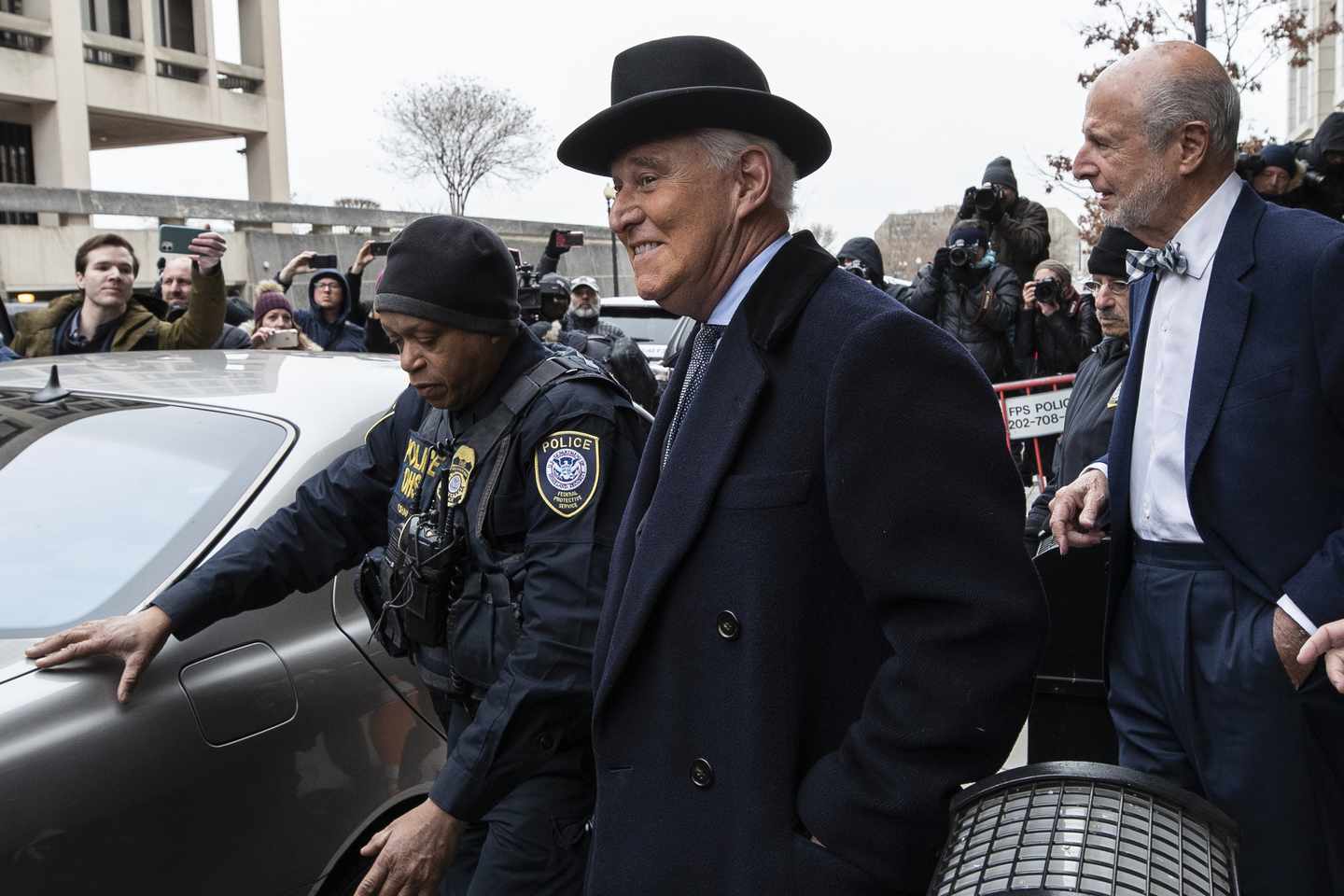
Anyone who follows politics is familiar with the long, colorful career of Roger Stone. On Feb. 20, that career reached its nadir when the unconventional Republican operative was sentenced to 40 months in prison for lying to Congress, obstruction, and witness tampering. Widely reported was U.S. District Judge Amy Berman Jackson’s statement that Stone “was not prosecuted for standing up for the president; he was prosecuted for covering up for the president.” Stone and his lawyers were quick to point out that “covering up” was not among the official charges.
Given Stone’s more than four-decade personal and professional relationship with the president, it was no surprise when the president commuted his sentence — just days before he was to report to prison.
Now, amid all the post-election legal wrangling, Stone is doing all he can, unofficially, to keep Trump in office. Curious about his plans going forward, I requested a Q&A with the man who is often called “a dirty trickster” but now publicly speaks about his faith in Jesus.He agreed; what follows is our exchange, which has been edited for length.
Myra Adams: On July 10, President Trump commuted your sentence, which means your conviction on seven felonies still stands. Are you anticipating that the president will issue you a pardon?
Roger Stone: At midnight on Election Day, the Department of Justice released the unredacted portions of the Mueller Report, which now prove definitively that Mueller’s hit squad had no evidence whatsoever of my having advanced knowledge of the source or content of the WikiLeaks disclosures [about hacked Democratic emails] — or any evidence of coordination or collaboration between me and WikiLeaks or Julian Assange. This information was withheld from us at trial so that federal prosecutors could insinuate throughout my trial that I had lied to Congress regarding my coordination with WikiLeaks — which they now admit there is no evidence of, and even BuzzFeed said I was “vindicated!”
It is a fantasy of the left that I somehow traded my silence regarding alleged misconduct with the president in return for clemency. That is false and there is no corroborated evidence to support this contention. I did say that I refused to give false testimony against the president in return for leniency.
I only reluctantly dropped the appeal of my conviction. While the willful misconduct of the jury forewoman who attacked me by name in social media postings in 2019; kept these posts on a private setting during jury selection and the trial, and deleted them afterwards — would have been among the strongest issues on appeal. The judge’s pretrial ruling that I could not raise the issue of misconduct by the special counsel, the FBI, the DOJ, or any member of Congress was also highly unconstitutional.
Despite these strong legal arguments, it became clear that the D.C. Circuit Court of Appeals was so politicized that I could never get a new trial and, even if I had won a new trial, it would have been before the same judge who demonstrated her bias repeatedly.
In fact, no misstatement I made to Congress hid any underlying crime. I had no motive to lie. It’s clear that my prosecution was political and contrived to pressure me to bear false witness against the president, which I refused to do.
In view of all of this, I hope the president will consider granting me a pardon so that I can clear my name.
MA: Have you been in contact with President Trump, either directly or indirectly, since he began all the post-election controversy?
RS: No.
MA: On Nov. 14, the Palm Beach Post reported that you spoke at a “Stop the Steal” rally attended by 500 Trump supporters in Delray Beach, Fla. [an upscale community 20 miles south of Palm Beach]. Here are some quotes from the Post’s report:
“Stone suggested the CIA changed vote tallies to benefit Democrat Joe Biden.”
“He [Stone] then hit on how the CIA used a supercomputer called the ‘Hammer’ and a program dubbed ‘Scorecard’ to alter the vote.”
Can you elaborate?
RS: As I wrote in stonecoldtruth.com, I believe there is both overwhelming and compelling evidence of extensive election fraud of the old-fashioned variety to include abuses in the mail-in ballot system; ballot harvesting; dead people voting; people voting multiple times; and the wholesale manufacture of ballots after the polls had closed since Democrats knew the margins by which Trump won.
I believe that there will also be substantial hard evidence of cyber manipulation of the 2020 vote. I raised the question of the “Hammer” and “Scorecard” programs, which [CIA] whistleblower Dennis Montgomery – who designed the [latter] program – specifically said was created for the purpose of voter manipulation in foreign countries. In fact, confidential audio recordings released by U.S. District Judge G. Murray Snow in November 2015, revealed that this computer program was used by the Obama campaign on Florida state election computers to steal the 2012 presidential election for Obama and Vice President Joe Biden.
I believe there is also substantial evidence of cyber manipulation of the 2020 vote by Dominion Voting Services, among others. The company has been subjected to substantive allegations in the past. It’s funny to see Democrats who told us for four years that our elections were being interfered with through the cyber efforts of the “Russians” now insisting that such a thing is impossible.
MA: Why have Trump’s lawyers been unable to confirm a single example of voter fraud?
RS: I reject the premise of your question. The president’s lawyers have produced multiple examples of voter fraud in Pennsylvania, Georgia, Wisconsin, Michigan and elsewhere. Don’t give into the mass hypnosis of the fake news media. If you want to see proof of this evidence you can go here.
MA: Let’s move ahead to Jan. 20, 2021. From the following scenarios, select the one that you believe is most likely to happen:
All the traditional Inauguration Day activities associated with a peaceful transition of power between the president and the president-elect occur without a hitch, culminating with Trump attending Biden’s swearing-in ceremony at the Capitol.
The president chooses not to attend Biden’s inauguration. Instead, Trump hosts a $10,000 a ticket “alternative inaugural” event at Mar-a-Lago to kick-off his 2024 presidential campaign.
Trump refuses to vacate the White House, insisting that he won if not for (unproven) election fraud. The president is physically removed and escorted to Air Force One bound for Florida.
RS: As a general rule, I try to avoid answering hypothetical questions. I don’t think there is any evidence under which President Trump will abandon his correct belief that he won a majority of legal votes cast.
Should he ultimately have to vacate the White House, it is clear that 73.7 million people will always believe was cheated out of the presidency and he will still enjoy the bully pulpit of a former president. He will always have the ability to make news and rally his movement against the misguided policies of an illegitimate successor.
Donald Trump is at heart an entrepreneur and he likes making money. The presidency has been an extraordinary financial burden on him. So, if he is no longer president, I do expect he will return to his business pursuits.
Meanwhile, the Trump movement has changed the face of the Republican Party, forever. Elitist “country club” Republicans like former Gov. John Kasich and Sen. Ben Sasse are dreaming if they think that the Trump Revolution is an aberration and that they will retake control of the Republican Party.
Should there be a Biden administration, I am certain that a former President Trump will be a most effective critic of the new president’s handling of COVID-19, the economy, foreign affairs, and trade deals. If Biden ever becomes president, his economic policies will make Herbert Hoover look popular.
MA: Where do you think Trump will rank among our presidents?
RS: When Trump became president we were told by the economic experts that the revival of America’s economy to be a world leader again was structurally impossible. They were wrong. President Donald Trump gave us record job growth, record wage growth, and the highest levels of employment among every group of Americans in our history. He rebuilt our military strength. He renegotiated trade deals, which have benefited the United States and fostered job creation here rather than abroad. The liberals will hate this, but win or lose Trump will rank among America’s greatest presidents. Trump’s personal style, which grates on the political class, will long be forgotten while his great accomplishments are remembered.
MA: Do you foresee any circumstances where Trump fades from the scene and allows Biden to take center stage?
RS: No.
MA: Can you talk about any plans you have for 2021?
RS: I intend to host a weekly syndicated radio show as well as doing a daily podcast at StoneColdTruth.com. Currently, I am writing the definitive book regarding my political prosecution because I was unconstitutionally gagged through much of the process and have never had an opportunity to lay out the abuses and misconduct by the prosecutors both during my trial and in its aftermath.
MA: How are you earning a living at this time?
RS: This almost three-year ordeal has essentially bankrupted me and my family. Last week when the IRS released a tax lien of $1.5 million against me in Miami-Dade County, Florida (where I do not live), a dozen media outlets reported that “Trump had canceled a $1.5 million tax debt.” None of these media outlets reported that within minutes the IRS refiled the exact same lien in Broward County. where I do live.
On the day of my commutation, Facebook announced that based on the entirely false claim that I owned over 100 fake Facebook profiles, I would be banned from Facebook and Instagram for life. …
Between being banned on Twitter, Facebook, and Instagram, I lost well over one million followers. These are the people who bought my books, which was a substantial portion of my income. My wife and I are struggling to rebuild our finances and I have been doing some paid speaking for both political and non-political groups, deriving some income from my Cameo profile, where you can get a customized video that can be a shout-out, a birthday or anniversary congratulations, or even the answer to a political question.
MA: Our RealClearPolitics interview back in April focused on your new-found faith in Jesus as you prayed for a pardon. Now, how is your faith journey impacting your everyday life?
RS: I have been very forthright about the fact that I believe that God spared my life for a specific purpose, and I have rededicated my life to Jesus Christ and will continue to do my best to walk in His way. I recognize that because of my 40-year career as a hardboiled political operative that many elites, who don’t believe in God anyway, will scoff at this. I don’t really care, as He knows what’s in my heart. I intend to continue speaking out about the awesome power and mercy of Jesus Christ and invite others who have problems to invite Him into their lives.
Checking out at the grocery store recently, I saw People magazine’s cover featuring Joe Biden and Kamala Harris with the headline “It’s Time for America to Unite.” And I thought to myself, “But do Americans want to be united?”
Sorry for the skepticism, but I had just come from lunch with a prominent Republican activist. We talked about the election and, coincidentally, I raised the issue of national unity under a new president. My friend emphatically said, “Republicans will never unite under Biden.”
I asked, “Who then?” He answered, “Trump in 2024.”
He may be right. Speaking as a longtime Republican, I believe the vast majority of Trump’s 73.5 million voters will not be supportive of the promise Biden made Nov. 7 during his first televised speech as president-elect: “I pledge to be a president who seeks not to divide, but unify. Who doesn’t see red states or blue states, but only sees the United States.”
Unfortunately, that sounds like political “kumbaya” suited for carving into a stone wall at Biden’s future presidential library.
Don’t get me wrong. I love this nation and, for its sake, I wish Godspeed to the 46th president, but also understand the mentality of my party. In today’s kill-or-be-killed mega-polarized political climate, Biden might as well be talking to a stone wall because to many partisans, “unity” means surrender. At the very least, it means compromise, and compromise leads to fear that what Republicans hold dear will be whittled away.
Conversely, many Democrats feel the same.
Simplified and in general, the red vs. blue divide is as follows:
Republican perspective:
They stand for all that is good in America: religious freedom, law and order, the sanctity of life, school choice, conservative judges, Mom, apple pie, guns, God, the flag, minimum government interference, and no masks. They believe Democrats stand for socialism, open borders, unlimited immigration, and transgender cultural decline.
Democrats’ perspective:
Republicans are white nationalists, afraid of losing power as the white population ages and shrinks in proportion to minorities. They believe Republicans want to turn back the clock to the 1950s when white men ruled; they are intolerable obstructionists to any progressive social views or movement that will better the nation. They are pro-coal, pro-oil, anti-anything that protects the environment. Republicans will blindly follow Trump off a cliff.
Democrats believe in economic equality for all, and that change must spring from the working class on up. Social justice and climate change must be among the highest priorities. Government spending solves most problems. They believe Democrats are the tolerant ones.
Substantiating this synopsis is a Pew Research Center statistical report headlined, “America is exceptional in the nature of its political divide.” Pew found that “both Trump and Biden supporters say that if the other wins, it would result in lasting harm to the country.”
Now irrelevant and long forgotten is President Ronald Reagan’s governing philosophy. In 1983, journalists accused him of “moving away from the policies and principles that got him elected.” Reagan replied, “I have always figured that a half a loaf is better than none, and I know that in the democratic process, you’re not going to always get everything you want.”
Ahh, ancient times. Today “all-or-none” is the preferred method guiding partisans’ democratic process. Half a loaf? Only if the loaf was made this morning in an “opportunity zone” at a non-union processing plant that grants workers time for prayer. (Or, from the other perspective, by workers who receive full health benefits, parental leave, and make at least $20 an hour.)
After talking with Trump voters, I can attest that there is no hope or desire for unity. This “stolen” election has brought only more anger and fear, motivating them to fight harder. As for Democrats, they want unity — but on their terms.
Therefore, where is there room for compromise? How can Biden pledge to be “a president who seeks not to divide” while governing a nation where fostering division is politically and financially profitable and ingrained as a way of life?
A subhead on that People magazine cover says, “The next president and his history-making Vice President promise healing — and get right to work. There is nothing we can’t do if we do it together.” But how is that possible when 52% of Republicans believe Trump “rightfully won” the election and 68% are concerned that the voting was “rigged,” according to a Reuters-Ipsos opinion poll released this week. A new Monmouth University poll found that 77% of Trump backers say Biden’s win was due to fraud.
Meanwhile, Trump has a supernatural, super-glue hold on his party. He will do everything in his power to keep power as he “rules” in exile from Mar-a-Lago. Although Trump won 47.2% of the vote compared to Biden’s 51%, losing is winning with the 45th president. After all, winning 73.6 million votes provides the bragging rights to say he won more votes than any Republican presidential candidate in history!
Moreover, Trump won 10.7 million more votes than he did in 2016, and 11.6 million more than the last Republican president to be reelected — George W. Bush in 2004. Trump won 7.7 million more votes than Obama in 2012, and all of these stats will be repeated ad nauseam over the coming months and years.
But to stage a “comeback,” the president has to stay in the public eye (think Trump TV) and continuously counter Biden’s lofty “unity” plans. We all know that Trump and his tweets will never go away until he is “sick of winning” (which is never). Even on Inauguration Day, if Trump does not attend, there will be media saturation about his absence. Why? Because he generates clicks and ratings, a media addiction. Plus, he’s guaranteed long-term attention by insinuating that he will run again in 2024.
Then imagine when he announces his plans for the Trump Hotel Presidential Library, Golf Resort & Spa. The biggest, greatest, and most lavish presidential vacation retreat in the world. It will even have a replica of the Trump Tower escalator that you can descend with a hologram of Trump and Melania! (Not sure I am joking about this.)
Circling back to the grocery store checkout line, millions of Americans will see the People cover touting that “It’s Time for Americans to Unite” — and 51% will applaud this effort. But suppose Biden’s attempt at unity fails. In that case, Democrats will be quick to blame Republicans’ intransigence while GOP leaders’ continue to fear Trump’s tweets, sure to chastise them if they favor compromises (half a loaf) to pass problem-solving legislation.
Nonetheless, in that grocery checkout line are 47.2% of Americans who voted for the president. Many (or most?) will see the same People cover and think, as my friend said aloud, “Republicans will never unite under Biden.”
Trump knows that is true and plans to keep it that way.
“If Republicans don’t challenge and change the U.S. election system, there will never be another Republican president elected again.” – Sen. Lindsey Graham on Fox News Channel, Nov. 8, 2020.
The South Carolina senator was specifically addressing why “President Trump should not concede” the election after “allegations of system failure [and] fraud.” But he also indirectly broached a wider truth. So let that truth come marching in about the GOP’s bleak prospects for no “Republican president elected again.” If Republicans choose to confront it, they need only look at exit polls from the Washington Post,ABC News, and NBC News, all reporting similar demographic voter data (and subject to change).
At this writing, it appears that Joe Biden is on track to win 306 electoral votes. Ironically, that is the exact number Donald Trump won in 2016, which he often characterized as a “landslide.” (Officially, and after two electors defected, Trump won 304 votes.) Yet, Trump failed to win the popular vote in either of his presidential races. Although not the final 2020 numbers, Biden has a respectable margin of 50.9% to 47.3%. Nonetheless, Trump deserves credit. Yes, Biden is ahead by 5.5 million votes – 78.2 million compared to Trump’s 72..7 million – but the president increased his 2016 total by a whopping 9.8 million votes, up from 62.9 million.
We know that winning the presidential “popular” vote does not grant entry to the Oval Office. The candidate must have robust support to muster the math needed to earn at least 270 electoral votes. But the popular vote points to a stark, inconvenient truth that is tough for the GOP to handle.
Starting in 1992, there have been eight presidential elections, but only once, in 2004, has the Republican nominee won the popular vote. And my party cannot count on the rare Electoral College “flukes” of 2000 and 2016 that delivered the White House. The truth of the GOP’s demographic crisis becomes more apparent after examining the pertinent 2020 exit data.
Let’s start with whites – 67% of all voters, but down from 70% in 2016. That decrease should shock Republicans for three reasons.
First, three percentage points in four years is greater than the decrease from 2012 to 2016 when the white vote dropped two points, from 72% to 70%
Second, the exit polls agree that Trump triumphed with white voters, winning them by 17 percentage points, 58% to 41%. However, in 2016 he won whites by 20 points over Hillary Clinton, 57% to 37%. It does not take a math genius to figure that Trump losing three percentage points of white voters after the white electorate itself decreased by three points contributed to his defeat. Conversely, if Trump had won the white vote by at least 20 points or more a second time, he would be planning his second inauguration
Third, in January 2020, the respected Pew Research Center projected that eligible white voters would be 66.7% of the electorate. Pew underestimated by 0.3 percentage points, probably due to record turnout, but will the white electorate shrink another three percentage points, or more, by 2024? The aging and dying white population could support such an estimate.
Consequently, the next GOP presidential nominee must capture an ever increasing share of the white vote if he or she lacks greater appeal to minority voters. In 2024 perhaps the nominee will need to earn 20 to 25 percentage points more than the Democratic candidate in order to win the popular vote and reach 270 electoral votes.
Here are more reasons why Lindsey Graham spoke truth.
In September, I wrote a RealClearPolitics piece headlined “How the Hispanic Vote Is Growing in Power.” Again, I used Pew Research Center data projecting eligible Hispanic voters to be 13.3% of the 2020 electorate. In 2016, Hispanics were 11% of voters.
The new exit poll data shows Hispanics at 13%, a record two-point increase, doubling what had been a steady one percentage point increase every four years. Joe Biden won 65% – down slightly from the 66% that Clinton won in 2016. In the meantime, there has been much reporting about how Trump increased his percentage among Hispanic voters. Yes, he did, winning 32%, up from 28% in 2016. However, as I wrote two months ago in that Hispanic power piece, “By now, [Hispanics’] two-thirds support for Democrats is a well-established voting pattern.”
If trends continue, the 2024 electorate is likely to be about 15% Hispanic. Thus, with the GOP traditionally winning only about one-third, dramatically increasing the share to 40% or 50% will be a challenge for any Republican presidential nominee. Remember that in 2004, George W. Bush won reelection with support from 44% of Hispanics. Does that help explain why he is the only Republican to win the popular vote in the last eight presidential elections?
Let’s look now at African Americans. They are also 13% of the voting electorate, one percentage point up from 12% in 2016. Blacks even surpassed Pew’s 2020 projection of 12.5%. Furthermore, during Barack Obama’s 2008 and 2012 elections, African Americans’ share of voters grew to 13% but shrunk back to 12% in 2016. Now this group is back to 13%, giving the Biden/Harris ticket some bragging rights.
Biden won 87% of Black voters but dropped two percentage points from Clinton’s 89% in 2016. Trump increased his share of African American voters, winning 12%, up from 8% in 2016. By comparison, since the 1980 election, the GOP presidential nominee who won the highest percentage of African American votes was Ronald Reagan with 14%, and Blacks were then 10% of the electorate. In 2020, Trump, with his 12% share, is tied for second place with Bob Dole in 1996.
Asian American voters stayed steady at 4% of the electorate. Biden won them by 27 points, 61% to 34%. But Trump increased his margin by seven points over 2016 when Clinton won Asians 65% to 27%. That is good news for the GOP, but more improvement is needed as this demographic continues to grow.
Overall, the 2020 non-white vote was 33% of the electorate, with Biden winning 71% to 26% for Trump. Henceforth, with the non-white vote potentially growing every four years, if the GOP continues on its current trajectory, Lindsey Graham’s inartful statement is destined to be a political reality.
But what exactly did Graham mean when he said, “If Republicans don’t challenge and change the U.S. election system, there will never be another Republican president elected again”? We know he is accusing Democrats of cheating now, but is he also insinuating as much into the future? And, is he slyly suggesting that the GOP permanently try to suppress the non-white vote?
Here is a more grounded suggestion: The Republican National Committee should dust off and update its famous “2013 autopsy report.” It was written after Mitt Romney’s 2012 devastating loss to Barack Obama when it was clear that although Romney won white voters by 20 points – 59% to 39%, with whites then 72% of the electorate – the demographic crystal ball looked more brown and black. (Romney won only 6% of Blacks, 27% of Hispanics, and 26% of Asians.)
Astonishingly, in 2016 Trump blew up the autopsy recommendations of “widening the tent” by focusing on engaging whites, especially blue-collar men in the Rust Belt. Now that Trump has lost the “blue wall” states – and potentially the reliably red states of Arizona and Georgia – a new blueprint (or should I say “redprint”) is needed to build the most massive, inclusive political party that policy, attitude, and money can buy.
In the meantime, bottle the policy ingredients that Trump used to marginally increase his percentage of non-whites and that helped win back House seats and likely keep control of the Senate. Then, ban Lindsey Graham from publicly discussing “challenging and changing” the U.S. election system when it’s demographic changes that are the greatest impediment to electing another Republican president. This is a truth the GOP must handle.
Whether you are voting for Donald Trump, Joe Biden, or another candidate, my Election Day advice is the same: Pray for a peaceful outcome.
Remember, this is America, the world’s oldest democracy that many believe the Almighty had a hand in birthing. Our nation grew into a proud example of representative government without election-related violence ever associated with the quadrennial exercise of choosing our next leader.
Yet today, there are numerous mainstream media reports of militias forming. For example, at NPR: “Five states – Georgia, Michigan, Pennsylvania, Wisconsin and Oregon – have the highest risk of seeing increased militia activity around the elections: everything from demonstrations to violence.”
On Sunday, a veteran Republican strategist told me he firmly believes a civil war is imminent if Trump wins. And I say perhaps the reverse is possible if Biden wins. After all, on several occasions, the president has publicly stated that if he loses, the election was “rigged.” Not surprising, since I know many Republicans who think that all this talk about a landslide is good news for Trump, not Biden. (Check out Rush Limbaugh’s radio show transcript from October 14.)
Then a handful of Republicans and boatloads of Democrats have told me that a Biden landslide would guarantee the most peaceful outcome. How could Trump rally his troops for an uprising if the results are indisputable?
That is one question on a list of thoughts, observations, and prayers for my last column of this nature before Election Day.
Topping the list is a strong feeling that Americans are totally fed up with the Electoral College. If an alien from Pluto observed the election campaign, it would think that the United States had only six states. The alien would beam back to the Mothership that two of those states reigned supreme – Pennsylvania and Florida – and those voters ruled over Michigan, Wisconsin, North Carolina, and Arizona.
Currently, Republicans generally oppose ending the Electoral College after losing the popular vote in 2000 and 2016 and still winning the White House. Moreover, the GOP thinks that big “blue” population states would tilt the election to the Democratic nominee. But, if (BIG if) Biden were to win Texas – the “red” state “crown jewel” with 38 electoral votes – Republicans could quickly have a change of heart and start embracing a direct presidential popular vote.
Furthermore, a blue Texas under the electoral vote system would mean a significant chunk of the 2024 presidential campaign energy and attention would shift to winning the Lone Star State. Watch closely because, according to the RealClearPolitics Texas poll averages, Trump only leads Biden by 2.3 percentage points – within the margin of error in a state that Trump won by nine percentage points in 2016. If you are a Republican, pray that Texas does not go “blue.”
Second on my observation list, if Trump loses, his refusal to appeal to swing voters might prove to be his reelection campaign’s most egregious strategic error.
In June 2019, I wrote an RCP piece headlined “How GOP Insiders View Trump’s ‘Base-Only’ 2020 Strategy,” after being prompted and intrigued by a Trump quote in a Time Magazine interview. When asked if the president should reach out to swing voters, Trump replied, “I think my base is so strong, I’m not sure that I have to do that.”
Yikes, bravado red flag warning!
At that time, the economy was humming along strong, and “Contagion” was a virus horror movie. Still, Trump’s RCP job approval average in mid-2019 hovered around 44% – exactly where it is today – a remarkedly stable number that would foretell a tough reelection.
It’s worth quoting Mark McKinnon’s prescient quote from my piece. McKinnon was speaking from experience as the chief media strategist for George W. Bush’s 2004 reelection campaign. Talking about Trump’s base-only strategy, he said, “It’s a risky strategy because in order to be successful, it means the campaign has to suppress turnout with Democrats to a level at or lower than it was in 2016. And given what we saw in 2018, Democratic turnout is likely to be significantly higher.”
Today’s record early-voting turnout and accusations of Republicans trying to suppress the vote are double scourges striking Team Trump that point to the inherent flaws of a base-only strategy. Not only lousy public relations for the GOP but when the voting pie grows, even a solid, static base serves up a smaller piece.
However, since the election is not over and if the president wins through prayers and Divine Intervention, then his base-only strategy will be considered brilliant but risky and non-traditional – like so much of Trump’s presidency.
Third on my list is a Trump action that could be looked back upon as a crucial turning point that did immense harm if he were to lose reelection. A poignant example of Trump serving his base with a “red meat all the time and to hell with blue land” attitude, this event took center stage Monday night when Amy Coney Barrett was sworn in as the Supreme Court’s newest member. Justice Barrett, a lovely, brilliant, pious, well-qualified woman, offers Trump the opportunity to please his base, especially “values voters” like no other presidential act.
Yet, rushing her through Senate confirmation in record time could yield some Election Day consequences, impact Supreme Court decisions for decades to come, and result in “court packing” if Biden wins. But for this discussion, let’s focus on the Senate optics.
The nation is hurting. No new COVID-related economic relief packages were passed, and now the Senate is adjourned until after the election. What signal does that send to non-base voters? Trump and GOP Senate leaders only had the base in mind when they rammed Barrett through while millions were in the process of voting. Furthermore, were those antics on the minds of record numbers of women and minority voters waiting in long lines to vote on Monday and through Election Day?
My last and overarching thoughts about the 2020 election is that Americans are sick of division. They are tired of all the Trump drama. Americans want to be unified, and Joe Biden, flawed as he is, offers that hope for millions of voters. Will this be a “hope over fear” election where unity wins over division? Or will Americans vote to keep the status quo? Never forget that for the vast majority of religious Republicans, Trump is their hope for a better America and with thousands of prayer groups asking to keep him in office.
Nevertheless, if “Blue America” defeats Trump and the Republican Party with resounding force, then the president and GOP leaders should look in the mirror and say, “We were the dividers. We fostered fear over hope. But we will be back in 2022 and 2024 when the Democrats overreach and with a kinder gentler message.”
In the end, no matter who wins, America will be transformed with God’s help.
But in the meantime and on Election Day, pray for peace. And depending on the outcome, an orderly transition, if that be His Will.
Myra Adams is a media producer and conservative political and religious writer with numerous national credits. She is also Executive Director of www.SignFromGod.org, a ministry dedicated to educating people about the Shroud of Turin. Contact: MyraAdams01@gmail.com or on Twitter @MyraKAdams.