Economic Crisis


By Myra Adams – The Hill contributor

MYRA’S COMPLETE ARCHIVE IS HERE

Reposted from The Hill – July 14, 2023

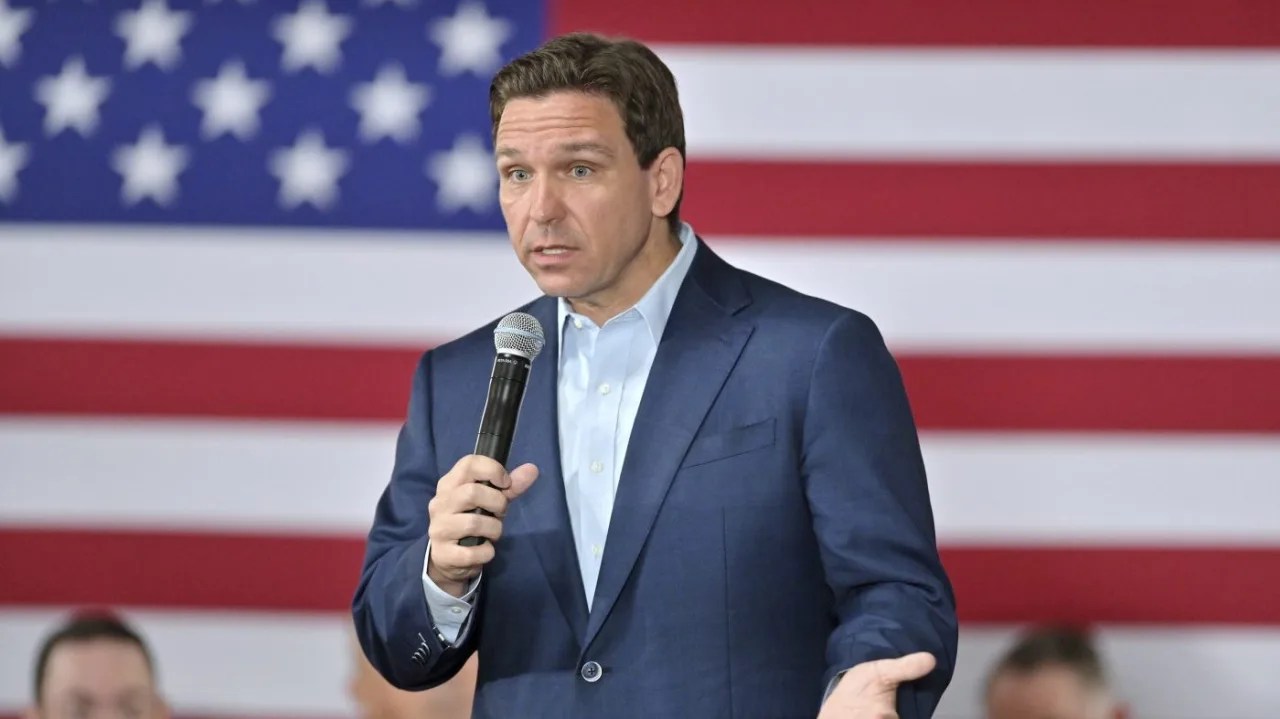
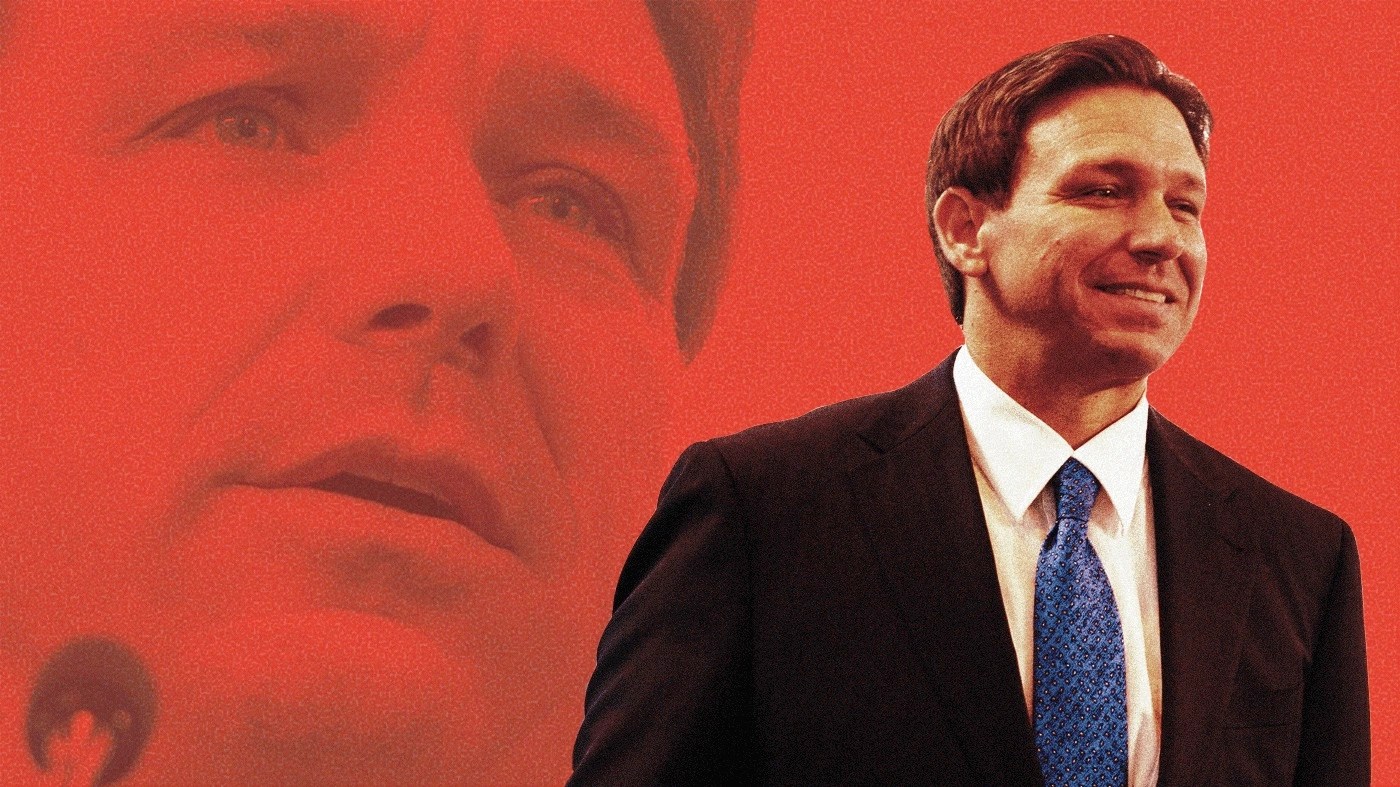
The day after Florida Gov. Ron DeSantis (R) won reelection by a shocking 19-point margin, the Rupert Murdoch-owned New York Post screamed a one-word front page headline: “DeFuture.”

The celebratory photo showed a Kennedy-esque, central-casting-worthy family. Casey DeSantis, holding hands with her two small children, looked like a future first lady in her stunning gold designer gown on her way to the inaugural ball. The victorious governor held their third child with one arm, waving to the crowd with the other.

At that moment on Nov. 8, 2022, Ron and Casey DeSantis’s White House dreams merged with positive political reality.

But this reelection blowout was merely a preview for the ambitious couple, who married at Disney World in Orlando, Fla. Their ultimate happy-ending Disney movie seemed only two years away, with the soundtrack “Hail to the Chief.”

Of course, all Disney movies have a villain aiming to destroy and derail the main characters’ goals and dreams. You know his name, as he is currently “DeFeating” “DeFuture” with a 32-point lead among Republican primary voters. 

Looking back at that eight-month-old New York Post front page, not only have the powerful Murdochs reportedly soured on DeSantis, but seemingly then-unimaginable questions are being raised. Is the DeSantis presidential campaign already in a death spiral? Will the Florida governor seek an early exit to save his national political future? Will he rebrand for 2028 — presumably a non-Trump-dominated political cycle? Or could DeSantis yet star as the “comeback kid” of 2024? If not, will his 2024 failure blossom into 2028 hope?

Before discussing possible answers and scenarios, consider recent Florida history, where (full disclosure) I voted for Gov. DeSantis in 2022. After his victorious reelection, I heard legions of Trump-supporting Florida Republican voters, activists, party leaders and insiders insist that DeSantis “should wait until 2028.”

Singing the same song, they warned how Trump, with his rock-solid, loyal MAGA base, would “destroy” Florida’s rising political star. They also feared that the Republican Party — which is to say Donald Trump — “would eat their young,” which is to say DeSantis.

Should DeSantis have listened to the folks who supported his reelection but wanted him to stay on the sidelines in 2024? In retrospect, yes. For MAGA land, which will dominate the Republican primaries in 2024, everything Trump “Truths” out becomes gospel. On July 8, the former president proclaimed: “Ron DeSanctimonious is desperately trying to get out of the Presidential race, while at the same time saving face for 2028, where he has been greatly damaged.” Trump ended his “Truth” rant with the further dig, “Ron is just wasting time!”

That “truth” could be the rare case when Trump offered wise political advice to his closest rival, beneficial to both. There is no evidence that DeSantis plans to withdraw from the primary race he officially entered on May 24. However, his campaign’s early performance seems destined for a political science case study, or perhaps even a future Searchlight Pictures comedy, “How to Lose a Presidential Primary in Two Months.”

The RCP poll average showed DeSantis at peak popularity in late February. At that point, he trailed Trump by a manageable 12.8-point margin. Thus, DeSantis was always the underdog in a fight against a powerful, vengeful former president, who in the time since has only gained support among his devoted followers as a result of the two indictments brought against him.

Trump repeatedly bragged that he “made” DeSantis’s career. He warned the governor against entering the 2024 race and boasted about destroying DeSantis for the “disloyalty” of daring to become his primary rival. Trump has since spent ample time, perhaps even excessive time, savaging his “DeSanctimonious” target — no surprise to Floridians who had urged he wait until 2028. At this point, Trump is walloping Florida’s governor by 20 percentage points in Florida itself. Whence the talk of a death spiral.

To DeSantis’s credit, he is the only primary candidate who consistently polls in second place and earns double digits. Both Trump and DeSantis are statistically tied with President Biden in general election match-ups.

Thus, DeSantis has a dilemma; although he is flush with millions in campaign cash, major donors are nervous. The governor has been losing traction ever since Feb. 24, falling from 30 to 20 percent support among national GOP primary voters. DeSantis has never lost an election, but how will he continue that streak?

If, by the end of 2023, he fails to compete with Trump because he is not Trump, DeSantis should drop out of the primary race and save himself the embarrassment of losing in IowaNew Hampshire and South Carolina. He trails Trump in each of those early states by at least 20 points. This will let him save his future and face for 2028.

But DeSantis will require a major rebranding if he underperforms badly against this cycle’s high expectations as Trump-slayer, national rising star, Republican Party future and White House winner. The “Top Gov” also committed numerous self-inflicted wounds and rookie mistakes, such as making the culture war his only war and trying to turn America into the “free state of Florida.” He hid from the mainstream media and has refused to engage in full frontal attacks against Trump.

Until January 2027, DeSantis has a day job governing the third most populous state. This will provide him with a national platform until it is time to run for president again. In the meantime, for the 2026 midterm election, DeSantis could serve as a star fundraiser, sought-after party leader, and national speaker, earning IOUs for 2028 when he turns 50 — a prime presidential age.

Suppose DeSantis were to drop out before 2024 voting began and learn from his primary run. He might fulfill his presidential dreams while repositioning himself as more human, less fighting machine — a compassionate leader, a “new DeSantis” who aims to unify Americans and not divide them.

After Richard Nixon lost the1960 presidential election, a “new Nixon” emerged, “tanned, rested, and ready” to win in 1968. And what about Joe Biden, who flopped in the 1988 and 2008 primaries before winning the 2020 Democratic nomination?

History shows that winning the White House is a super marathon for some presidential aspirants. They just need to keep their eyes on “DeFuture.”

Myra Adams writes about politics and religion. She served on the creative team of two GOP presidential campaigns in 2004 and 2008. Follow her on Twitter @MyraKAdamsTAGS CASEY DESANTIS DONALD TRUMP PRESIDENT JOE BIDEN RON DESANTIS RON DESANTIS WASHINGTON D.C.


By Myra Adams – The Hill contributor

MYRA’S COMPLETE ARCHIVE IS HERE

Reposted from The Hill – June 30, 2023

Heading into the Independence Day holiday weekend, the nation is facing an unprecedented political and judicial crisis that could span years and tear at the very fabric of our country.

What would the Founding Fathers think if they read The United States of America v. Donald J. Trump — the 37-count felony indictment of the twice-impeached former one-term president? One imagines them shaking their powdered-wig heads in disbelief upon learning that the federal government they painfully birthed 247 years ago possessed overwhelming evidence charging the defendant — a former commander in chief — with putting “at risk the national security of the United States.”

Nonetheless, the defendant is on track to win the presidential nomination of a major political party, and his trial is on a collision course with the forthcoming presidential election.

Indeed, our Founders would be appalled and shocked that a twice-indicted former president was again running for president, as are the 59 percent of Americans who believe that “Trump ought to end his campaign now that he’s facing federal charges.”

The level of discontent among Trump’s strongest supporters will reach the next level if he is federally indicted again, this time for conspiring to obstruct congressional proceedings that resulted in the Jan. 6, 2021, attack on the U.S. Capitol by his supporters, or indicted in Georgia for attempted 2020 election interference.

Hence, the national political forecast for the last half of 2023 and 2024 is dark and dismal, with increasing chances of tumult. However, this bleak assessment stems directly from the actions and inactions of two men who could have stopped Trump — Senate Minority Leader Mitch McConnell (R-Ky.) and Mark Meadows, Trump’s former White House chief of staff.

Suppose both men had acted differently at two pivotal points. In early 2021, McConnell — in the patriotic spirit of bipartisanship after a national crisis — could have led his caucus to achieve the two-thirds Senate vote needed to convict Trump at his impeachment trial. Then, with that same two-thirds Senate support, McConnell and Majority Leader Chuck Schumer (D-N.Y.) could have drawn up legislation to prohibit Trump from holding future public office.

For his part, Meadows could have leveraged his power as chief of staff to stop Trump from taking top-secret documents to Florida, sparing both Trump and the Justice Department from the recent spectacle of Trump’s indictment.

Unfortunately, neither McConnell nor Meadows spoke truth to power. It would be more accurate to say that they acted as Trump’s enablers out of personal political expediency instead of in the national interest. Thus, our country continues to pay a heavy price for their failings, especially the Justice Department — trying to uphold the rule of law and show that no man, even a former president, is above the law.

Moreover, Americans would not be hearing the 2024 presidential primary leader, who is also the leader of the Republican Party, make egregious statements, such as Trump made on Saturday at the Faith and Freedom Coalition’s conference.

Railing to the crowd of Christian activists about any person or entity who opposes his actions — Republicans, Democrats, federal or state governments, the media, etc. — Trump pledged: “Together, we’re warriors in a righteous crusade to stop the arsonists, the atheists, globalists, and the Marxists — and that’s what they are — and we will restore our republic as one nation under God with liberty and justice for all.” 

Continuing, Trump warned that he is “being indicted for you,” calling each new indictment a “badge of honor.”

After hearing such remarks and facing the prospect of Trump topping the GOP ticket, one wonders if McConnell regrets voting to acquit Trump. Recall that, minutes after his Feb. 13, 2021 acquittal, McConnell justified his Senate vote and leadership actions with a very odd speech. One might have thought he favored conviction when he said, “A mob was assaulting the Capitol in [Trump’s] name. These criminals were carrying his banners, hanging his flags, and screaming their loyalty to him. It was obvious that only President Trump could end this.”

McConnell could have ended Trump’s political career on Feb. 13, 2021. But did he fear backlash from Trump loyalists, whom McConnell thought he needed for Republicans to win back the Senate in the 2022 midterm elections?

Ironically, the record shows that most Trump-supported Senate candidates actually blocked McConnell from becoming Senate majority leader again. Most likely, McConnell did not want to be held responsible for Trump’s conviction, but did he do his duty to his country that day?

At the other end of Pennsylvania Avenue was Trump’s fourth and last chief of staff, Mark Meadows. An important unanswered question about Meadows is whether he knew that Trump retained classified documents, and whether he could have stopped his boss from taking them to Florida.

This week, I spoke with John Kelly, who had served as Trump’s second chief of staff, from July 2017 to January 2019. I asked him if he thought Meadows might have prevented Trump’s actions that led to the recent 37-count federal indictment. The retired four-star Marine general said that Meadows “could have involved the rest of the Cabinet, bringing in the vice president, attorney general and CIA to talk to the president” about how removing such documents was “very destructive.”

Kelly added that “if Meadows turned a blind eye” and “if he knew it was happening, it is hard to believe [enabling] was not in play.”

When or if our nation emerges intact from current and future Trump indictments or a second Trump administration, history will judge whether Meadows and McConnell were Trump’s enablers.

Myra Adams served on the creative team of two Republican presidential campaigns.TAGS CHUCK SCHUMER DONALD TRUMP JAN. 6 CAPITOL RIOT MITCH MCCONNELL WASHINGTON D.C.


By Myra Adams – The Hill contributor

MYRA’S COMPLETE ARCHIVE IS HERE

Reposted from The Hill – June 16, 2024

Pity Florida Gov. Ron DeSantis. Reelected by a landslide in November, he is on track to complete his second four-year term. According to the RealClearPolitics poll average, three weeks after his long-awaited presidential announcement, DeSantis still trails former President Trump by the same 30-point starting difference.

Interestingly, the day after his May 24 launch, DeSantis tried to close his Grand Canyon-sized polling gap with a “pardon strategy” designed to extract MAGA voters from Trump’s iron-clad grip. The Hill headline — “DeSantis says he’ll consider pardoning January 6 defendants, including Trump” — raised eyebrows for blatant pandering, but the second-place primary candidate gained no momentum.

Then on June 8 history was made when a Miami grand jury issued a federal indictment with 37 felony counts against Trump. Immediately, DeSantis criticized the political circumstances with what became the GOP’s template for Trump’s defense. Without naming the former president, DeSantis tweeted:

“The weaponization of federal law enforcement represents a mortal threat to a free society. We have for years witnessed an uneven application of the law depending upon political affiliation.” 

Some would argue that the mountain of evidence showing how the former president allegedly broke the law 37 times strengthens a free society while solidifying America’s foundational principle that “no one is above the law.”

Trump surrendered to federal authorities and was arraigned at a Miami courthouse on June 13. But the bombshells dropped on June 9, when Trump’s indictment was unsealed and the explosive charges were revealed to anyone with an internet connection.

That night, while the world was abuzz with Trump’s hoarding of top-secret national security documents (reportedly including nuclear capabilities, readiness and battle plans for us, allies and enemies), DeSantis spoke before the North Carolina Republican convention. He uttered what could be considered his most honest and under-reported statement since beginning his presidential quest. But first, to better understand the gravity and political implications of his remarks, here is some background.

While a student at Harvard Law School in 2004, DeSantis was commissioned as a Navy officer, joining the Navy Judge Advocate General Corps (JAG) in 2005. Thus, as a Navy lawyer, DeSantis was well-schooled in all aspects of classified material, including prosecuting personnel who removed or mishandled national secrets.

DeSantis no doubt had his JAG training on his mind when he spoke to the North Carolina GOP audience. As the New York Times reported: “Seeming to muse aloud, Mr. DeSantis asked what the Navy would have done to him had he taken classified documents while in military service. ‘I would have been court-martialed in a New York minute.’”

DeSantis’s admission, “seeming to muse aloud,” was unprompted. Moreover, if  DeSantis wins the Republican nomination, he just wrote the script for a Biden campaign ad. Furthermore, his defending Trump’s handling of classified material to win the hearts of MAGA voters makes the Florida governor appear hypocritical.

Worse, DeSantis is already on record suggesting a Jan. 6-related pardon for Trump in what is morphing into the GOP’s “pardon me primary.” Forget that our nation operates under the rule of law. In MAGA-land, twisted legal logic is “the rule” where talk of pardoning a potential convicted felon is considered politically advantageous to attract media attention and primary voters. Therefore, is pledging to pardon Trump becoming the new litmus test for primary candidates?

Consider Nikki Haley, supported by 3.6 percent of Republican primary voters. On the day Trump was arraigned in federal court, the former UN ambassador said she’s  “inclined in favor of a pardon” for Trump. Haley explained that if Trump were jailed, “That’s something you’d see in a Third World country. I saw that at the United Nations, so I would be inclined in favor of a pardon.”

Is it time for GOP candidates to start debating whether President Gerald Ford’s 1974 pardon of Richard Nixon was “good for the country”? (Ford lost the 1976 presidential election to Jimmy Carter in part because of the Nixon pardon.)  

Then there is Vivek Ramaswamy, a primary candidate favored by under 3 percent of GOP voters. On June 8, he tweeted: “I stand for principles over politics. I commit to pardon Trump promptly on January 20, 2025 and to restore the rule of law in our country.”

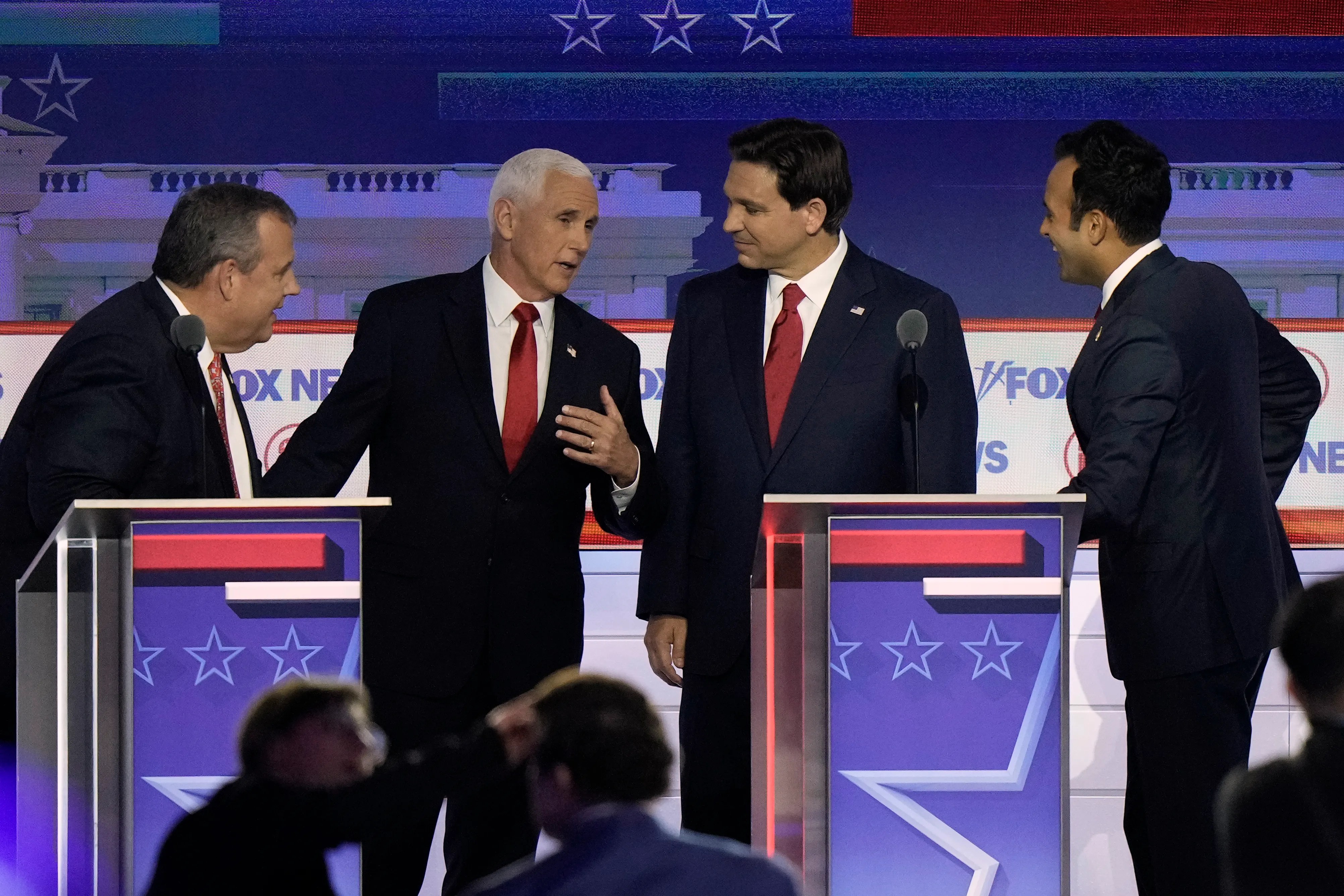
However, on June 13, Ramaswamy paraded further down the pardon path, “urging” all White House contenders in both parties to follow his lead. He said, “I respectfully request that you join me in this commitment or else publicly explain why you will not.”  As if on cue, former Vice President Mike Pence explained why not.

Ramaswamy also warned that Trump’s prosecution “will permanently damage public trust in our electoral process and our justice system.” After Trump’s arraignment, Ramaswamy must have heard Trump’s lawyer Alina Habba say, “The people in charge of this country do not love America — they hate Donald Trump.”

Habba’s statement summarizes the new conundrum: If you favor prosecuting Trump, does that mean you don’t love America and are not a patriot? Is patriotism synonymous with supporting Trump?

So many unanswered questions to keep Trump where he thrives — on center stage with the world revolving around him, including the Big Kahuna: If Trump wins the GOP nomination, is convicted and reelected, can he pardon himself? The Supreme Court has never addressed that legal hornet’s nest.

The “pardon me” issue will continue to loom large, suffocating the GOP primary if Trump is indicted for Jan. 6-related federal crimes and 2020 Georgia election meddling. Will his support grow with each indictment and allow him to win the 2024 GOP nomination?

Then, “Let Trump Pardon Trump” could become the new battle cry of “patriots” showing their love for America.


Myra Adams (@MyraKAdamsserved on the creative team of two Republican presidential campaigns in 2004 and 2008. She writes about politics and religion.

TAGS 2024 REPUBLICAN PRIMARY  DONALD TRUMP  NIKKI HALEY  PARDONS  RON DESANTIS  RON DESANTIS  TRUMP CLASSIFIED DOCUMENTS  TRUMP INDICTMENT  TRUMP INDICTMENT  VIVEK RAMASWAMY


By Myra Adams – The Hill contributor

MYRA’S COMPLETE ARCHIVE IS HERE

Reposted from The Hill – June 2, 2023

Last week, before Florida Gov. Ron DeSantis (R) launched his presidential campaign, news broke that more than 150 former President Trump officials calling themselves the “Eight-Year Alliance” would be supporting the governor’s efforts to win the 2024 GOP nomination.

The alliance’s name highlights a formidable strategic and constitutional advantage DeSantis holds over former President Donald Trump, who would be immediately become a “lame-duck” president if reelected. The 22nd Constitutional Amendment states, “No person shall be elected to the office of the President more than twice.”

Trump has yet to acknowledge this problem. And DeSantis, an underdog both nationally and in the early states of IowaNew Hampshire and South Carolina, has barely lifted a finger to take advantage of it.

For the sake of long-term positioning, DeSantis needs to condense his eight-year vision for America into a bumper sticker-like message like “DeSantis equals eight,” to educate primary voters about why nominating Trump, with his four-year limitation, would put Republicans at a long-term disadvantage.

So far, communication with voters has not been the Florida governor’s strong suit. In his underwhelming announcement video following his Twitter Spaces debacle, the “Culture Warrior” governor said, “Righting the ship requires restoring sanity to our society, normalcy to our communities, and integrity to our institutions. Truth must be our foundation, and common sense can no longer be an uncommon virtue.”

Such quotations sound like they were written for a marble wall at his future presidential library, but they hardly move Republican crowds, who much prefer Trump’s lengthy stories and rants from the stump. DeSantis, a Yale and Harvard graduate, might have a much better vocabulary than Trump, but Republican voters would rather listen to the former president hoot and holler about economic populism, victimhood and grievances.

Former House Speaker Newt Gingrich observed this after DeSantis’s announcement. “One of Trump’s great advantages is that he talks at a level where third, fourth, and fifth-grade educations can say, ‘Oh yeah, I get that. I understand it,’” he said.

At the end of his announcement video, DeSantis said, “I am running to lead our great American comeback.” Trump, meanwhile, is running to “Make America Great Again,” again. So their slogans offer a distinction without a difference.

But taking a cue from Gingrich, DeSantis should tweak his own slogan to provide a meaningful contrast: “I am running to lead our great American comeback — for eight years.” This would both unnerve Trump and reassure his base that this is not the end of “Trumpism.”

DeSantis has enough disadvantages right now. He must therefore exploit whatever substantial advantages he has over Trump, one of which is his potential to serve up to a full eight years in office fighting woke culture and leading a “great American comeback” with the vim and vigor of a man who will be 46 years old on Election Day.

And DeSantis, in contrast with the septuagenarian Trump, is not under indictment, has never lost an election and is generally better equipped to defeat President Joe Biden, who will be 82 years old next November. 

Of the last 59 U.S. presidential elections, 33 involved incumbents, 22 of whom won reelection. DeSantis can point out, if he dares, that Trump is in the unsuccessful minority, having broken the winning streak of two-term presidents Bill Clinton, George W. Bush and Barack Obama. Thus, DeSantis can position himself as the only candidate with the skills, smarts, track record and vision to lead America for eight years — unique because his chief primary opponent cannot do so by law.

Speaking of law, DeSantis would do well to ask Trump if the former president will abide by the constitutional amendment limiting him to two terms. Imagine if Trump gave his familiar non-answer, “We will see what happens.” Or if he gives an incorrect answer, perhaps, about the 22nd Amendment applying only to consecutive terms. 

Given Trump’s demonstrated problem with relinquishing power, he has little choice but to acknowledge that “When re-elected, I can only serve one term.” Anything else would feed into Biden’s narrative that “Trump and MAGA Republicans are a threat to democracy.” Furthermore, if Trump refuses to address his 22nd Amendment problem without qualifications, Democrats and Republicans will be right to ask what other amendments or laws Trump would trample if reelected.

Also, take note of Trump’s remarks to donors in 2018  after “Chinese President Xi Jinping had recently consolidated power. “He’s now president for life,” Trump said. “President for life. … I think it’s great. Maybe we’ll give that a shot someday.’” Will it be “someday if Trump is reelected in 2024?” Does Trump perceive relinquishing power as a sign of weakness?

How DeSantis reacts if Trump equivocates about his lame-duck status will show that DeSantis cares more or less about the Constitution than about winning support from Trump’s die-hard base, estimated at between 35 percent and 38 percent of GOP primary voters.

Trump can, of course, minimize the lame-duck issue. “I can only serve one term,” he could say, “but I will cram eight years of ‘making America great again’ into four years.”

Even then, DeSantis can still make a strong case that he is the future of the Republican Party and the nation — for as many as eight years, ending Jan. 20, 2032.

Myra Adams (@MyraKAdamsserved on the creative team of two Republican presidential campaigns in 2004 and 2008. She writes about politics and religion.


By Myra Adams – The Hill contributor

MYRA’S COMPLETE ARCHIVE IS HERE

Reposted from The Hill – May 19, 2023

Every four years, Americans think they are voting in a national presidential election. But pragmatically speaking, the vast majority are sideline voters, watching a battleground-state presidential election from the fringes.

This opinion is quantified by 2020 campaign data indicating that the Trump/Pence and Biden/Harris tickets spent $883 million of television ads across just six states and held in-person campaign events in only 12 states — mostly in the same six. This revealing data is antithetical to a nation that prides itself on conducting free and fair country-wide presidential elections.  

How fair is our indirect presidential voting system that practically ignores voters in 38 of 50 states? The culprit is the constitutionally mandated Electoral College — an antiquated system by which electors from each state vote for the winner of their state’s popular vote. On those occasions when a candidate wins the 270 Electoral College votes needed to be elected president but loses the popular vote, a majority of voters feel cheated. 

For all those reasons, the people want change.  

According to a 2022 Pew Research study, 63 percent of adults support “changing the current system so the presidential candidate who receives the most votes wins.” Finding 63 percent of Americans to agree on anything in our hyper-polarized political environment is rare enough that this demonstrates significant distrust and disgust with the battleground-state presidential election. 

Pew Research found that among Democrats, 80 percent support direct presidential voting, whereas only 18 percent oppose it. On the Republican side, 42 percent prefer the change, while 56 percent want to keep the Electoral College.  

Among age groups, 70 percent of 18 to 29-year-olds prefer direct voting. Amazingly, all ages favor the change, even 56 percent of seniors over 65.   

From a positive political perspective, a national popular vote would mean a presidential election free from the over-sized importance of Pennsylvania’s suburban swing voters — or swing voters anywhere — since everyone would equally become a swing voter.  

Just imagine the first presidential election without battleground states. Every presidential candidate would be battling for your vote, no matter where you live. Suddenly, the national playing field would expand, fostering increased voter turnout and candidate visits to more than 12 states. At the same time, blue-state voters in red states and red-state voters in blue states wouldn’t feel that their presidential ballots are wasted.

Since nearly two-thirds of the people support electing the popular vote winner, how does change happen?  

One option is through a constitutional amendment. Amendment ratification is an arduous process, such that the 27th Amendment, originally proposed in the 18th Century, was the last to be ratified in 1992. Proposed amendments require a two-thirds vote in the House of Representatives and Senate, followed by ratification by three-fourths of the states, or 38 of 50 (the same number of states ignored by the candidates in 2020). 

In January 2021, Rep. Steve Cohen (D-Tenn.) introduced H.J.Res.14, proposing an amendment to abolish the Electoral College and replace it with direct presidential elections. It went nowhere.    

The second option is the National Popular Vote Interstate Compact, which currently includes 15 states and the District of Columbia. It represents a viable hybrid plan that does not abolish the Electoral College (so no constitutional amendment) but forces the election of the national popular vote winner by changing how state legislatures award electors.

When a state joins the National Popular Vote (NPV) compact, it agrees to award its electoral votes to whichever candidate wins the national popular vote — even if its resident voters backed the other candidate. The compact becomes operational when enacted by member states whose electoral votes total 270.  

Is it legal for states to change how they award presidential electors? Yes. Currently, Nebraska and Maine award some electors to the presidential candidate who wins an individual congressional district, not in the winner-take-all manner of most states. This suggests that alternative arrangements, such as that of the National Popular Vote compact, are constitutionally legitimate. 

In April, Minnesota’s legislature voted to join the National Popular Vote compact. Upon the governor’s signature, Minnesota’s 10 electoral votes will bring NVP’s compact to 205 electoral votes — only 65 short of the 270 votes required for the enactment of the national popular vote. 

Since 63 percent of Americans favor direct presidential voting, the NPV could be a suitable workaround, compared to the drawn-out process of a constitutional amendment. Moreover, proponents of the compact believe that by the 2028 election, Americans will elect their president by direct popular vote, ending the egregious farce of the battleground-state presidential election.  

Furthermore, the previously mentioned 2020 campaign data is evidence that our Electoral College system is broken, warped, excludes American voters, is widely unpopular and must change.  

As of October 2020, the Trump and Biden campaigns had spent an incredible $257.5 million just in Florida. Pennsylvania was second with $195.7 million, followed by Michigan’s $120 million. Rounding out the top six were North Carolina ($110.8 million), Wisconsin ($101.5 million) and Arizona ($97.4 million).   

Interestingly, 2020 television campaign spending in Georgia ranked seventh at only $28.6 million. But then the Peach State unexpectedly flipped from red state to light blue. Thus, heading into 2024, Georgia will experience a major political and economic boost with its new decisive role. Expect the state’s television campaign ad spending to increase and presidential campaign visits to multiply in 2024, from only seven in 2020 to something closer to Pennsylvania’s 47.  

In 2024, most safe red and blue states will again be ignored — a fatal flaw in our imbalanced, outdated system of electing a president that mocks our democracy and our sensibilities.   

Hopefully, 2024 will be the last battleground-state election, in which we repeatedly hear how college-educated women voters in Atlanta’s suburbs will help determine the next leader of the free world.  

Myra Adams, who served on the creative team of two Republican presidential campaigns in 2004 and 2008, writes about politics and religion. Follow her on Twitter @MyraKAdams.TAGS 2024 PRESIDENTIAL ELECTION ELECTORAL COLLEGE JOE BIDEN


By Myra Adams – The Hill contributor

MYRA’S COMPLETE ARCHIVE IS HERE

Reposted from The Hill: May 4, 2023

It is unknown when Gov. Ron DeSantis (R-Fla.) is expected to officially launch his presidential campaign, but pre-launch efforts have produced an accelerated drop in his poll numbers.

Among GOP primary voters, the RealClearPolitics poll average has former President Trump leading DeSantis by 29.2 percentage points. Then Monday, a CBS News-You GOV poll showed Trump trouncing DeSantis by 36 points.

Hence, there has been much punditry and donor class chatter about DeSantis’s aloof, non-user-friendly personality, lack of interpersonal skills and jack-hammer bully style. Those traits are incompatible with face-to-face retail politicking and a barrier to success on the national stage. Moreover, major donors, elected officials and high-powered influencers find DeSantis’s disdain for “working a room” abnormal and troublesome. 

Summarizing DeSantis, Peggy Noonan wrote: “He’s tough, unadorned, and carries a vibe, as I’ve said, that he might unplug your life support to re-charge his cellphone.” Ouch!

DeSantis has self-branded as a “fighter who never backs down.” But is he fighting for you or himself?

To help answer that question, let’s review three of DeSantis’s controversial television ads. The oldest, from his 2018 gubernatorial primary campaign, was such a Trump love-fest that snippets appear in a new Trump campaign ad to undermine DeSantis’s 2024 presidential aspirations. The other two full-of-himself ads are from the governor’s 2022 reelection campaign. What Ron DeSantis reveals about himself in these three ads might help explain his recent primary poll decline.

Nonetheless, in November, DeSantis was reelected by 19 percentage points — a Florida electoral earthquake, proving Sunshine State voters applauded his braggadocio fighter image. Still, both 2022 ads are cringeworthy on the political spectrum. Moreover, the ads are destined to age poorly and could haunt him in future campaigns. Most revealing is a window into his persona that screams, “I am unstoppable; get out of my way.” The governor’s problem is that the reigning national heavyweight champion fighter screams louder, “Get out of MY way,” and never backs down.

The first ad we examine aired on Nov. 4, 2022, four days before the election. Immediately, religious groups criticized the ad as “sacrilegious,” and some politicians called it blasphemous. Even “People” magazine was not kind.

The Almighty-sounding voice-over mentioned God 10 times, repeating the ad’s theme, “On the Eighth Day, God created a fighter.” Fortunately, DeSantis was not named, only shown.

If the governor wins the GOP presidential nomination, expect Team Biden to mock how God created DeSantis, “the fighter,” to save America. And the president could argue that DeSantis’s freedom-based governing record shows the exact opposite. Furthermore, Biden’s well-rehearsed line, “Don’t compare me to the Almighty; compare me to the alternative,” could be juxtaposed with DeSantis, the “alternative” who represented himself as God’s superior creation.

From Trump’s perspective, “God Created a Fighter” was an incredibly sanctimonious ad that prominently figured into Trump creating the governor’s mocking nickname, “Ron DeSanctimonious.” 

The second of DeSantis’s cringeworthy reelection ads was “Top Gov,” released on August 24, 2022 — coinciding with the opening of “Top Gun: Maverick” starring Tom Cruise. The ad is set in an Air Force hangar called “Freedom Headquarters.” There, we meet “Top Gov,” dressed in Cruise’s uniform and with a similar bravado swagger, who said:

“Good morning, ladies and gentlemen. This is your governor speaking. Today’s training evolution—dog fighting, taking on the corporate media,” and the ad displays “text fighter” to the number shown. From the briefing room, we see press clips of DeSantis “dog fighting” the “corporate media.”

The governor promoted a pompous, tough, “don’t mess with me” attitude when he said, “Never ever back down from a fight.” Only time will tell how long that moniker remains operative, considering “Top Gov” is engaged in a brutal two-front war.

The state-front battle is with Disney — Florida’s largest employer, economic driver and iconic national brand. The national battle is against Trump for the GOP nomination. But Trump fights “dirty” with no rules, and Mickey Mouse is a corporate superpower.

Therefore, DeSantis will need God’s help on both fronts; after all, He “created” the governor/fighter on the “eighth day.”

Now consider the governor’s most memorable ad to round out the premise that these three ads could explain his recent decline in primary polls. And, as previously mentioned, snippets from this 2018 gubernatorial primary ad are shown in a new Trump ad mocking DeSantis for being ungrateful to his master. This 2018 ad bolsters Trump’s argument that the governor should not contest the former president for the 2024 nomination since “he made” DeSantis’s career. Trump’s message appears to be resonating with GOP primary voters.

Let’s set the stage.

In the summer of 2018, then-Rep. DeSantis, a-little known congressman from northeast Florida, was faltering in the primary polls. But, desperate to win and knowing Trump’s penchant for flattery, DeSantis used his children’s blocks to “build the wall” and taught them to say, “Make America great again.”

In August 2018, after the ad’s debut, I attended the GOP’s annual Palm Beach Lobster Feast, as did DeSantis. Having previously met the congressman, I felt comfortable being honest and said, “That ad is embarrassing, and you will regret it.” He retorted, “Everyone thought it was funny,” and walked away. Years later, Trump is still laughing.

Over time the ad became evergreen and is mentioned in nearly every feature story about DeSantis.

So, what do these three ads explain about DeSantis’s poll decline? Perhaps Republicans think he acts like God’s gift with an oversized ego. Maybe they demonstrate that he doesn’t play well with others, or that he’s a bully who believes he can do no wrong. (Did he learn from Trump?)

But DeSantis’s undoing could also be impatient, unbridled ambition. When DeSantis ran for governor in 2018, insiders joked that he was using the office as a way station to the White House — and could soon be proven correct.

However, in 2024, if Trump triumphs and DeSantis is forced to back down, “Top Gov” might learn, “On the eighth day, God created humility.”

Myra Adams writes about politics and religion for numerous publications. She is a RealClearPolitics contributor and served on the creative team of two GOP presidential campaigns in 2004 and 2008. Follow her on Twitter @MyraKAdams.TAGS DESANTIS 2024 DESANTIS CAMPAIGN DESANTIS V. DISNEY DONALD TRUMP FLORIDA RON DESANTIS RON DESANTIS


By Myra Adams – The Hill contributor

MYRA’S COMPLETE ARCHIVE IS HERE

Reposted from The Hill – April 20, 2023

The concept of branding is central to the long-term foundational identity of products, corporations, interest groups, teams, celebrities and organizations. Traditionally, it took a decade to establish a positive image built on consumer trust and product satisfaction. However, in the social media era, branding growth or decline has accelerated (See Bud Light for a warp-speed unraveling.)

Now consider the Republican brand for the 2024 presidential cycle. Voters’ perceptions of what the party stands for are based on coverage or exposure to Republican officials who generate the most media attention. By that metric, the Grand Old Party’s modern brand is toxic to at least half the electorate.

The six names discussed below currently define the GOP’s brand with their alleged connection to actions and behaviors not generally tolerated by voters or other officeholders before 2016. The list includes indictments (current or pending), media stunts, hypocrisy, perpetrating fake voter fraud, lies and financial scandals.

Democrats (and some Republicans) will exploit the vulnerability of these “toxic six” GOP brand ambassadors, especially among battleground state voters.

Former President Donald J. Trump

If the Republican brand were a solar system, Trump would be the sun. He has transformed the GOP into the “Trumplican Party,” where he rules with the power of fear — nullifying Ronald Reagan’s long-respected 11th Commandment: “Thou shalt not speak ill of any fellow Republican.”

With his red-hot renewable energy that fuels the MAGA movement, Trump appears unstoppable to win the GOP’s 2024 nomination (after shredding all norms of presidential behavior, boundaries and traditions), even attempting to smash the Constitution’s laws of succession on Jan. 6, 2021.

Yet, back in January 2016, Republican leaders were aware of the passionate, unorthodox brand they were about to buy when Trump proudly stated, “I could stand in the middle of 5th Avenue and shoot somebody, and I wouldn’t lose voters.”

Nevertheless, the GOP establishment eventually embraced him, knowing Trump’s braggadocio heralded a narcissistic chaos candidate who was likely to lose — but amazingly won in 2016. That brings us to today’s vengeful one-term former president, twice impeached, first to be indicted, as the GOP’s most popular brand.

Recently, when Trump was asked, if convicted, would he leave the presidential race, he responded, “‘No, I’d never drop — it’s not my thing. I wouldn’t do it.’” Cue the cheers from his loyal MAGA base, where Trump’s carefully crafted, blended brand is “hero-rockstar-victim.”

Eventually, Trump’s success birthed a pliable wanna-be-star who thrives on outrageous statements and media antics to grow her brand.

Rep. Marjorie Taylor Greene 

Known as MTG, the 49-year-old Georgian from a solidly red district won her first reelection in 2022 with 65.9 percent voter support. After Republicans won the House, MTG’s alliance with Trump was instrumental in crowning Speaker of the House Kevin McCarthy (R-Calif.).

Invigorated by majority power, MTG is the female face of the “I can do and say anything” wing of the party. For example, she generated media attention by showing up and equating Trump’s New York City arraignment with the persecution of Jesus just before Easter week. And when MTG defended Air National Guardsman Jack Teixeira, who allegedly leaked secret documents, she enjoyed being lambasted by other Republicans and a former CIA director.

For now, MTG and Trump are the Republican branded “Faces of the Party,” with no one to stop them except general election voters. Even if Trump loses in 2024, MTG has a glorious future because she is his MAGA heir — a beloved fundraising media magnet but toxic outside her bubble.

House Speaker Kevin McCarthy

Without the support of Trump and MTG, McCarthy would not be House Speaker — his dream job dramatically won after four days on the 15th ballot. But, since McCarthy is beholden to the “Faces of the Party,” their toxicity circulates through his bloodstream.

Most famously, McCarthy can never escape his Jan. 6, 2021-related behavior. When the Capitol was under siege, he begged and screamed at Trump for help. Then on Jan. 10, McCarthy was recorded saying, “I had it with this guy. What he did is unacceptable.” But on Jan. 28, 2021, McCarthy met with the former president at Mar-a-Lago, soliciting Trump’s support to win back the House with him as Speaker. They met again in July 2021.

Today, McCarthy must govern like a House Speaker to avert a potential financial crisis by raising the debt limit and passing a federal budget. However, governing and compromising conflicts with McCarthy’s likely operating equation: Party power first, country second = toxic GOP brand.

Rep. George Santos

At age 33, Rep. George Santos (R-N.Y.) is so comically, financially and ethically challenged that no scriptwriter could imagine this congressman. Still, he serves in McCarthy’s House, poorly reflecting on the Speaker, who needs his reliable vote. Santos, a poster child for “honesty is overrated,” recently announced his reelection bid, delighting Democrats. So, expect the Trump, MTG, McCarthy and Santos squad to star in a 2024 ad campaign, “Why comedy writers vote Republican.”

Supreme Court Justice Clarence Thomas

Has Associate Justice Clarence Thomas become the Supreme Court’s version of George Santos after stunning revelations about Thomas’s ethically and financially problematic non-disclosures spanning decades? But his seat remains safe because, since 1991, Thomas’s voting record has made him the darling of conservatives — the reason Republicans defend him, while others express outrage and demand answers or his resignation.

Meanwhile, Thomas threatens the court’s integrity and the reputation of this hallowed institution — the pinnacle of our government’s third co-equal branch. For Democrats, Justice Thomas (Trump’s favorite judge) is the gift that keeps on giving, and, similar to Santos, Thomas highlights the GOP’s failure to police its own in exchange for reliable votes.

Sen. Lindsey Graham

The “ultimate flip-flopper” best describes Graham’s relationship with Trump, ranging from hatemore hatecheerleadergolfing buddy, “enough is enough, count me out,”  golfing buddy confidantbreak-ups and Trump money beggar. Graham, a role model for gaining power but losing all credibility, is a comical, toxic-Trump front man who will rebrand tomorrow. Republican rebranding, meanwhile, could take decades.

Myra Adams writes about politics and religion for numerous publications. She is a RealClearPolitics contributor and served on the creative team of two GOP presidential campaigns in 2004 and 2008. Follow her on Twitter @MyraKAdams.

TAGS CLARENCE THOMAS DONALD TRUMP GEORGE SANTOS GEORGE SANTOS GOP KEVIN MCCARTHY KEVIN MCCARTHY LINDSEY GRAHAM MARJORIE TAYLOR GREENE REPUBLICAN PARTY


By Myra Adams – The Hill contributor

MYRA’S COMPLETE ARCHIVE IS HERE

Reposted from The Hill – April 6, 2023

A suspension of disbelief is required to rank the names most likely to appear on Donald J. Trump’s vice presidential shortlist. “Disbelief” for the following reasons:

Twice-impeached former President Trump, who lost his 2020 reelection bid and was recently indicted on 34 felony charges, is currently the runaway leading candidate for the 2024 Republican presidential nomination. Also, consider that Trump twice lost the popular vote and in 2016 won the Electoral College by only fractional percentages in three states. Then ask yourself, is this America or a fictional movie script?

Nonetheless, if Trump were to reoccupy the White House, he would be a lame-duck president thanks to the 22nd Amendment’s two-term limit.

Furthermore, if Trump wins the GOP nomination and general election, his vice president would likely become the party’s heir apparent and 2028 front runner. But if Trump is defeated a second time, his running mate – after garnering national name identification and valuable campaign experience – could still lead the 2028 primary pack (unless his running mate bombs out on the national stage).

If (big if) Trump tops the GOP ticket, the following six factors will influence his running mate selection process, impacting whom I rank as the top two prospects.

1. Trump’s running mate must display (blind) loyalty — no exceptions.

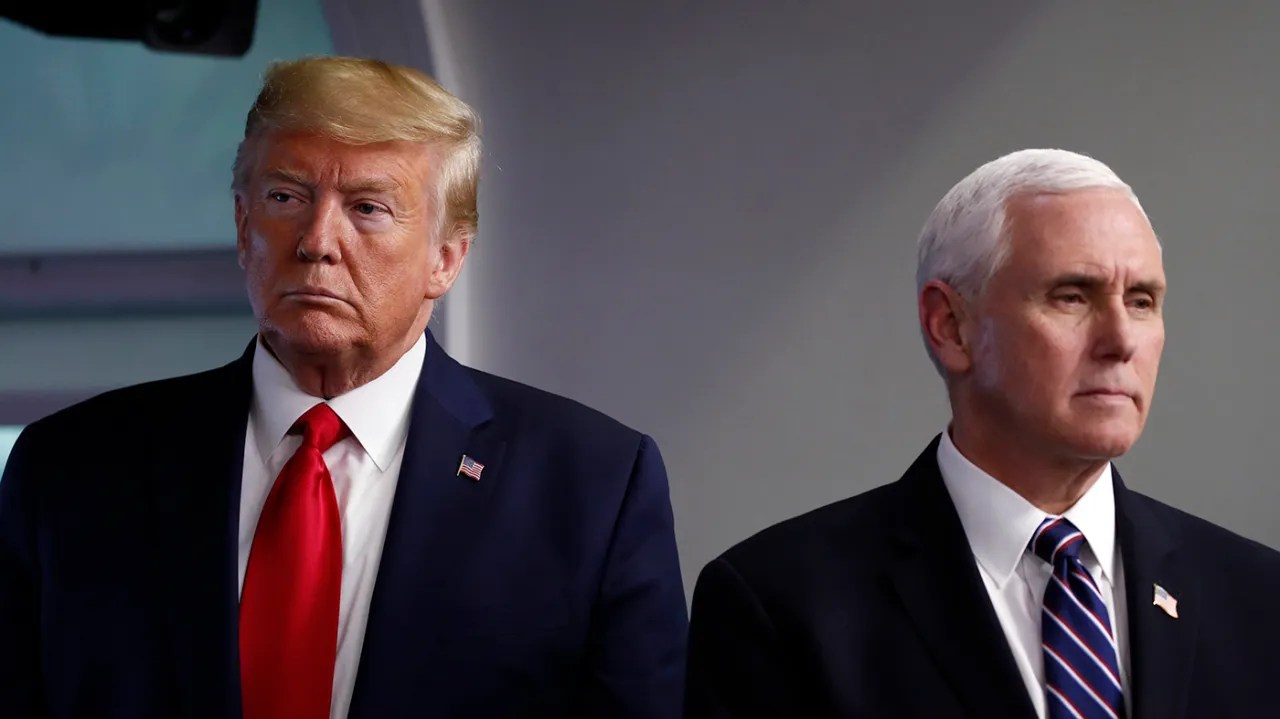
The loyalty must hold even if Trump again calls for terminating the Constitution. Shortlist candidates might study former VP Mike Pence’s never-to-be-written guide, which could be appropriately titled as “Puppet Playbook — The Art of Blind Loyalty.” They would learn how Pence executed all his loyalty plays until well after the November 2020 election.

During his four-year term, Trump reigned over Pence’s uber-loyal and consistent head nodding. Thus, Trump will expect no less from a new number two. Among the skills that Trump’s prospective VP candidates must bring to the job is smiling while lip-biting.

2. Running mate must never outshine the media master  

Unlikely to be a problem since Trump will only select someone he thinks the media is less interested in covering. But if Trump miscalculates on that assumption, his running mate will face his wrath.

3. The “defending Trump” factor

Already in full motion, Trump is watching where, when and with how much vigor prospective running mates are speaking, acting out and defending him after his first (and unlikely last) indictment. So expect the “Defending Trump” factor to become his number one selection criterion if or when indictments mount.

4. Trump will select someone who wants the VP nomination, but not too much.

In February, Trump discussed his future running mate and said, “A lot of people are right now auditioning.” Translation: Trump is closely watching and grading how prospective VP candidates look and act on television and social media platforms.

5. What constituencies/demographic groups/gender does the potential VP nominee attract to enhance the ticket?

Although this question relates to every presidential nominee, Trump’s ticket enhancement intentions are on steroids since his fruitful 2016 running mate selection experience. After Trump tapped then-Indiana Gov. Mike Pence, millions of evangelical voters turned out to the polls. Recall that in 2016 Pence (a respected, experienced federal and state-elected official) was also perceived by Republican voters as a moderating influence on Trump’s wild impulses and political inexperience. Again, Trump needs someone of that ilk if the indicted former president wins the nomination or White House.

6. Female running mate

Women comprised 52 percent of the 2020 electorate. Joe Biden won 57 percent of them to Trump’s 42 percent. Given Trump’s misogynist reputation, in 2024, he may be more inclined to select a female running mate. Chances are Vice President Kamala Harris will remain on Biden’s ticket, which is more reason for Trump to choose a woman.

Trump’s first choice could be Rep. Elise Stefanik (R-N.Y.). She chairs the House Republican Conference, making her the third most powerful House Republican. Furthermore, Stefanik checks every previously mentioned criterion with double checks for loyalty. For example, on Nov. 11, 2022, four days BEFORE Trump announced his 2024 presidential campaign, Stefanik endorsed Trump’s candidacy.

If Trump chose Stefanik, he would never worry about her outshining him in the media since she does not overtly seek media attention. Stefanik is young (born in 1984), intelligent (a Harvard graduate) and Catholic. Stefanik might provide some moderating balance reminiscent of Pence.

 Regarding the “Defending Trump” factor, Stefanik earns triple checkmarks. Recently, she expressed outrage sprinkled with familiar phrases pleasing to Trump’s ear, calling his indictment “a political witch-hunt and a dark day for America.” She said, “..save our great republic by electing President Donald J. Trump in 2024.” (Practicing for the campaign trail?)

Trump’s second choice could be Rep. Marjorie Taylor Greene (R-Ga.) Greene is in some ways the polar opposite of Stefanik. Trump’s campaign would constantly worry about her statements and antics deflecting attention from Trump. Greene is unpredictable, has no filter and does not expand Trump’s voter base. She is a female version of Trump, addicted to attention, adhering to his celebrity/political philosophy: chaos equals media attention earning fundraising millions equals Republican Party power. Greene will likely remain Trump’s gold star surrogate but not his running mate.

If Trump is the 2024 nominee, my bet in April 2023 is Trump/Stefanik.

TAGS 2024 2024 PRESIDENTIAL ELECTION DONALD TRUMP DONALD TRUMP PRESIDENTIAL CAMPAIGN ELISE STEFANIK ELISE STEFANIK MARJORIE TAYLOR GREENE MIKE PENCE MIKE PENCE TRUMP INDICTMENT


By Myra Adams – The Hill contributor

MYRA’S COMPLETE ARCHIVE IS HERE

Reposted from The Hill – March 23, 2023

Last month The Hill reported, “Seven issues that will define the 2024 election” — Social Security and Medicare; education; abortion; foreign policy; immigration; LGBTQ-related concerns; and crime. Although fiscally critical, divisive and emotional, these hot-button issues – combined with the traditional quadrennial question about how voters perceive their economic situation – could be overshadowed by five potentially explosive circumstances unique to 2024.

Here is why Americans should dread or even fear next year’s presidential election.

1. Proliferation of fake content 

Everyone is familiar with “fake news,” immortalized by former President Trump and applied to any media critical of him. But more consequential is realistic-looking fake content, called “deepfakes,” quickly produced through technological advancements.

Across all communication platforms, deepfakes are maliciously intended to deceive, confuse, create chaos, unduly influence, sway public opinion and propagandize. They also sometimes provide comedic entertainment.

Comedy aside, the 2024 presidential race will be the first election widely subjected to this sinister, hostile, challenging and uncontrollable message environment. As a result, campaigns and candidates are exceptionally vulnerable to domestic and foreign players intending to harm or boost candidates and or attempt to subvert or destabilize the democratic process. The potential for mayhem is limitless.

For example, during the recent banking crisis, the Associated Press reported, “Fake audio falsely claims to reveal private Biden comments.” Supposedly, in the background, Biden was heard saying, “All the money is gone” and “a collapse is imminent.” Then social media began sharing Biden’s concerns with their economically debilitating consequences. Fortunately, in this case, the fake was quickly exposed.

But in the heat of a fast-paced campaign, will voters be able to distinguish between real or fake ads and private comments that could cause irreparable damage?  

Are news organizations and campaigns prepared to promptly detect fake from real? Watch as campaigns, social media and news outlets fight an uphill battle against a barrage of fakes, with many bound to slip through. Indeed, millions of dollars are needed for sophisticated high-tech fact-checking and investigative know-how to address the fakery challenge presented by the 2024 election.

Remember the old saying, “A lie travels halfway around the globe before the truth puts on its pants.” The new version asks, “Deep fake or real, who can tell the difference?”

2. Hangover from 2020

Our nation’s friends and enemies will watch closely whether the world’s “longest-standing democracy” can peacefully elect and inaugurate its next president without aggrieved citizens violently attacking the building symbolizing freedom and liberty.

The problem is 28 percent of adults still believe the 2020 election was stolen. As always, the burden of conducting a free and fair national election falls on local and state authorities and voters’ trust that the system will flawlessly perform and correctly tabulate. Such decentralization is the hallmark of our voting system — making widespread national corruption nearly impossible.

Thankfully, and generally speaking, trust was restored after the 2022 midterm elections were conducted with minimal controversy. However, presidential voter turnout is always significantly higher, and the main perpetrator who sparked and fostered distrust in 2020 could again appear atop the 2024 ballot.

Nevertheless, what American presidential voters must not repeat or believe (distinctly un-American thinking) is that their candidate lost because the election was rigged. Remember, the world will be watching, and national credibility is at stake.

3. A two-front war could dominate the 2024 election

With much fanfare, Russian President Vladimir Putin and Chinese President Xi Jinping met in Moscow this week. The Washington Post reported they “proclaimed their plans to deepen Sino-Russian political and economic cooperation for years to come — sending a strong message to the West about their determination to push back against the global domination of the United States.”

Translation: A win-win marriage. China wants cheap Russian energy to pursue global domination, while Russia needs cash to recapture its lost Soviet empire. The relationship was best summarized by White House spokesman John Kirby, who said that Russia was China’s “junior partner.”

How do Xi’s and Putin’s goals impact the 2024 presidential election? Naturally, domestic issues dominate, but China and Russia know that polarization is increasingly heightened during a presidential election year when a divided USA means a weaker USA. Thus, 2024 could be when this dangerous duo coordinates strategic and aggressive moves in Europe and Asia.

NATO is concerned China might arm Russia in its war against Ukraine, and through attrition, Russia could ultimately triumph and threaten NATO countries engaging the U.S. More problematic is if China tries to reclaim Taiwan, conceivably gaining control over 63 percent of the world’s semiconductor manufacturing — a game changer for the U.S. economy.

4An indicted major party presidential candidate

Trump is the wild card in the highest-stakes contest with no playbook. The question is, how many times will he be indicted? Will trial(s) occur in 2023 or spill into 2024? How does a former president/leading presidential candidate go on trial? Count on Team Trump to construe any action by state or federal charging authorities as politically motivated. Americans will watch as the former president plays victim and hero, as previewed in his recent CPAC speech:

“In 2016, I declared I am your voice. Today I add, I am your warrior. I am your justice, and for those who have been wronged and betrayed, I am your retribution.”

Is America ready for the Trump show’s most dramatic season?

5Trump v. Biden  

A majority of Americans are dissatisfied with what looks like an inevitable rematch. A February 2023 Post-ABC poll found 62 percent of Americans would be “dissatisfied” or “angry” if Biden won reelection, while 56 percent feel the same about Trump.

Disgusted voters might blame a broken nomination process for the choice between two men born before the television age at a time when China appears to be winning the future and poised for world domination.

If Trump and Biden top the ballot, most voters will dread the 2024 election because America loses no matter who wins.

Myra Adams writes about politics and religion for numerous publications. She is a RealClearPolitics contributor and served on the creative team of two GOP presidential campaigns in 2004 and 2008. Follow her on Twitter @MyraKAdams.TAGS 2020 PRESIDENTIAL ELECTION 2024 PRESIDENTIAL CAMPAIGN 2024 PRESIDENTIAL ELECTION 2024 REPUBLICANS CHINA DEEPFAKES DONALD TRUMP JOE BIDEN RUSSIA RUSSIA-UKRAINE WAR TRUMP INDICTMENT UKRAINE UNITED STATES


By Myra Adams – The Hill contributor

MYRA’S COMPLETE ARCHIVE IS HERE

Reposted from The Hill – March 9, 2023

Last week The Hill published an op-ed titled, “Do Democrats need a past ‘superstar’ to hold the White House in 2024?” by veteran Republican consultant Douglas MacKinnon, who wrote: 

“At some point, all of the Democrats I have spoken with drift into a version of the same thought: They need a superstar to emerge as the ‘adult in the room’ to save the party.” 

Yet, MacKinnon failed to name a “superstar” who realistically could replace President Biden except for former First Lady Michele Obama — who has shown no interest.

Also lamenting the Biden problem is journalist Mark Leibovich. He recently wrote a piece for The Atlantic titled “The Case for a Primary Challenge to Joe Biden.” The piece was subtitled: “There must be some freethinking Democrat who’s willing to get in the race.” 

Between the lines, you can hear Leibovich screaming, “What is wrong with you people?” when he wrote: “There has to be one good Challenger X out there from the party’s supposed ‘deep bench,’ right? Someone who is compelling, formidable, and younger than, say, 65?”

However, Challenger X is not on the party’s “deep bench.” Like MacKinnon, Leibovich envisions this known savior candidate parachuting in and changing everything. Sorry to disappoint, but inside-the-box thinking leads to the lackluster Biden/Harris ticket. Yet, outside, there is potentially a “change everything” candidate. He is 59 years old and shopping around for big boy toys like an NFL team while building his dream sailing yacht and a rocket ship to Mars. His name is Jeff Bezos.

With a net worth of $127 billion, Bezos is one of the world’s wealthiest men. Currently, he appears not to harbor presidential ambitions. But do we know whether any Democratic leaders have asked?

After all, Bezos is a superstar performer in a nation long overdue for a leadership course correction. Moreover, polling indicates that Democrats are ready for an out-of-the-box president, not one from “the bench.”

Last month The Hill reported that only 37 percent of Democrats want President Biden to seek a second term, but with no clear replacement. Overall, a January 2023 Gallup poll found that while 64 percent of Americans think the “United States’ power in the world will decline, 73 percent think China’s power will increase.” If we are a declining power, we need a leader who is an extraordinary innovator with once-in-a-lifetime business acumen, a proven track record and the highest level management skills to reverse our downward spiral.

The RealClearPolitics average finds 64 percent of voters think our nation is on the “wrong track” compared to 27 percent who say we are headed in the “right direction.” Such pessimism will multiply if Americans must endure a Trump v. Biden rerun, begging the question, “Is this the best we can do?” And if Democrats are longing for “Challenger X” to derail the Biden/Harris ticket, then a strong case can be made for Bezos. But someone needs to ask him — now.

Building from scratch is a Bezos specialty and, fortunately, between his sofa cushions, he has the $2 billion needed to build, launch and run the most high-tech presidential campaign organization in history.

Then there is his rock star name recognition through Amazon. The company he started in 1994 is projected to overtake Walmart as the world’s largest retailer by 2024.

Amazon Prime has 153 million members. Juxtapose that with 155.5 million voters who cast a presidential ballot for Trump or Biden in 2020. From a marketing perspective, those 153 million prime members have an ongoing personal relationship with Jeff Bezos — a political plus if he were to run and win the nomination.

Of course, Bezos would have to detach himself from Amazon if elected president. Not easy since Bezos and his empire are thoroughly integrated into the U.S. economy. Remember during COVID-19 how Amazon’s delivery played a critical role while people were homebound and many businesses were shuttered? In addition, consumers are unaware of how many products and services they regularly use that have Amazon tentacles

Furthermore, unbeknownst to most Americans, Amazon is deeply embedded in the U.S. government as a contractor through Amazon Web Services (AWS). According to its website, “7,500 government agencies” use AWS. Even the CIA and other intelligence agencies are prominent AWS clients with state-of-the-art (often secret) contracts.

Also, the Department of Defense (DOD) is a longtime AWS partner. In 2019 then-President Trump was accused of intervening to preclude AWS from winning a $10 billion DOD contract. Allegedly, Trump wanted retribution for all the “fake news” perpetrated against him by the Bezos-owned Washington Post.

Ultimately Amazon sued, and DOD eventually canceled the Microsoft-won contract. But in December 2022, AWS won a DOD multi-vendor “Joint Warfighting Cloud Capability” contract worth billions.

And don’t forget Bezos the Rocket Man who blasted into space in 2021. Last month, NASA awarded Blue Origin – his personally owned space exploration company – a Mars study mission contract.

In these perilous times, Bezos’s skills are needed. New technologies, artificial intelligence and cyber warfare will rule the world, and China threatens. But, unlike other wannabe 2024 candidates, Bezos understands how to manage the challenges by leveraging present and advanced technologies to keep our nation from global decline.

Perhaps in 2024 voters will choose between Trump’s “Make America Great Again — Again” and Bezos’s “Make America Amazon.”  

TAGS 2024 2024 PRESIDENTIAL ELECTION AMAZON AMAZON PRIME AMAZON WEB SERVICES BLUE ORIGIN JEFF BEZOS JEFF BEZOS JEFF BEZOS JOE BIDEN MARK LEIBOVICH