Economic Crisis


By Myra Adams – The Hill contributor

MYRA’S COMPLETE ARCHIVE IS HERE

Reposted from The Hill on Dec. 29, 2021

On any given day in 2021, I receive at least 20 fundraising emails from current, former or wanna-be Republican candidates, along with right-leaning PACs, and promptly click “unsubscribe.” But I save those sent from potential 2024 presidential contenders since they provide valuable insight into Republican-base message testing from high-priced GOP consultants. Then, I watch who sent them and how often, during what is traditionally the most off-year in the presidential campaign cycle.

Here is a review of emails from three contenders from whom I have received the most.

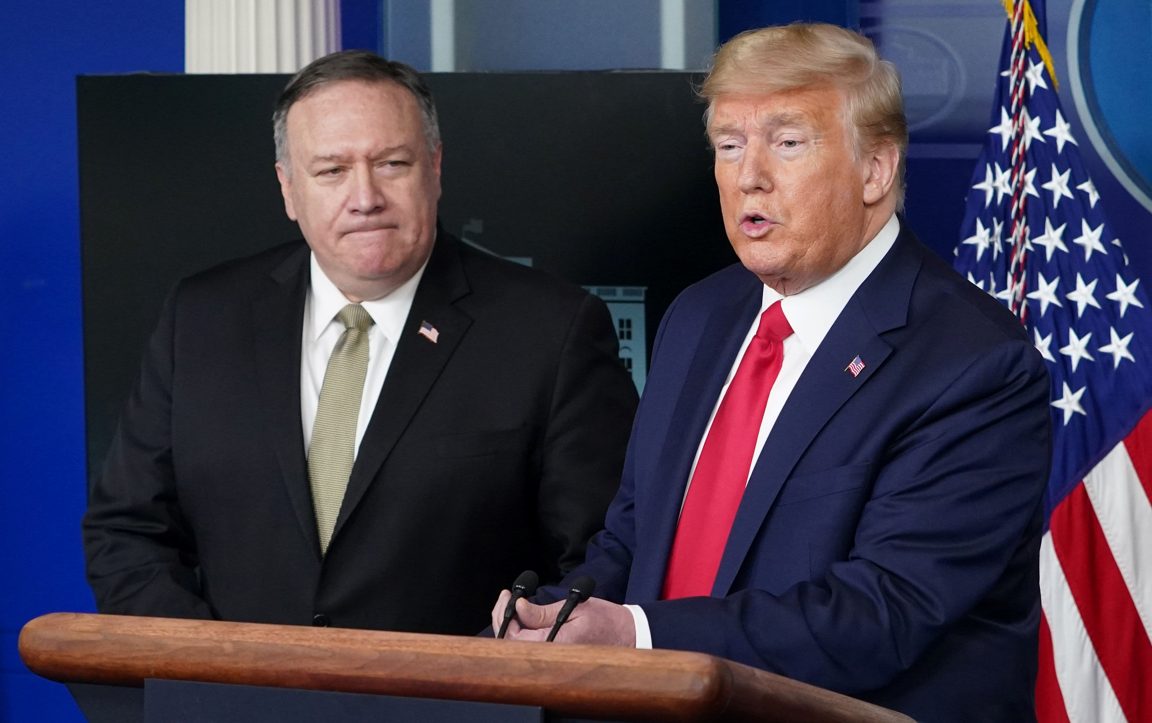
Mike Pompeo:

To refresh your memory, Pompeo was Trump’s second secretary of state, starting in mid-April 2018, after serving as the president’s first CIA director. (Pre-Trump, he was a three-term Republican representative from Kansas.) Pompeo’s respectable resume gives him license to actively test the 2024 waters.

Hence, starting about two months ago – with Dec. 20 the most recent – I began receiving emails from “Mike Pompeo.” Untitled, as a Mr. Average Guy, he asked in the subject line: “Can you spare just $1? I’ll be blunt: I’m asking.”

After seeing Pompeo’s message, my first thought was, “how the mighty have fallen.” Second, how embarrassing for someone of his stature to ask if I could “spare just $1.” Upon opening the message, four times he asked me to “Chip in $1.”

Sent on behalf of Pompeo’s CAVPAC (Champion American Values), his PAC is raising money to “elect more principled Republicans who won’t give an inch to the Democrats.” Not exactly a unifying message. And Pompeo, who for four years presided over our national secrets and foreign policy – presumably trying to keep us safe – now warns, “our democracy is at stake here!”

Ironically, he could have issued that same warning to the media during the Jan. 6 Capitol attack, but instead, Pompeo remained silent.

Then, on Nov. 16, a Hill headline read, “Mnuchin, Pompeo mulled plan to remove Trump after Jan. 6: book.” The report explained: “ABC News’s Jonathan Karl writes in ‘Betrayal’ that then-Treasury Secretary Steve Mnuchin spoke with other Cabinet members including then-Secretary of State Mike Pompeo about attempting to remove Trump from office through the 25th Amendment, according to excerpts published by MSNBC.”

The Hill also reported, “‘Pompeo through a spokesman denied there have ever been conversations around invoking the 25th Amendment,’ according to Rolling Stone.”

You might ponder this Jan. 6-related thought: If a major U.S. ally had suffered a similar attack, it is highly likely that Secretary of State Mike Pompeo would have made a public statement.

And now he is begging for a buck, further devaluing the slight chance he has of winning the 2024 GOP nomination. Pompeo’s problem is three-fold: He is not Trump. He can’t separate himself from Trump. His charisma and star power shines like a black hole. Moreover, he has physically shrunk after a dramatic weight loss. (No comment on the symbolism.) 

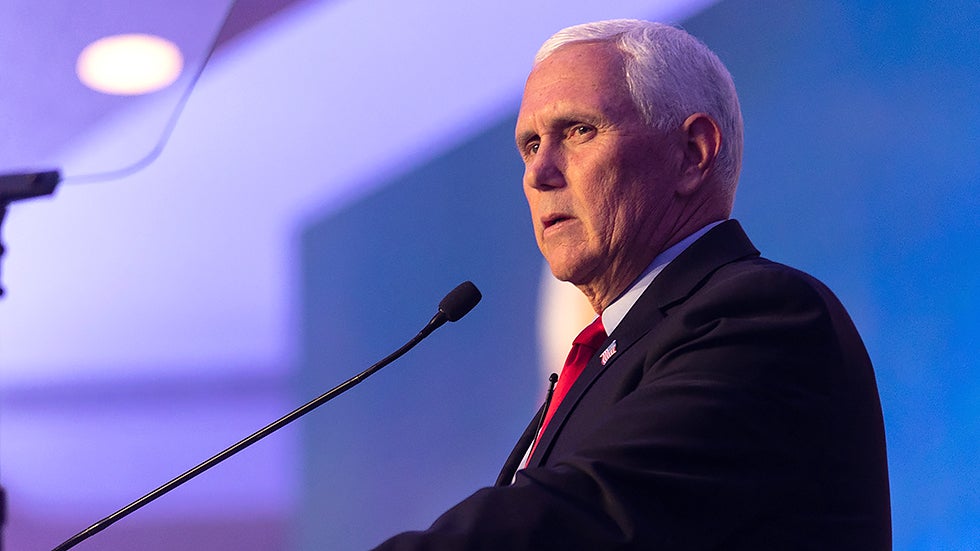
Mike Pence:

The emails I receive from the former vice president arrive with a blinking red warning light. Starting on Nov. 13, a daily newsletter headlined “Pence News” invaded my inbox. It is sent from an address that, when opened, literally causes my anti-virus software to erupt with a noisy warning — “Access denied: Website that presents a potential data leakage threat.”

This strange “Pence News” daily email offers no news about Pence, no “about” link to explain who aggregates the newsletter’s content and, oddly, does not solicit donations. But, when I risked computer safety to visit the Pence News site, it prominently read, “Supporting our values and our vice president.”  

Furthermore, that same “lethal” address is what Mike Pence uses to send emails from his PAC – AdvancingAmericanFreedom – with subject lines such as “Parents are NOT terrorists” and “Defending the Faith.”

Is Team Trump sabotaging Pence’s marketing efforts? And does it even matter? “Pence is going nowhere,” says an associate who is an expert on GOP politics. Worse, Trump recently said that Pence was “mortally wounded” inside the GOP. Why? He obeyed the law on Jan. 6.  

However, when the history of Jan. 6, 2021, is written decades from now, then-Vice President Mike Pence is likely to be revered as an American hero who saved our democracy. The democracy that Mike Pompeo now proclaims is “at stake” — while asking for “just $1.”

Donald Trump:

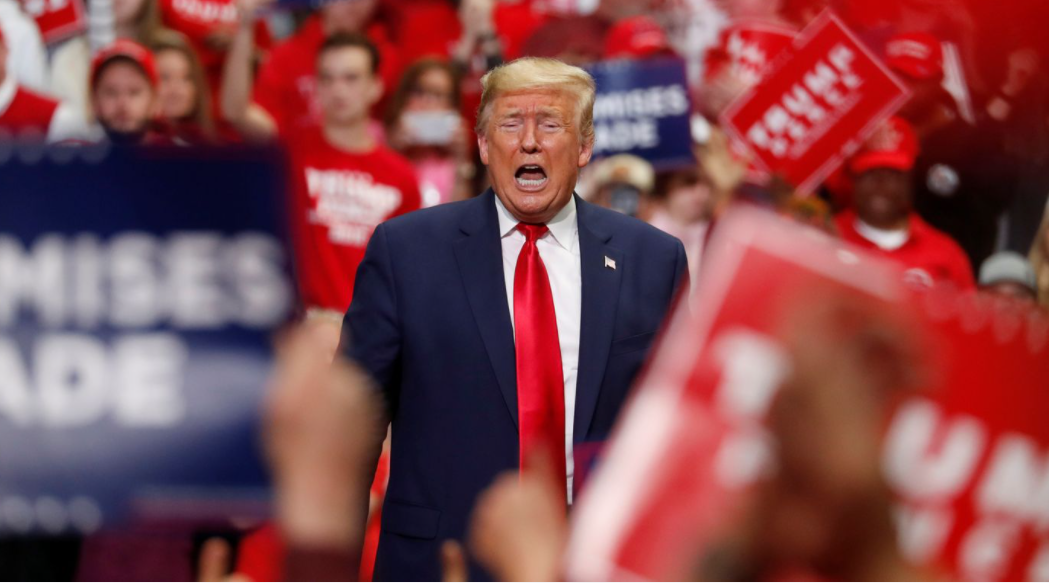
The former president is the “King-Kong” of emailers who crushes the others’ efforts like the ape crushed cars. Previously, I wrote about a weekend in mid-August, the most unlikely time to be bombarded by Trump’s fundraising emails.

My husband said he “unsubscribed,” but unabatedly, the emails continued. The messages are non-stop, with multiple daily “official alerts” from the “desk of Donald J. Trump” sent from his “Save America” PAC. The content is his usual fare that rips Biden to shreds, complains about the rigged 2020 election, Big Tech and the horrors of the Jan. 6 committee. He seeks revenge, ravages his enemies and sometime makes headlines. You never know until you open.

Don Jr.’s emails are especially irritating, continuously haranguing me about missing this or that fundraising deadline while screaming, “YOU were identified as one of my father’s TOP supporters.” And there’s always a barrage of emails hawking those famous Trump banners, hats and other seasonal paraphernalia.  

Team Trump’s daily email tsunami reminds me of the old joke asking: “What survives after a nuclear bomb is dropped?” Answer: cockroaches and Cher. But now add Trump’s emails.

After reviewing my 2021 inbox, here what’s missing: Bold, truthful emails from Pompeo and Pence. Instead, they forge ahead with cultural cliché subject lines and one-dollar asks without confronting Trump about the “Big Lie” and Jan. 6. As a result, their emails are weak drivel while Trump’s are strong, often factually challenged and sometimes anti-democratic.

If Trump is King Kong, will “Godzilla” emerge to fight him for the 2024 nomination? Or does the GOP surrender and cancel their presidential primaries? My 2022 inbox will no doubt be deluged with endless drama and possibilities.


By Myra Adams – The Hill contributor

MYRA’S COMPLETE ARCHIVE IS HERE

Reposted from The Hill on Dec. 16, 2021

’Tis the season for end-of-year lists –– most famously the one that asks whether you’ve been “naughty or nice.”

However, a powerful, unpublished “enemies list” always hovers over the media and political landscape. Updated 24/7 and always in motion, this “naughty” list generates name-calling headlines, reflecting the persona, whims, fears and grievances of its keeper –– Donald J. Trump.

Those “named” to Trump’s Enemies List (TEL) should recall the Eagles classic-rock verse: “You can check out, but you can never leave.” That “Hotel California” cliché reflects Trump’s long memory and inability to forgive perceived violations of his obsessive demands for loyalty that run only one way.

Listed below are 10 names who clashed with Trump’s loyalty demands and actions in conflict with the law. Subsequently, the 10 voted or acted according to what they believed was, and is, in the national interest. Unfortunately, butting heads with Trump’s firmly held beliefs (true or false) is messy, cringeworthy and noisy — always playing out at full volume on media’s center stage.

Remember, no matter where one ranks, the faces are equal in size on the dartboards at Mar-a-Lago.

10:  Sen. Mitt Romney (R-Utah)

The 2012 Republican Party presidential nominee is TEL’s foundational name for two reasons. First, Romney epitomizes the GOP that many believe Trump hijacked in 2016 and remade in his image. What Trump thinks about the Utah senator is neatly summarized in then-President Trump’s Oct. 5, 2019 quote: “He is a pompous ‘ass’ who has been fighting me from the beginning…”.

Second, Trump never forgets that Romney was the only GOP senator to vote in favor of his failed conviction on Feb. 5, 2020, ending Trump’s first Senate impeachment trial. A year later, on Feb.13, 2021, Romney joined nine other Republican senators who voted to convict Trump during his second failed impeachment trial.

Keep these two socially distanced at all times!

  1. House Speaker Nancy Pelosi (D-Calif.)

Another TEL archenemy with her name carved in stone after Speaker Pelosi ushered through the House two Trump impeachments on Dec. 18, 2019, and Jan. 13, 2021.

At her Dec. 8 weekly press briefing, The Hill reported Pelosi “would ‘never forgive’ former President Trump and his ‘lackeys’ for the ‘trauma’ that Capitol Hill staff experienced during the Jan. 6 riot.”

The last dramatic chapters of Trump vs. Pelosi can only be imagined.

  1. Former Israeli Prime Minister Benjamin Netanyahu

He is the newest, shocking TEL entry. “Shocking” after the Drudge Report screamed a Trump quote in red letters: ‘F*ck him’: Bitter Trump blasts Netanyahu”  –– recorded during a Dec. 10 Axios interview.

Apparently, Trump was deeply offended when Netanyahu congratulated President-elect Joe Biden 12 hours after the U.S. networks declared him the winner. Also, on Dec. 10, The Hill reported: “Netanyahu responds to Trump attack, says ‘it was important’ to congratulate Biden.”

Now for Trump’s blow-back: The Washington Post reported that evangelical leaders warned Trump “risked alienating his Christian base by distancing himself from the Israeli leader.” That matters since 81 percent of white evangelical Protestants voted for Trump in 2020 ––  a voting block that he desperately needs to run again in 2024.

  1. New York Attorney General Letitia James

She has asked to subpoena Trump for a Jan. 7 deposition. Fireworks ahead! This is part of an ongoing civil fraud investigation stemming from the Trump Organization allegedly under-valuing real estate holdings for tax and insurance purposes but overvaluing as assets for loan collateral.

Watch for Attorney General James to rise in the 2022 TEL rankings.

  1. Georgia Gov. Brian Kemp and Sec. of State Brad Raffensperger

Both Kemp and Raffensperger earned Trump’s ire when they refused the president’s request/demands to overturn Georgia’s 2020 election results. And, for doing their jobs by obeying the law, both are being primaried by Trump loyalists as they run for reelection in 2022.

Trump will do anything to ensure that Kemp and Raffensperger are defeated.

  1. Rep. Liz Cheney (R-Wyo.)

To many Americans, Liz Cheney is a hero for speaking the truth about Trump from her perch on the Jan. 6 House Select Committee. Conversely, Trump wants her out of Congress more than anyone who voted for his impeachment.

The Hill reported Trump said: “ ‘She [Cheney]  is a smug fool, and the great State of Wyoming, together with the Republican Party, fully understands her act. To look at her is to despise her,’ Trump continued. ‘Hopefully she will continue down this unsustainable path and she will soon be gone!’ ” 

In 2022, expect the Trump/Cheney volcano to explode.

  1. Joint Chiefs of Staff Chairman Gen. Mark Milley

Ironically, Trump selected Gen. Milley as chairman despite then-Sec. of Defense James Mattis’ recommended man for the job. Recently, at Mar-a-Lago, the former president publicly called the chairman of the joint chiefs a “f-ing idiot.”

Some consider Gen. Milley a hero for his actions after the election because he feared Trump’s erratic behavior could start a foreign war. Instead, the battle of Capitol Hill occurred on Jan. 6.  

  1. Senate Minority Leader Mitch McConnell (R- Ky.)

It is well known that Trump and McConnell despise each other. Trump believes McConnell was insufficiently loyal to him after the Nov. 2020 election. Reportedly the two have not spoken since Dec. 15, 2020. Their battle will only escalate with Trump meddling in Senate primaries, impacting McConnell regaining “majority” in his title.

  1. United States House Select Committee on the January 6 Attack

Trump is waging the political equivalent of a thermo-nuclear war to keep this committee from learning the truth about his actions surrounding Jan. 6, 2021. War means one side loses, but Trump must never lose.

  1. President Joe Biden

The president is guaranteed TEL’s highest-ranking while Biden holds the title that Trump believes he won. From Trump’s perspective, how someone as strong, powerful, and all-knowing as Donald J. Trump lost reelection to such an inferior, weak, mentally challenged old man can only mean the election was rigged –– driving Trump to avenge his loss.     

Prediction for 2022: Ongoing multi-front battles makes TEL the list to watch.

Myra Adams writes about politics and religion for numerous publications. She is a RealClearPolitics contributor and served on the creative team of two GOP presidential campaigns in 2004 and 2008. Follow her on Twitter @MyraKAdams.


By Myra Adams – RealClearPolitics Contributor

MYRA’S COMPLETE ARCHIVE IS HERE

Reposted from RealClearPolitics on Dec. 9, 2021

Eighty years after the Japanese attack on Pearl Harbor, my Japanese-brand SUV (made in Liberty, Ohio) is parked next to my husband’s competing-brand SUV (made in Hiroshima, of all places). In my mind, I hear President Roosevelt’s iconic voice saying, “December 7, 1941, a date which will live in infamy,” and I marvel at the evidence of postwar cooperation in our garage.

But there is another memorable Pearl Harbor-related quote that a Hollywood film attributed to attack planner Adm. Isoroku Yamamoto: “I fear all we have done is to awaken a sleeping giant and fill him with a terrible resolve.”

Regardless of whether that statement was truth or fiction, it raises three relevant questions: First: Does the U.S. still have the will to inflict “terrible resolve” against its enemies? Second: Eight decades after Pearl Harbor, could the U.S. become embroiled in another two-front war if Russia invades Ukraine and China invades Taiwan? Third: Would the U.S. emerge victorious?

Currently, the answers to all three are uncertain, and therein lies the problem.

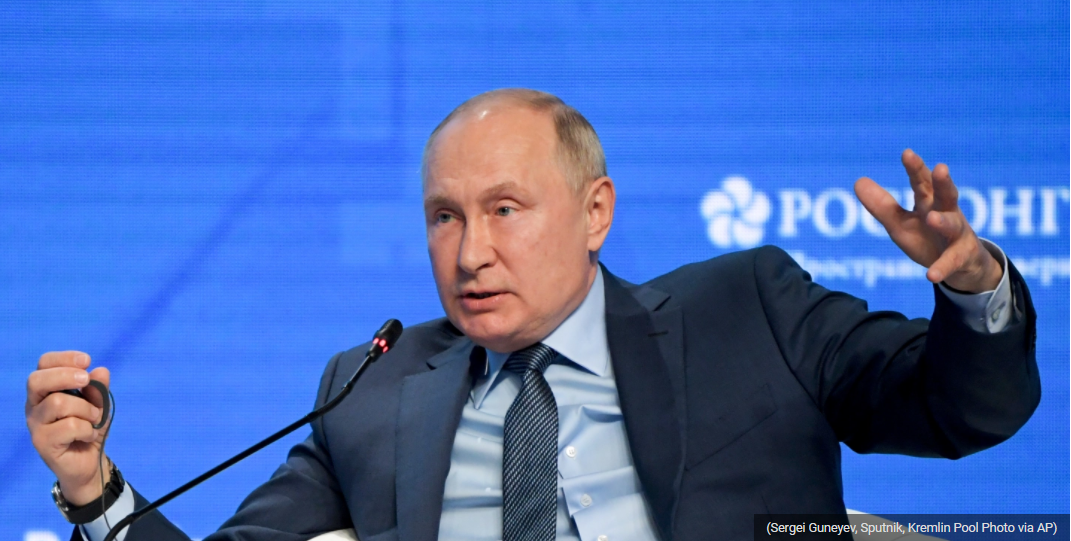
Surely such questions are raised during private discussions between Russian and Chinese dictators-for-life Vladimir Putin and Xi Jinping while they collaborate on military exercises, extend their 20-year-old friendship treaty, and inch closer to a formal alliance. One imagines them strategizing how best to capitalize on America’s political, military, and cyber weaknesses. Meanwhile, their overarching question is a low-tech and psychological one: Do we fear the United States and President Biden?

Moreover, do Putin and Xi think Biden is a weak leader incapable of galvanizing America and its allies into taking military action against them? That answer is of paramount importance since perceived weakness likely gives way to the more aggressive pursuit of Putin’s goal to refold Ukraine into  the Russian Federation and China’s desire to bring Taiwan back under its control after 72 years of autonomy.

Unfortunately, the U.S. and its allies cannot rest until both matters are favorably resolved, but open conflict is guaranteed to be fraught with not just bloodshed but extensive global business and security repercussions. Consider this: Taiwan’s Semiconductor Manufacturing Co. produces 92% of the world’s advanced chips found in high-tech products such as cellphones and fighter jets. Overall, Taiwan’s semiconductor contract manufacturers account for 63% of the global market share.

Simply stated, if China were to control chip manufacturing, it would dominate the world.   

That fact feeds the dangerous notion that China perceives Biden and Vice President Kamala Harris as increasingly weak, unwilling, or incapable of stopping it from retaking the breakaway province. And it’s why our two top leaders could be considered, in effect, a threat to national security.

Then consider what happened on Monday: In a Newsmax interview, former President Trump said, “Now I see that Biden is going to be talking to Putin, and that’s not a fair match.” He continued, “The election was rigged, and it was stolen, and this is what we got. This is not a match that should even be allowed. This is the New England Patriots playing your high school football team. That’s what you have right now.”

With that statement, Putin and Xi heard something they have never heard before: A recent ex-president — the de facto leader of the Republican Party — publicly demeaning his successor before a high-profile discussion. Trump’s timing only enhanced Biden’s political weakness, which Russia and China can and will exploit.

In the meantime, Biden is trying to govern an increasingly ungovernable, polarized nation where half the people do not believe a word he says, with Trump cheerleading that opposition.

Worse, the American people have a zero tolerance for war, further solidified after the botched Afghanistan withdrawal. So imagine Putin’s and Xi’s glee as they watched America being humiliated and thinking, “Hey, Joe — good luck sending troops anywhere now.”

Let’s revisit those three initial questions: Does the U.S. have the will to demonstrate “terrible resolve” against its enemies? Are we careening towards a two-front war? And would we be victorious?

Before you answer, consider the following:

After last weekend’s annual Reagan Defense Forum, Defense News reported: “Several U.S. defense leaders said Saturday they are worried that a confrontation with China over Taiwan would lead to a wave of significant cyberattacks against U.S. critical infrastructure that could disrupt day-to-day life.”

The ensuing domestic chaos would be unimaginable and a potential deterrent to U.S. action.

Furthermore, in a November Washington Post op-ed, Space Force Gen. David Thompson was quoted saying, “We’re really at a point now where there’s a whole host of ways that our space systems can be threatened.” He added, “Both China and Russia are regularly attacking U.S. satellites with non-kinetic means, including lasers, radio frequency jammers and cyber attacks.”

It certainly sounds like we are already at war. Or is the U.S. afraid to admit that China and Russia are at war with us? Remember, the 9/11 Commission Report famously concluded that U.S. suffered from a “failure of imagination.” Is there a lesson here?

Then there is faltering military readiness. According to Air Force Magazine: “Mission capable rates dropped in 2021 for every Air Force fighter type except the A-10, reversing progress in 2020.”

And according to John Rossomando, a senior analyst at Defense Policy, the Navy is “rusting away.” He notes that “the U.S. Navy used to scoff at images of rusting Soviet ships as a sign of lagging seamanship and warfighting abilities.” Now, he warns, “Mismanagement seems to be the name of the game in today’s Navy.”

And quietly, a Defense Department report admits, “China has the biggest maritime force on the globe with an inventory of about 355 vessels.”

Worst of all, after “a fictional confrontation with China,” the U.S. lost war games in what primarily would be an air and naval war.

And regarding Ukraine, where tank combat would dominate, the U.S. has only one tank factory (located in Lima, Ohio).

Ultimately, our severely polarized nation — with its weak leadership, an ex-president fanning discord, and withering military capabilities — could soon be confronted with the greatest national security crisis since World War II.

And again, the final painful question: Is the U.S. a “sleeping giant” capable of awakening with “terrible resolve,” or has our nation slipped into a coma?

When the alarm goes off, the world will know the answer.


By Myra Adams – The Hill contributor

MYRA’S COMPLETE ARCHIVE IS HERE

Reposted from The Hill on Dec. 2, 2021

Last weekend I saw a boat flying an American flag alongside a “Trump 2024 – Save America Again” banner replicating the infamous “Trump 2020 – Make America Great Again” flag. “Infamous” because those were the “battle flags” carried by Trump supporters as they stormed the Capitol on Jan. 6.

Upon seeing my first Trump 2024 banner, I was disgusted and partially blamed Senate Minority Leader Mitch McConnell (R-Ky.) for three reasons.

First, some of his actions or inactions between Nov. 7, 2020, and Feb. 13, 2021, directly or indirectly threaten our democratic system of government and jeopardize the credibility of forthcoming national elections. 

Second, Sen. McConnell made one of the greatest political miscalculations in modern history when he told GOP senators that their decision about whether to convict an impeached Donald Trump for the second time was a “vote of conscience.”

Third, McConnell failed to initiate legislation that would have barred Trump from holding future elective office. 

Those reasons make me wonder, “Does Mitch McConnell have any regrets?” and “What does Mitch think when he sees growing number of 2024 Trump banners and hats?” 

These are reasonable questions to ask, since 13 months after losing reelection, Trump is still the undisputed king of the Republican Party and daily teases another presidential run when McConnell could have defanged the Trump tiger in February.

Instead, Trump continues to rule through fear and intimidation after rising from the ashes of Jan. 6. Resurrected by power derived from cult-like followers, the former president is intervening in the 2022 midterm’s primary process by backing loyalist candidates even against incumbents — potentially jeopardizing the GOP’s chances of winning back the Senate.

Characteristically, Trump conveniently forgets McConnell’s critical role during two impeachments that twice saved him from Senate conviction. And how McConnell provided Trump with bragging rights after his Senate confirmed a record number of judges, including three on the Supreme Court. Also, McConnell pushed through Trump’s first legislative victory, a tax cut bill in 2017, and 2018’s criminal justice reform.

But all that is past. Instead, Trump delights in regularly berating McConnell, using childish names such as “Broken Old Crow,” “stupid” and “fool,” accusing him of incompetence and questioning his legislative voting decisions.

Worse, in April, while addressing GOP donors, Trump called McConnell a “stone-cold loser” and “a dumb son of a b_ _ch.” And on the Fox Business Channel, Trump said, “the party needs new leadership in the Senate.”

Back to the question, “Does McConnell have any regrets?” Let’s review actions and statements that earned him Trump’s ire. 

On Nov. 7, 2020, four days after the election, major news outlets projected that Joe Biden had defeated the incumbent president. However, then-Senate Majority Leader McConnell silently waited until Dec. 15  — the day after Biden’s win was certified by each state’s Electoral College – to acknowledge and congratulate the Biden-Harris ticket. Also, this was reportedly the last day Trump and McConnell spoke.

During those 39 days of McConnell’s silence, the president was in media overdrive, promulgating the “big lie” that undermined the integrity of our presidential elections.

McConnell chose not to counter Team Trump’s election falsehoods that ultimately resulted in the Jan. 6 attack on Capitol Hill when the Electoral College votes were ceremoniously certified before a joint session of Congress presided over by Vice President Mike Pence.

At 10 p.m. on Jan. 6, hours after the violent mob was removed from the Capitol, Leader McConnell addressed a reconvened joint session of Congress, saying, “This failed insurrection only underscores how crucial the task before us is for our republic.” He ended his short speech by stating, “And we will certify the winner of the 2020 presidential election.” The moment Trump heard those words is likely when he moved McConnell’s name to the top of his enemies list.

After the Jan. 6 “insurrection,” it is likely that McConnell never thought Trump would rise again from the ashes. That was evidenced by McConnell’s powerful Feb. 13 Senate acquittal speech, given after he, along with nine other Republican senators, voted “no”  — ensuring the two-thirds Senate votes needed to convict an impeached president would fall short.     

“American citizens attacked their own government,” said McConnell, “they used terrorism to try to stop a specific piece of democratic business they did not like.” But, he continued, “They did this because they had been fed wild falsehoods by the most powerful man on Earth — because he was angry he’d lost an election. Former President Trump’s actions preceding the riot were a disgraceful dereliction of duty.”

Indeed, McConnell could have used those words to make a strong case for convicting Trump, considering that on Jan. 6 he said it was a “failed insurrection.” 

As a result, the power of impeachment uniquely vested in the legislative branch to check the co-equal executive branch had essentially been declared null and void by Sen. Mitch McConnell’s leadership or lack thereof on Feb. 13, 2021. 

In retrospect, one could ask: Was McConnell afraid of leading the Senate in impeaching, convicting and then potentially barring from holding office a president for the first time in U.S. history? 

Perhaps, and remember how McConnell conveniently timed the Senate trial to occur after Biden’s inauguration, presumably to use the “we can’t convict a former president” card. And during the trial, he did just that, saying, “Article II, Section 4 must have force. It tells us the President, Vice President, and civil officers may be impeached and convicted. Donald Trump is no longer the president.”

But he might be again.

In preparation, Trump loyalists are positioning allies in local and state election offices to prevent future “fraudulent” outcomes. Moreover, numerous controversial Trump-inspired voting laws have been passed throughout the nation that many Democrats believe are uncalled for, restrictive and discriminatory.

Meanwhile, Trump’s primary focus and fundraising efforts are to avenge his 2020 loss, turn the “big lie” into truth and reconfigure Jan. 6 into a newfangled Patriot’s Day.

Any regrets, Sen. McConnell? If not, Amazon is selling Trump 2024 flags for $9.44 with free delivery that will be “in stock soon.”

Myra Adams writes about politics and religion for numerous publications. She is a RealClearPolitics contributor and served on the creative team of two GOP presidential campaigns in 2004 and 2008. Follow her on Twitter @MyraKAdams.

TAGS 2020 PRESIDENTIAL CAMPAIGN 2020 PRESIDENTIAL ELECTION MITCH MCCONNELL DONALD TRUMP MIKE PENCE JOE BIDEN


By Myra Adams – The Hill contributor

MYRA’S COMPLETE ARCHIVE IS HERE

Reposted from The Hill – Nov. 18, 2021

These “war games” have an evolving high-stakes dramatic plot with larger-than-life characters that could have sprung from the minds of Hollywood scriptwriters. We kick off “season one” with the protagonist’s backstory.

Donald J. Trump is a 75-year-old one-term, twice-impeached former U.S. president who lost the popular vote in 2016 and 2020. But his fragile (some say narcissistic) psyche prevents him from admitting his reelection loss to President Biden, whom Trump considers weak, inferior and mentally challenged.

“Loss” is a trigger word since losing is a nonexistent concept in the mindset of the former president. Thus, to compensate and rationalize Trump’s official reelection loss, he and his most loyal supporters repeatedly say the election was stolen, which became known as the “Big Lie.”

Then, on Jan. 6, 2021, the Big Lie came to life when Trump inspired a group of his followers to “stop the steal.” Currently, congressional leaders are trying to determine the exact role Trump played when some of his followers attacked the U.S. Capitol. As a result, Trump was quickly impeached for a second time by the House of Representatives on Jan. 13. But the Senate acquitted him on Feb. 13, and Trump was not barred from holding public office.

Shortly after Biden’s inauguration, Trump started flirting with avenging his stolen “victory” — continuing to raise mega-millions from GOP voters while maintaining his status as the unofficial leader of the Republican Party. Last month a Quinnipiac University survey found that 78 percent of Republicans polled thought Trump should run again, but 94 percent of Democrats and 58 percent of independents disagreed.

Trump also faces a myriad of legal challenges stemming from charges against his business empire, his conduct after the 2020 election and executive privilege fights with Congress regarding the events of Jan. 6.

“Season one” concludes with Trump’s recent interview on Fox News in which he said he’d made his decision about running again and, “I think a lot of people will be very happy … probably will announce that after the midterms.”

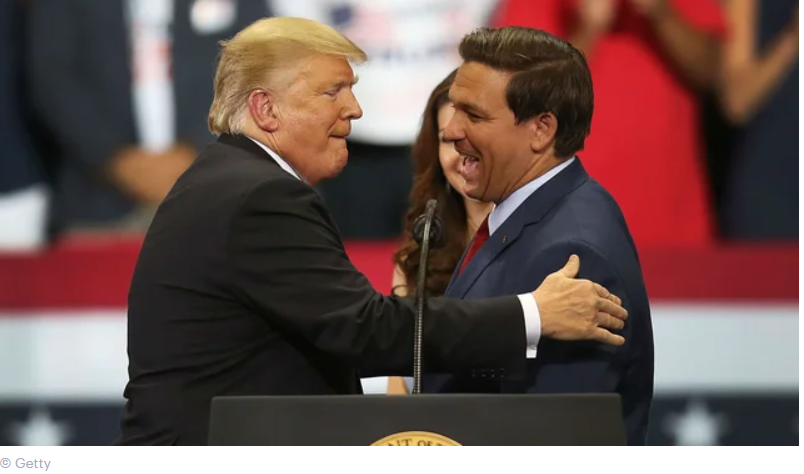
“Season two” picks up with Trump’s antagonist — Florida’s popular Gov. Ron DeSantis (R) — who channels Trump’s “win at all costs” fighting spirit. He is an ambitious 43-year-old, Yale- and Harvard-educated, Bronze Star-awarded Naval Reserve officer who hears echoes of “Hail to the Chief.”

Although the governor is running for what could be a hard-fought 2022 reelection, DeSantis travels the nation raising millions of dollars, confirming his status as the rising GOP star most likely to end all the Trump-era drama.

But DeSantis owes his title to Trump. When initially gearing up for the August 2018 GOP gubernatorial primary, DeSantis was an unknown northeast Florida congressman. That changed after he caught Trump’s eye on Fox News and received his early surprise endorsement on Dec. 22, 2017. Reciprocating the Trump love, DeSantis and his family starred in a cringe-worthy TV spot.

Three years later, the commercial reflects what Trump said in June on Fox Business, “I was at the beginning of Ron. I was the first one to endorse him when he came out as a congressman that a lot of people didn’t know. My endorsement helped him tremendously.”

In the 2018 election, DeSantis squeaked out a 0.4 percent margin of victory but now basks in the national spotlight — a potential threat to Trump’s all-consuming desire to avenge his 2020 loss with a 2024 win. Of course, Trump-world is ready to pounce: “Given that Ron DeSantis owes both his nomination and election as governor to Donald Trump, I don’t think he should now use Florida as a steppingstone to a 2024 challenge to the former president,” warned Roger Stone in an email responding to my question about the DeSantis-Trump conflict.

Note that Trump pardoned Stone shortly before he left office, perhaps accounting for Stone’s recent statement that DeSantis should pledge not to run for president in 2024 if reelected in 2022.

Then on Nov. 12, Politico reported that Trump is “souring on DeSantis” because the governor “still hasn’t joined the other 2024 hopefuls in pronouncing that he won’t run for president if Trump runs.”

Surely DeSantis wants to avoid a higher ranking on Trump’s enemies list, but it’s doubtful that the governor will acquiesce. Yet, one assumes the governor will want to campaign with the former president in his adopted home state.

Conversely, Trump risks helping DeSantis win reelection by a wide margin, which would propel the governor into a primary fight for the 2024 GOP nomination that Trump wants handed to him.

So expect early battlelines to form between the GOP’s past and future in late February at CPAC in Orlando, Fla. For example, will CPAC event Chairman Matt Schlapp choose Trump or DeSantis as the keynote speaker? After all, DeSantis is the host state governor on the 2022 ballot.

I posed that question to Schlapp, who emailed, “Stay tuned on speaker announcements for CPAC in Florida. All the top speakers will be there.” Yes, but in what pecking order? (Schlapp wisely avoided answering.) But he added, “Gov DeSantis should stay focused on Florida, where he is showing America what a smart, respectful governor can do to combat socialism from Washington. Everyone should focus on 2022.”

But the media will focus on who wins the 2024 GOP presidential nomination straw poll. “Season three” of the Trump vs. DeSantis war games begins at CPAC 2022.


By Myra Adams – The Hill contributor

MYRA’S COMPLETE ARCHIVE IS HERE

Reposted from The Hill: Nov. 12, 2021

The Democrats have a 2024 conundrum, with heir apparent Vice President Harris presenting a maze of questions and complications. Let’s start with the foundational problem: her boss, President Biden.

A USA Today-Suffolk University poll conducted last week had Biden’s job approval rating dipping to 38 percent, with 59 percent disapproving. Also, 64 percent of the registered voters surveyed opposed Biden running for reelection, including 28 percent of Democrats.

Furthermore, a mid-October NPR-Marist poll revealed that 44 percent of Democrats and Democratic-leaning independents thought “someone else” besides Biden would have the best chance of winning the presidency.

Maybe now Biden is rethinking his March 25 statement: “My plan is to run for reelection, that’s my expectation.” After all, Biden’s “expectation” might be thwarted by the growing perception that he is a weak leader not up to the task of governing and shaken by the shellacking Democrats received in last week’s elections.

Democratic strategists dream of a turnaround after a potential string of legislative victories. But with inflation soaring, their nightmare is the 2022 midterm elections warning of a red tidal wave, with Republicans likely to win control of the House and perhaps the Senate.

And the wave could crush Harris if she stars in a potential Republican attack ad. In the final days of the tight Virginia gubernatorial race, while campaigning with Democratic nominee Terry McAuliffe, Harris displayed a stunning lack of political savvy when she said, “What happens in Virginia will, in large part, determine what happens in 2022, 2024 and on.”

Harris violated a cardinal political rule — never publicly state the future meaning of a race that your candidate could lose — and her candidate was walloped.

If the midterms turn out to be a Democratic repudiation, stick a fork in Joe Biden’s presidency and expect the following questions to occupy copious amounts of cable bandwidth.

1) When will Biden announce that he is not running for reelection?

Certainly earlier than President Lyndon Baines Johnson when he announced his decision not to seek a second term on March 31, 1968 — only eight months from Election Day.

Herein lies the dilemma: The earlier Biden announces his lame-duck status, the more his power decreases, reflecting the aura of a failed presidency. So, naturally, attention then shifts to the Democrats’ presidential horse race. But more consequential is the national security perspective if enemies think a “defeated” Biden signals an opportune time for aggression.

Conversely, the longer Biden delays his announcement, the more those seeking the nomination will be handicapped. Nearly two years are needed for an organizational build-up to raise the megamillions of dollars required to wage a successful presidential primary campaign.

For example, then-Sen. Barack Obama (D-Ill.) announced his 2008 presidential campaign on Feb. 10, 2007, early in the election cycle.

Then-Sen. Kamala Harris (D-Calif.) announced her 2020 presidential aspirations on Jan. 21, 2019. But she quickly flamed out and withdrew on Dec. 3, 2019.

2) Will Harris pressure Biden to announce his 2024 plans early? Then she could begin acting like a president-in-waiting while potentially keeping her primary opponents at bay.

3) If Biden announces that he will be a one-term president, when will he endorse Harris as his successor? Or will Biden choose to mimic Obama in 2020? Remember, Obama held off endorsing his former vice president until April 14, after Biden had clinched the nomination — most likely to avoid embarrassment.

But will Harris even want Biden’s endorsement if his job approval rating is below 40 percent? In that case, will she seek to separate herself from him? Any of these scenarios will be an awkward, clumsy dance between Joe and Kamala.

4) At the heart of the Harris 2024 conundrum are her consistently dismal job approval ratings — the latest at 28 percent with 51 percent disapproving. And Harris’s RealClearPolitics average favorable rating is 40 percent with 51 percent unfavorable.

So what if in early 2023 her ratings are still low, and general election match-up polls show her losing to most or all potential GOP opponents? How then do Democratic presidential candidates wage a primary campaign to defeat the incumbent vice president who is both the first woman and first racial minority to hold that office?

5) Will Democrats elect Harris as their nominee because it’s “her turn”? Historically, the “it’s their turn” strategy does not end well for either party. (See Clinton, Hillary 2016.) White House winners are usually charismatic leaders with their fingers on the nation’s pulse, and Harris falls short on both. President Biden was a notable exception. He was hardly charismatic but fit the bill when Americans sought a “no drama return to normalcy” after four years of President Trump.

6) What if in 2024 Harris is the incumbent president either through an unspeakable event or because Biden resigns for “health reasons” to give Harris an electoral advantage? Anything can happen between now and 2024.

7) Will Republicans support Harris’s candidacy by sending her money and forming pro-Harris groups as a ruse to help her win the 2024 nomination? “Yes” is my guess.

Finally, it appears the American people are just not that into Harris. She rubs many voters the wrong way — branded as an uninspiring leftist and weak leader — although she’s credited with a historical gender and race breakthrough.

Now, imagine a 2024 election between Kamala Harris and Donald Trump. It would be MAD (Mutually Assured Destruction) with an unpopular sharp-tongued incumbent female vice president taking on a twice-impeached former president with authoritarian tendencies avenging his 2020 defeat. Our nation deserves better.

Myra Adams writes about politics and religion for numerous publications. She is a RealClearPolitics contributor and served on the creative team of two GOP presidential campaigns in 2004 and 2008. Follow her on Twitter @MyraKAdams.

TAGS: KAMALA HARRIS JOE BIDEN TERRY MCAULIFFE DONALD TRUMP BARACK OBAMA JOE BIDEN 2020 PRESIDENTIAL CAMPAIGN VICE PRESIDENT OF THE UNITED STATES PRESIDENCY OF JOE BIDEN 2024 CAMPAIGN


By Myra Adams – The Hill contributor

MYRA’S COMPLETE ARCHIVE IS HERE

Reposted from The Hill: Oct. 28, 2021

At Reagan National Airport, I saw a newsstand selling t-shirts with Donald Trump asking, “Do you miss me yet?” But how can we miss him if he never went away?

The 45th president vacated the White House but not the news cycle, and Republicans want more. Last week, a Hill-HarrisX poll found 77 percent of GOP voters support a Trump 2024 run, as did a Quinnipiac poll, reporting 78 percent support.

Although 2024 is three years away, it appears that Trump has claimed the Republican presidential nomination unless derailed by a severe health, legal or political crisis worse than two impeachments.

“If Trump runs again, he is essentially the incumbent,” Matt Schlapp, the influential chairman of the annual CPAC conference, told me in a recent interview. Then this week, Trump released a statement quoting GOP pollster John McLaughlin, who says, “Trump would win in a landslide right now. He would beat either Biden or Harris. He’s ahead of Harris 49 to 46 in the poll.”

Trump topping the 2024 GOP ticket likely means replacing former Vice President Mike Pence. Why? On Jan.12, the New York Times confirmed a terse exchange summarizing their schism. The conversation occurred on Jan. 6, before Pence presided over the constitutionally mandated joint session of Congress certifying the states’ Electoral College votes. After Pence refused the president’s demands to overturn the election results, Trump allegedly said: “You can either go down in history as a patriot, or you can go down in history as a pu–y.”

If Trump’s stars align enough to select a new running mate, one can surmise that his first choice would be a clone of himself. But since science has yet to offer that political option, Trump’s favorite off-spring might suffice. Thus, expect endless punditry and comedy about why daughter Ivanka Trump should be included or excluded from the VP shortlist.

More constructive than long lists of specific names this early in the 2024 cycle are questions and answers that complicate Trump’s search for a Number Two.

First, any prospective VP should examine the post-election conflict between Trump and Pence, asking themselves: “On Jan. 6, would I have acquiesced to Trump’s demands or acted like Pence in accordance with the VP’s constitutional role?” Inevitably, candidates must be prepared for that question with the “correct” answer a litmus test for selection.

Second, and related: “If, as vice president, Trump demanded that I engage in what is widely considered to be a constitutionally illegal act, how would I respond?”

Third, “What if before Trump selects me as his VP nominee, he demands that I publicly disavow all disparaging press statements attributed to me concerning him or his actions relating to the 2020 election, impeachment or the events of Jan. 6. Would I comply?”

Conversely, what follows is a list of questions from Trump’s perspective:

Would this candidate be 100 percent loyal to me during a crisis?

Will they outshine me in the media?

Will they always put me first or focus on positioning themselves to be president?  

How physically attractive is this candidate?

How well would they defend me on television?

How does this candidate enhance my chances of winning?

Do I personally like and respect this candidate?

Is this person “strong” enough to be my VP?

Would they resent and conflict with family members in senior White House roles?

Is this candidate qualified to be president and carry forth my agenda?

Answers to all questions from both perspectives could be tricky, and why my Trump VP shortlist offers only two names — coincidentally, both from South Carolina.

In first place is Nikki Haley, twice-elected governor before joining the Trump administration as U.S. ambassador to the United Nations. Then in 2019, rumors swirled that Trump was considering replacing Pence with Haley on the 2020 ticket to help attract more women voters.

Trump and Haley have a complicated up-and-down relationship. Most notably, her February bombshell Politico interview signaled she was separating from the former president and positioning herself to lead a post-Trump GOP. But in April, Haley inched back, saying, “I would not run if President Trump ran, and I would talk to him about it.”

Then, this month, she switched again, stating her decision to run would not be dependent on Trump. Obviously, Haley and Trump would need relationship counseling before joining forces, but she is a strong, qualified woman and could be an asset to Trump.

In second place is Sen. Tim Scott (R-S.C.), the only African American Republican senator. Scott is running for reelection, raising millions of dollars, and back in March, Trump heartily endorsed him. Scott endeared himself to the former president during a Fox News appearance on Feb. 8. While discussing the Jan. 6 Capitol attack, the senator said, “The one person I don’t blame is President Trump.”

In 2019, Scott announced that his 2022 reelection bid would be his “last race,” which translated from Washington speak means “ripe for higher office.”

And why is Florida Gov. Ron DeSantis absent from my shortlist? For starters, DeSantis is not a “number-two” kind of guy. But more serious, Article II of the U.S. Constitution presents an Electoral College voting problem when both candidates on the presidential ticket are from the same state.

Ultimately, anyone who agrees to be Trump’s running mate enters a minefield and should enroll in the Mike Pence School of Patience and Constitutional Law.

Myra Adams writes about politics and religion for numerous publications. She is a RealClearPolitics contributor and served on the creative team of two GOP presidential campaigns in 2004 and 2008. Follow her on Twitter @MyraKAdams.


By Myra Adams – RealClearPolitics contributor

MYRA’S COMPLETE ARCHIVE IS HERE

Reposted from RealClearPolitics Oct. 21, 2021

Question: How did a campaign rally near Richmond, Va., attended by approximately 450 people, generate nearly a week’s worth of national media attention and potentially impact a closely watched gubernatorial race?

Answer: The Oct. 13 rally in the town of Glen Allen had offered MAGA  political red meat starring Donald Trump and Steve Bannon. They energized Trump-loyal voters about Virginia’s Nov. 2 bellwether election between Republican Glenn Youngkin and Democratic former Gov. Terry McAuliffe. The candidates are in a statistical dead heat with the outcome having implications for the 2022 midterm elections.

But capturing most of the press attention was the flag used at the gathering’s Pledge of Allegiance, a banner the emcee told the audience had been “carried at the peaceful rally with Donald J. Trump on Jan. 6.”

Who had the clout to sponsor and organize this convergence of simmering national hot-button issues and featuring the two leading MAGA provocateurs —  causing such a media uproar?

The answer is John Fredericks, a central Virginia radio talk-show host who owns and operates five stations. He bills himself as a “conservative talk radio host, media guru, and patriotic voice for America.”

Having known John since 2011, I wrote last year about his growing influence as a longtime Trump cheerleader and station owner. Thus, I was not surprised to hear that he hosted the newsmaking rally; this week, I emailed him several questions about it.

Topic A was the controversial Pledge of Allegiance to the Jan. 6 flag, which McAuliffe had been quick to denounce. John replied with a viewpoint that differed substantially from the event video, writing that he “stands by” the following statement from emcee Martha Boneta: “The American Flag at last night’s rally was in a bus tour and was never at a rally or never near the Capitol on January 6. Anyone saying anything differently is LYING. Terry McAuliffe is a stone-cold liar — desperate because he is losing — and he is LYING about the American Flag, just like he lies about his dismal record.”

I responded, “But Martha clearly said the flag was ‘carried” at Trump’s Jan. 6 rally.’ ”

After several email volleys, John called. He was agitated about the controversy and admitted that Martha misspoke at his Oct. 13 event. Referring to the U.S. Capitol protest and Trump’s rally that preceded it, he said, “The truth is that the flag was not at any rally, ever.”

Nonetheless, Glenn Youngkin — who did not attend the Glen Allen rally — had felt the media heat. The day after the event, he issued a statement:

“It is weird and wrong to pledge allegiance to a flag connected to January 6. As I have said many times before, the violence that occurred on January 6 was sickening and wrong.”

Youngkin is a successful businessman who has never held elective office. However, he has yet to invite Trump to join him on the campaign trail even though the former president heartily endorsed Youngkin when Trump phoned in to address the rally.

McAuliffe turned Trump’s “gift” endorsement into a TV spot.  Previously, while hammering his anti-Trump theme, McAuliffe had sent an email blast with the subject line: “Terry McAuliffe Needs You to Stop Trumpism in Virginia.”

Overall, Fredericks was pleased with the media attention his rally generated under the invitation to “Take Back Virginia” — even though the national press gleefully reported that the Republican gubernatorial nominee wasn’t present.

“This event was never about Glenn Youngkin — he didn’t need to attend. This was our event about rallying the Trump base who did not show up in Virginia in 2017, 2018, or 2019. They need to show up in 2021 to win,” John wrote in an email.

Some speakers, such as state Sen. Amanda Chase, had warned earlier on John’s show, “I know how they’re stealing elections, and we’re not gonna let that happen this year.”

Rally attendees also heard the usual repeated claims that Trump won in 2020 (including by the former president himself), while Bannon predicted that Trump would return to the White House in 2024. In fact, the latest Quinnipiac poll found 78% of Republicans want him to run again.

Bannon — a big name draw at the rally — is a business associate of Fredericks, whose radio network founded and hosts his popular show, “War Room.” Since that program often makes news, I asked John about its success.

“Steve Bannon’s War Room is the most-watched and listened to live broadcast in America today,” he replied. “His total audience has surpassed 100 million downloads worldwide. I had the opportunity to be the founder of Steve’s War Room show two years ago. I was Trump’s chairman of his Virginia campaigns in 2016 and 2020 and got to know [Bannon] when he was chairman of the Trump campaign in 2016. He inspired me.”

On Thursday, Bannon was found in criminal contempt of Congress by a vote of 229-202. He had refused to comply with the House committee investigating the Jan. 6 Capitol attack — guaranteeing even higher ratings and more downloads as “War Room” wages war over that legal battle. 

How did Fredericks’ once fledging talk-radio career pull him into the orbit of two mega-MAGA figures?

The trajectory started on June 1, 2015, when Fredericks predicted on air that Donald Trump would be the 45th president of the United States. Then, two weeks later, Trump famously descended that gold escalator, launching his campaign and changing America’s political landscape.

Fredericks had, and continues to have, the former president on his show. And, as mentioned earlier, he held leadership roles in Trump’s 2016 and 2020 campaigns. Doing so, Fredericks broke new ground as a regional media figure who openly engages in high-level partisan politics outside of the studio.

But sometimes, Trump does not make life easy for even his most ardent supporters. For example, on the day of Glen Allen rally, Trump released the following controversial statement:

“If we don’t solve the Presidential Election Fraud of 2020 (which we have thoroughly and conclusively documented), Republicans will not be voting in ’22 or ’24. It is the single most important thing for Republicans to do.”

In John’s email to me, he wrote what sounded like pushback against that sentiment, at least as it pertains to Virginia’s election on Nov. 2: “We want our MAGA supporters to turn out in record numbers to vote and to get involved as poll watchers, election officials, door knockers, phone callers, and everything else they can do to help Youngkin win in Virginia.”

He also reiterated his support for the GOP candidate:

“Glenn Youngkin is generating tremendous excitement in our Trump base because he is organizing the greatest game-day election integrity operation in history. This is also being coordinated with the RNC, and it will ensure a free and fair election where every legitimate and legal vote is counted, and illegal votes are not counted. This voter integrity model will serve as a state-by-state blueprint for the midterms.”

Then I asked, “If Youngkin loses to McAuliffe, does that mean the election was stolen?”

“It depends on what the Glenn Youngkin campaign and the RNC says. Let’s see what happens — Youngkin has done everything humanly possible to ensure that the election is not stolen,” he replied.

John Fredericks is a unique talk show talent/media owner/activist who believes that Trumpism will outlast Trump. “It’s a movement, not a personality,” he explained. “It will endure with new leaders who authentically embrace the core tenets of America First and put America’s workers first.”

When I asked John about his own future, he insisted that he “outworks everyone,” provides “excellent return on investment to his advertisers,” and “plans for future station acquisition.”

“My audience,” he continued, “is growing exponentially because good, bad or ugly, I tell the truth and the truth will set you free. I am the Godzilla of Truth in America.”


By Myra Adams – The Hill contributor

MYRA’S COMPLETE ARCHIVE IS HERE

Reposted from The Hill – Oct. 14, 2021

Recently, I asked a Trump-supporting friend from Georgia if he thought our nation was doomed with President Biden at the helm. Using a Titanic analogy, he answered, “We’ve already hit the iceberg, and now we’re running for the lifeboats.” Then he added, “I would take Trump back in office five times over Biden,” but admitted, “I personally don’t like Trump and prefer he step aside for Florida Gov. Ron DeSantis.”

Based on my friend’s demographic profile, I consider him a one-person focus group reacting to layers of crises. And his pessimism is in line with new polling. The president’s 44 percent job approval rating average indicates more than just that Trump supporters are losing hope in Biden’s ability to right the ship of state.

Nonetheless, for anti-Trump and independent voters souring on Biden, remember the pendulum-swinging reason you voted for him: He was not Donald Trump. And that was before January’s violent attack and second impeachment on Capitol Hill, which made “boring Biden” even more appreciated after all the authoritative strong-man drama.

However, Biden following Trump into the White House is emblematic of a pervasive, overarching national problem that rarely makes headlines yet impacts them all — the United States has a presidential leadership crisis. 

When voters see two names at the top of the presidential ticket every four years, they shake their heads and ask: “Why can’t we do better than these two?” Raise your hand if you can relate.

Unfortunately, due to what I call a “compounded pendulum effect,” our presidential leadership crisis is on a downward swinging spiral. Although the pendulum has always swung from one president to the next, the 24/7 media and internet-era has increased polarization and intensified severity.

For example, in January 2009, George W. Bush left office with a 29 percent job approval rating average. That helps explain why the inexperienced Barack Obama was elected amid fervor for hope and change.

Then Obama in 2016, plagued by a perception of weak leadership, backed the unlikable but experienced Hillary Clinton with her truthful but unstated campaign message — “it’s my turn to be president.” But her dreams were unexpectedly thwarted by a burger n’ fries eating “everyman” celebrity billionaire named Donald J. Trump. He was the political and intellectual polar opposite of both Clinton and Obama with his rally message of “Make America Great Again” and “build the wall!” on repeat play.

That brings us to the 2020 election in the uber-polarized Divided States of America. An era in which everyone only watches and reads news and information they agree with and share through their phones on social media. That climate propelled the COVID-pandemic-election pendulum to swing from Trump to an “adult” place-holder president whose go-to leadership line is “C’mon man.” 

The Biden vs. Trump choice – among the worst “hold your nose” moments in American history – motivated a record turnout of 155 million voters.

Thus, nine months into his term, is anyone surprised that President Biden – who will celebrate his 79th birthday in November – is turning out to be among our weakest presidents? During his 36 years as a U.S. senator, followed by eight years as Barack Obama’s vice president, Biden was never a stand-out leader. And, today, if not for Rep. James Clyburn’s (D-S.C.) endorsement in the 2020 South Carolina presidential primary, Joe Biden would be painting with Hunter Biden at his Delaware beach house.

Looking ahead to 2024, we have the makings of potentially the greatest modern presidential leadership crisis at the most perilous time. Pay close attention to China’s aggressive military moves toward Taiwan. Chinese communist leaders have set their sights on taking back the island and controlling the world’s leading manufacturer of semiconductor chips. That means the U.S. economy could be brought to its knees since the American share of global chip manufacturing capacity has “fallen to 12 percent,” according to the Semiconductor Industry Association. It is only a matter of time until this Taiwan/China conflict comes to a head, and practically every item you touch and depend on is impacted.

Is there a U.S. leader now or on the horizon who could navigate our nation through such a global economic catastrophe? Names, please.

he very definition of a leadership crisis would be if the American people had to choose between Biden and Trump in 2024. Could the pendulum swing from Trump to Biden back to Trump? Hill pundits argue how Biden’s “train-wreck” could elect Trump 2.0  — resulting in authoritarian rule with no guardrails.

Even Biden’s ever-shrinking, nearly-forgotten vice president, Kamala Harris, has an underwater job approval rating of 42 percent, with 51 percent unfavorable.

Could she win Biden’s second term if he were to step down? Can you imagine a Harris vs. Trump race? The winner would take our nation from leadership crisis to leadership apocalypse.

Now ask yourself two big-picture questions: Is America ungovernable and incapable of being led? How can anyone lead when half the population refuses to follow?

Our enemies know the answers.

Myra Adams writes about politics and religion for numerous publications. She is a RealClearPolitics contributor and served on the creative team of two GOP presidential campaigns in 2004 and 2008. Follow her on Twitter @MyraKAdams.

TAGS: 2020 PRESIDENTIAL CAMPAIGN DONALD J. TRUMP JOE BIDEN KAMALA HARRIS HILLARY CLINTON DONALD TRUMP BARACK OBAMA RON DESANTIS PRESIDENTS OF THE UNITED STATES UNITED STATES PRESIDENTIAL ELECTION JOE BIDEN PRESIDENCY AMERICAN LEADERSHIP


By Myra Adams – The Hill contributor

MYRA’S COMPLETE ARCHIVE IS HERE

Reposted from The Hill – Sept. 30, 2021

When Time magazine’s Feb.18, 2013 cover featured then-41-year-old Sen. Marco Rubio (R-Fla.), the declarative headline read: “The Republican Savior: How Marco Rubio became the new voice of the GOP.”

That headline – with a photo showcasing Rubio’s boyish yet statesman-like look – cast him as the Republican Party leader for a new generation. Moreover, Rubio’s name was phonetically linked to “rising-young-star” while he led the GOP’s charge on immigration reform.

Strategists and pundits discussed whether Rubio was the party’s Hispanic answer to President Obama. After all, the same week Rubio appeared on Time’s cover, he gave the Republican response to the State of the Union address. (Mostly remembered for his ill-timed gulp of water followed by ridicule.)

Fast forward eight years to last week’s Harvard CAPS-Harris Poll survey, in which Rubio’s “new voice” and “Republican Savior” monikers have not aged well. At age 50, he languishes at the bottom of his party’s 2024 presidential prospects list — supported by just 3 percent of Republican voters.

So, what happened to Marco Rubio, the GOP’s “new leader for the next generation”?

No slouch by any standard, he is a respected senior senator from the nation’s third most populous state and known for foreign policy expertise. In 2022, he will vie for his third term and likely will prevail against Rep. Val Demings — but only after a tough, expensive fight. How expensive? In June, a FOX News headline read: “Rubio-Demings 2022 showdown could become most expensive Senate race ever.” That means Democrats think Rubio is beatable, and in politics, perception is reality.

What contributed to his “downfall”? One argument is that Rubio peaked too early and prematurely reacted to media hype. Then in 2015 – beginning in the fourth year of his first six-year term – Rubio contracted a severe case of “Potomac Fever,” a contagious yet common Senate disease. The fever deluded him into thinking he could be Obama’s successor.

Predictably, Rubio struggled throughout the 2016 primary season and dropped out on March 15, after winning only 27 percent of Florida primary voters compared to 46 percent for Donald Trump. 

Rubio’s embarrassing and career-altering campaign never gained traction. It was plagued by bad political timing and conflict with Trump, who effectively reduced Rubio to “Little Marco” — permanently popping his “Republican Savior” balloon.

Humiliated by his presidential run, on March 17, 2016, Rubio declared, “I’m not running for re-election to the Senate.” Nevertheless, two days before the June 24 deadline, he filed for reelection, saying, “I changed my mind.”

Ironically one of the five primary candidates fighting for Rubio’s then-open seat was a little-known, young, two-term congressman from the Daytona Beach area named Ron DeSantis. He promptly went back to his 6th District and won reelection but whet his appetite for statewide office.

In November 2016, Rubio retained his Senate seat with only 52 percent of the vote against a lackluster Democrat named Patrick Murphy. Trump, at the top of the ticket, won the state by only 1.2 percentage points.

As we head into the 2022 election cycle, Rubio has carved out a lane of national and Senate respectability. But the early momentum from his 2013 glory days is lost because the Republican Party and Tea Party wing that first elected him in 2010 has radically changed. Rubio belongs to the Trumplican Party now but is not considered a true MAGA-hat-wearing believer.

Politically speaking, the two-term senator is smothered by Gov. DeSantis, who is smothered by former President Trump. Loyalty to Trump is the only standard that seems to matter. And Trumplicans, especially those in Florida, know the difference between true believers and those who pretend because they have no choice.

Rubio’s last chapter hasn’t been written. Born in 1971, he could be a factor in presidential cycles for at least two more decades. Rubio could be perceived as a moderate, compromise candidate when the Trump era ends. Moreover, serving for decades, he could become a “lion of the Senate” — even majority leader someday.

Then perhaps when Rubio is in his late 60s, some young GOP presidential candidate might pluck him from the Senate and choose him to be his running mate — adding gravitas and foreign policy experience to a national winning ticket.  

In the end, Rubio is a man of great faith who often tweets Bible verses. And this once so-called “Republican Savior” knows that His Savior was humiliated and defeated by his people, but ultimately resurrected.

Myra Adams writes about politics and religion for numerous publications. She is a RealClearPolitics contributor and served on the creative team of two GOP presidential campaigns in 2004 and 2008. Follow her on Twitter @MyraKAdams.TAGS 2016 PRESIDENTIAL CAMPAIGN MARCO RUBIO RON DESANTIS DONALD J. TRUMP PATRICK MURPHY DONALD TRUMP BARACK OBAMA VAL DEMINGS FLORIDA REPUBLICANS